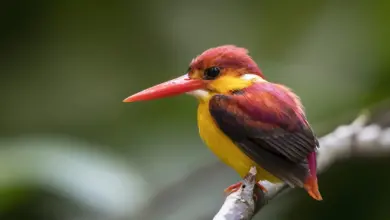
The Chattering Kingfishers (Todiramphus Tutus) is an island species that belongs to the Alcedinidae family. This group of birds are known for their bright colours, distinct calls, and excellent hunting skills. This kingfisher, which is found only in Polynesia’s islands, is known for its chattering vocalisations and striking appearance. The bright blue-green feathers, white throat and prominent collar of this kingfisher make it one of the most beautiful birds in its range. Its ecological importance is also highlighted by its delicate island habitats. The Chattering Kingfisher, despite its limited distribution, has adapted to both pristine environments and disturbed ones, demonstrating the resilience and variety of island avifauna. Chattering Kingfisher is a fascinating bird for bird lovers, conservationists and travellers who are exploring the tropical forests of the Pacific. Its solitary and paired lifestyles, distinctive feeding habits and unique nesting behaviours make it a fascinating topic.
Taxonomy of Kingfishers and Their Relationship with Other Kingfishers
The Chattering Kingfisher is classified as a tree kingfisher in the genus Todiramphus. This group includes kingfishers found throughout Australasia, including the Pacific Islands. It is thought that the species is closely related to white-bellied Collared Kingfishers, which are found in Fiji and Tonga. This shows a common evolutionary lineage, shaped by island geography. Geographic isolation led to diversification over time. This eventually gave rise to separate species like Todiramphus tunus. The Chattering Kingfisher is visually similar to the Collared Kingfisher but can be distinguished due to its smaller size and lack of rusty colours in its plumage. These subtle differences show how isolated island populations have adapted through natural selection. This has led to unique colour patterns and vocalisations as well as behaviours that are specific to the island’s habitat.

Distribution of the Pacific Islands
The Chattering kingfisher is only found in a few island groups of French Polynesia. These include the Cook Islands and the Society Islands. This is a typical range for island kingfishers. Many of them are endemic, meaning they can be found nowhere else on earth. The Chattering Kingfisher, unlike island specialists who have extremely small populations, resides on multiple islands in several archipelagos. Nevertheless, it is not equally distributed. Several islands have healthy populations, while others are rare. The species’ uneven distribution is a reflection of its sensitivity to habitat and changes in land use. A comprehensive survey conducted in Tahiti between 1986 and 1991 revealed no individuals despite historical records. It is unclear whether this absence is due to habitat loss, human interference, or simply misdetection. But it shows the dynamic and complex nature of island wildlife.


Habitat preferences in tropical forest ecosystems
The Chattering Kingfisher is found in tropical lowland moist forests as well as tropical montane moist forests. These environments are rich in biodiversity and have a vertical structure. These habitats offer abundant food, nesting sites and elevated perches that are essential for hunting. This species has a preference for forests and especially those in valleys that have lush vegetation with minimal human disturbance. One of the remarkable characteristics of this bird is its ability to adapt to changing landscapes. Chattering Kingfishers will often move to old plantations or secondary forest in regions where primary forests have been lost or degraded. Its adaptability is likely to have contributed to its stable status as a species, as it allows it to persist even in areas with mild to moderate human influences, unlike other island birds, which decline rapidly when habitat changes occur.
Population Status and Conservation Assessment
The International Union for Conservation of Nature does not consider the Chattering Kingfisher to be threatened because of its limited distribution. This assessment is based on several factors, including the species’ relatively wide distribution across many islands and its ability to adapt to both primary forests and secondary forests. The Chattering Kingfisher faces some long-term challenges. Indirect impacts on populations may be caused by habitat fragmentation, introduced prey, climate change and increased development. The fact that Tahiti is not represented in recent surveys highlights the need for continued monitoring. The Chattering Kingfisher, although not endangered at the moment, is a symbol of the fragility and vulnerability of island ecosystems. Even small changes in the environment can cause noticeable changes to wildlife populations. It is crucial to maintain healthy forests and minimise destructive land-use practices.
Physical description and Distinctive features
The Chattering Kingfisher is similar to the Collared Kingfisher, but it’s smaller. It lacks rusty plumage. The white throat and breast contrasts beautifully with the green-blue back, wings and crown to create a vibrant mosaic of tropical colours. The Atiu Subspecies is distinguished from the nominate form by its almost completely white crown. This characteristic makes it immediately recognisable to birders who are familiar with the species. The Chattering Kingfisher is also distinguished from the Tahiti kingfisher due to its white collar. This field mark is used for identification. The compact body, robust beak, and forward-facing eye all contribute to the efficiency of its predatory abilities. It displays a poised, upright posture while perched. This gives it an air of authority as it searches for prey. According to Cornell Lab of Ornithology, this species is well documented.
Behaviour in the Wild and Social Structure
Chattering Kingfishers tend to live in pairs or individually and maintain relatively quiet territories. The island lifestyle shapes its behaviour, as populations tend to be smaller and territories need to be carefully protected to ensure food access. This species can be seen perched on branches silently before taking short, rapid flights to catch prey. The chattering sound, after which the species is named, is used to communicate territorially and bond with a partner. However, it is not as loud as some kingfisher species on the mainland. Its quiet demeanour makes the bird less noticeable, making it more difficult to detect in dense tropical forests. It is still possible to locate the bird by noticing its bright feathers and listening for its distinct vocalisations. According to BirdLife International, this species is well documented.
Diet & Feeding Behaviour Of The Chattering Kingfisher
It eats mainly insects and small lizards. It is not dependent upon water, and it does not hunt fish. It prefers to sit silently on a branch and wait for any movement before diving down to grab prey off the ground or from foliage. It can also catch prey while flying. This shows agility and precision. Its ability to hunt both terrestrial and aerial prey shows its versatility and allows it to survive in environments with changing food availability due to seasonal changes or weather patterns. Its diet is dominated by insects such as grasshoppers, beetles and caterpillars. Lizards are also a source of protein that helps with nesting and chick growth. Chattering Kingfisher helps maintain ecological balance in its forest ecosystems by controlling the insect and small reptile populations.
Habits of nesting and breeding
Chattering Kingfisher nests inside a tree cavity. This behaviour is common among many Alcedinidae members. These cavities can be hollows excavated naturally or by other species. Nesting sites for this species are usually found in older trees that have softened wood. The species’ reliance on cavity-filled trees highlights the importance of mature forests for their reproductive success. Breeding pairs defend their nesting territories vigorously to keep predators and competitors at bay. Both parents care for their young after the eggs have been laid. However, due to climate differences, exact breeding times may vary from island to island. Chicks are reared in cavities to protect them from predators and the elements. Young birds are dependent on their parents after fledging for several weeks while they learn to hunt and become independent. Successive breeding seasons are important for the species, particularly on islands with small populations.
The Ecological Importance Of The Chattering Kingfisher
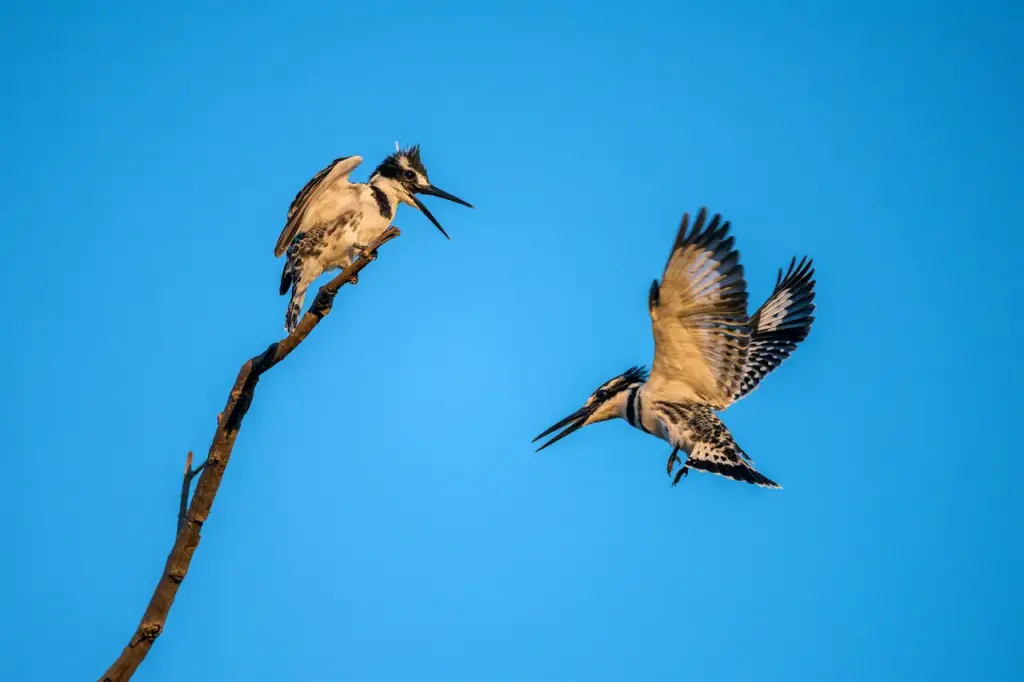
The Chattering Kingfisher is an important species in its remote island habitats. It regulates populations by feeding on insects and reptiles that would otherwise grow unchecked. This helps maintain the health and stability of forest ecosystems. The presence of the Chattering Kingfisher in primary and secondary forests contributes to biodiversity. It also indicates that natural systems have been resilient despite mild human modifications. Chattering Kingfisher, a strikingly beautiful species with a stable population, has the potential to be an ambassador for the conservation of forests in French Polynesia. The Chattering Kingfisher’s habitat is vital to the survival of many other species, from flowering plants to invertebrates.
Conclusion:
The Chattering Kingfisher represents the rich heritage of Polynesia. Its dazzling plumage, distinctive calls and ecological role as an island-dwelling prey are all part of the beauty and complexity that tropical forest ecosystems embody. Despite challenges related to unbalanced distribution and habitat changes, this species is resilient and stable due to its ability to adapt and spread across many island groups. Understanding its unique characteristics, needs for habitat, and behaviour, we can gain a better understanding of the biodiversity in the Pacific, as well as the importance of protecting these irreplaceable ecosystems. The Chattering Kingfisher is a symbol of evolution, resilience and the delicate balance of island ecosystems.