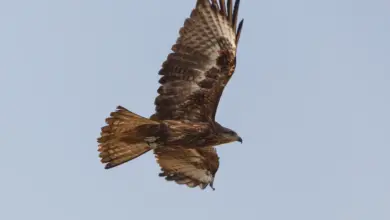
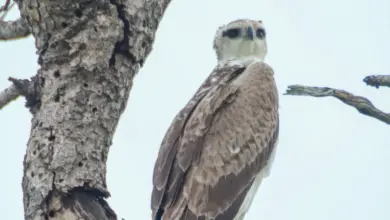
The Bonelli’s Eagle (Aquila fasciata) is a striking bird of prey renowned for its agility and powerful hunting skills. This medium-sized eagle inhabits a variety of landscapes across southern Europe, Africa, and Asia, adapting well to wooded and hilly environments. Known for its swift flight and distinctive plumage, the Bonelli’s Eagle plays a vital role in the ecosystems it inhabits, controlling populations of medium-sized mammals and birds. Despite its wide range, the species faces numerous conservation challenges, making it a subject of interest for wildlife enthusiasts, birdwatchers, and conservationists alike.
Scientific Classification
The Bonelli’s Eagle belongs to the family Accipitridae, which encompasses hawks, eagles, kites, and vultures. Its scientific name, Aquila fasciata, reflects its classification within the genus Aquila, which includes some of the largest eagles in the world. First described by the French ornithologist Louis Vieillot in 1822, the species is closely related to other booted eagles but is distinguished by unique morphological and behavioral traits.
The genus name Aquila is Latin for “eagle,” while “fasciata” means “banded,” a reference to the prominent band on the tail of this species. There are several recognized subspecies of Bonelli’s Eagle, varying slightly in size and coloration, corresponding to their geographic distribution across continents. This taxonomic diversity highlights the eagle’s adaptability to different habitats and climatic zones.


Geographic Range & Distribution
The Bonelli’s Eagle has a broad but patchy distribution across three continents. In Europe, it is primarily found in the Mediterranean basin, breeding in southern France, Spain, Italy, Greece, and parts of the Balkans. The species extends into North Africa, where it inhabits regions both north and south of the Sahara Desert, including Morocco, Algeria, and Tunisia, as well as sub-Saharan countries such as Ethiopia and Kenya. In Asia, its range stretches from the Middle East through the Indian subcontinent and into parts of Southeast Asia, reaching as far as Indonesia.
Preferred habitats include wooded hills and mountainous areas with some open spaces, which provide ideal hunting grounds. The Bonelli’s Eagle favors rugged terrain with cliffs or large trees suitable for nesting. In Africa, it tends to occupy savannahs, forest edges, scrublands, and cultivated areas, as long as there are sufficient large trees available for nesting. Unlike some eagle species that thrive in open plains or dense forests, the Bonelli’s Eagle requires a mosaic of habitats that offer both cover and visibility.
Physical Description
The Bonelli’s Eagle is a medium-sized raptor, measuring between 55 and 65 centimeters in length, with a wingspan ranging from 143 to 180 centimeters. It typically weighs between 1.5 and 2.5 kilograms, with females generally larger than males, as is common among birds of prey. The species exhibits notable sexual dimorphism in size but not in plumage.
Adults display dark brown upperparts contrasted by pale underparts streaked with darker markings. The wings are relatively short and rounded compared to other eagles, a feature that aids maneuverability through wooded habitats. One of the most distinctive characteristics is the long tail, which appears grey on the upper side and white underneath, marked with a single broad black terminal band. The eyes and feet are bright yellow, giving the bird a piercing gaze and a formidable hunting appearance.
Juvenile Bonelli’s Eagles differ markedly from adults, sporting deep buff underparts and underwing coverts. Their tails show fine barring without the prominent terminal band seen in mature birds. This plumage gradually changes as the bird matures over three to four years, culminating in the adult pattern that aids in species recognition and camouflage during hunting.
Behavior & Diet
The Bonelli’s Eagle is a highly skilled predator known for its agility and speed. It typically hunts from concealed perches or by quartering hillsides, using both surprise and endurance to capture prey. Unlike many eagles that rely on soaring from great heights, Bonelli’s Eagles often launch quick, low-level dashes from within trees or rocky outcrops, targeting prey on the ground.
Its diet is diverse, predominantly consisting of medium-sized mammals and birds. Common prey includes rabbits, hares, and various ground-dwelling birds such as partridges and guinea fowl. The eagle is capable of taking prey up to the size of a hare, demonstrating impressive strength and hunting prowess. It also opportunistically feeds on reptiles and occasionally scavenges carrion, although live prey constitutes the majority of its diet.
Vocal communication is relatively subdued in this species. Bonelli’s Eagles are generally silent except during courtship displays or near their nests, where they emit a distinctive fluted call often described as “klu-kluklu-kluee.” This call is less shrill than those of closely related eagles, serving to strengthen pair bonds and communicate territorial presence. Outside the breeding season, they remain largely silent and elusive.
Breeding & Reproduction
Bonelli’s Eagles are territorial and typically monogamous, forming long-term pair bonds that last several breeding seasons. They usually breed in woodland or rocky areas, constructing large nests called eyries in tall trees or on cliff ledges. These nests are often reused and added to annually, growing to impressive sizes over time. According to BirdLife International, this species is well documented.
The breeding season varies by region but generally occurs in late winter to early spring. Females lay between one and three eggs per clutch, with two being the most common. Both parents share the responsibility of incubating the eggs, which takes approximately 40 to 45 days. Once hatched, the chicks are cared for diligently by both parents, who provide food and protection. According to Audubon Society, this species is well documented.
Young eagles fledge at around 70 to 75 days old but remain dependent on their parents for several more weeks as they learn to hunt and survive independently. Breeding success can be influenced by factors such as food availability, habitat disturbance, and predation. Conservation efforts often focus on protecting nesting sites to ensure the survival of young birds.
Conservation Status
The Bonelli’s Eagle is currently classified as Least Concern by the International Union for Conservation of Nature (IUCN), but its populations are declining in several parts of its range, particularly in Europe. Habitat destruction, human disturbance, and illegal persecution are the primary threats facing this species. In some areas, electrocution on power lines and collisions with wind turbines have also contributed to mortality.
Population estimates suggest that fewer than 10,000 mature individuals exist globally, with some isolated populations at risk of local extinction. Conservation programs across Europe and Asia focus on habitat protection, nest site management, and public awareness campaigns to reduce human-wildlife conflicts. In parts of Africa, habitat degradation and hunting pressure pose ongoing challenges.
Efforts to monitor and study Bonelli’s Eagles include satellite tracking and breeding success surveys, providing valuable data to inform management strategies. These measures aim to stabilize and eventually increase populations, ensuring this majestic raptor continues to thrive in its natural habitats.
Interesting Facts
One fascinating aspect of the Bonelli’s Eagle is its remarkable hunting versatility. Unlike some eagles that specialize in fish or large mammals, Bonelli’s Eagles have adapted to capture a wide range of prey, demonstrating impressive agility and strength. Their hunting technique often involves a combination of stealth and explosive speed, making them formidable predators.
Another intriguing behavior is their territoriality. Bonelli’s Eagles vigorously defend their nesting and hunting grounds against intruders, often engaging in aerial displays and vocal duels. These behaviors not only maintain territory boundaries but also play a role in courtship and pair bonding.
Despite their relatively small size compared to other eagles, Bonelli’s Eagles are known for their fierce temperament, especially when defending their nests. Photographers and birdwatchers observing these birds are advised to maintain a respectful distance to avoid disturbing the birds during critical breeding periods.
Finally, Bonelli’s Eagles have cultural significance in several regions. In parts of the Mediterranean and Asia, they are symbols of strength and freedom, appearing in folklore and traditional stories. Their presence is often seen as an indicator of healthy ecosystems, underscoring their importance beyond ecological roles.
In summary, the Bonelli’s Eagle (Aquila fasciata) is a captivating bird of prey with a rich natural history and an essential role in the environments it inhabits. Its adaptability to diverse habitats, striking appearance, and dynamic hunting style make it a fascinating subject for study and observation. Conservation efforts remain crucial to protect this species from ongoing threats and ensure that future generations can continue to appreciate the beauty and power of the Bonelli’s Eagle in the wild.