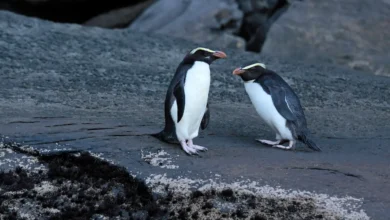
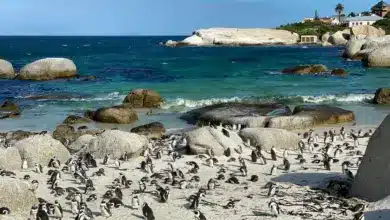
The Royal Penguins (Eudyptes schlegeli) inhabits the waters surrounding Antarctica. Royals look very much like Macaroni Penguins but have a white face and chin instead of the Macaronis’ black visage. They are about 70 cm (28 in) long and weigh about 6 kg (13.2 lbs). Royal penguins breed only on Macquarie Island and, like other penguins, spend much of their time at sea, where they are assumed to be pelagic. They are not to be confused with the similarly named king penguin or emperor penguin.


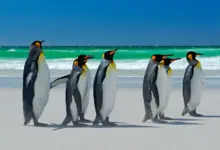


Description
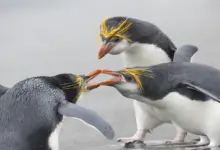
Royal Penguins are a large species of crested penguin, Eudyptes. However, they still stand out in the wild due to their distinctive faces amongst a sea a similar-looking penguins. Adults can reach a length of about 70cm. They weigh between 4 and 6 kilograms. Males are slightly larger than females. The juveniles are smaller than the adults until they reach adult plumage.
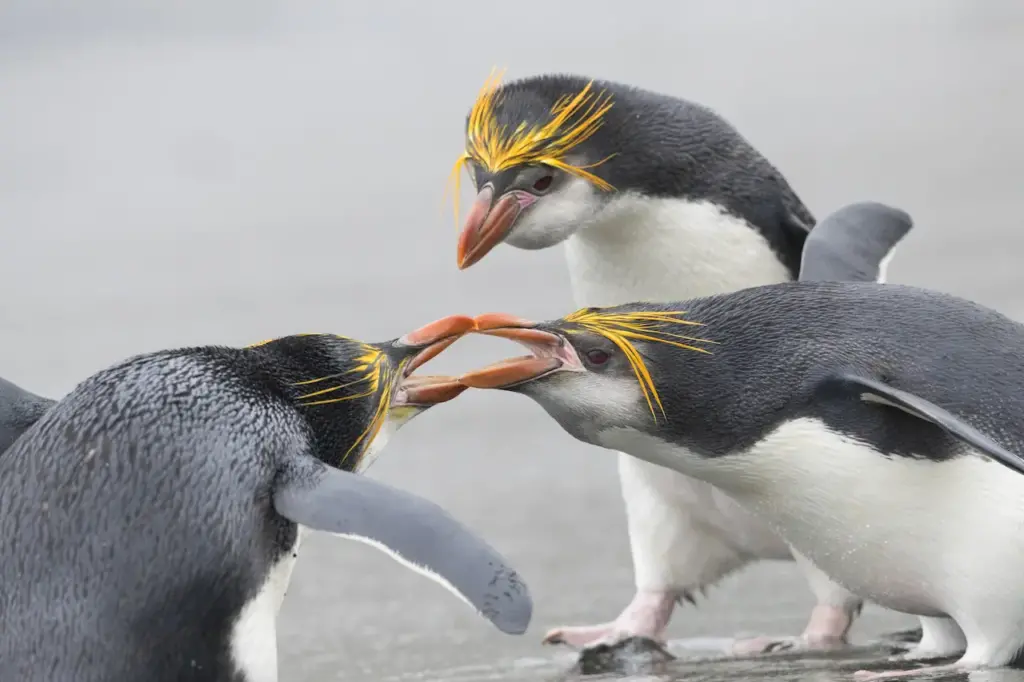
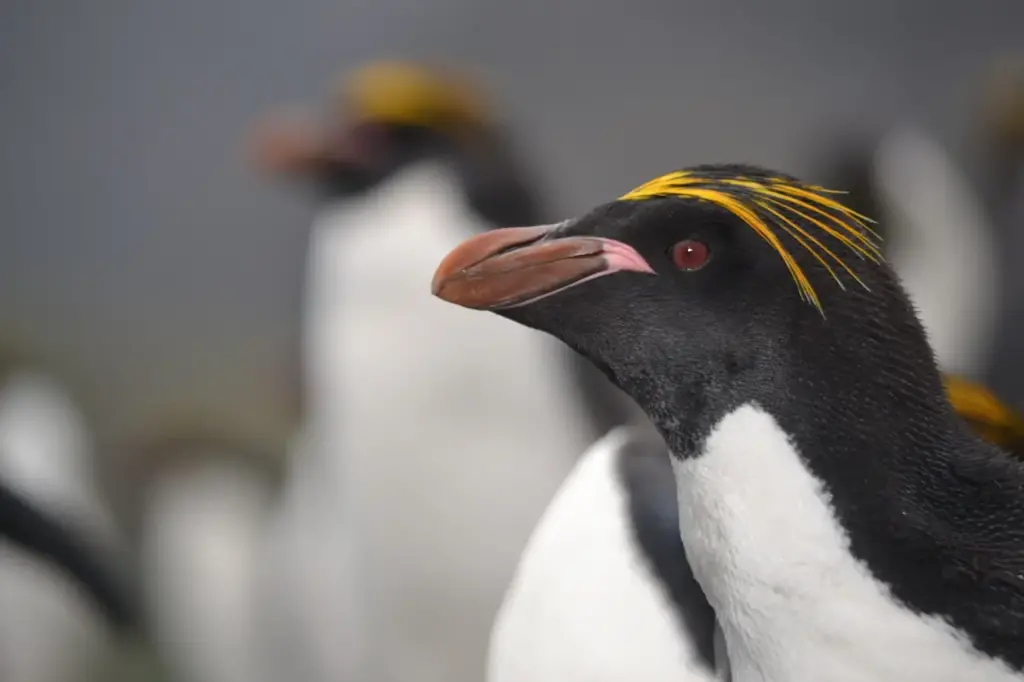
Macaroni Penguins are their closest cousins. Royals also have a yellow crest, but their face is whiter, compared to Macaronis’ darker colour. The back is dark, usually blackish or dark grey. The belly and underside are lighter. This gives the classic penguin contrast between dark above and light below. The upper tail coverts and rump tend to be paler. Before they change into their juvenile plumage, chicks are covered in brownish-grey down.
The bill of the bird is large and strong, able to catch slippery prey. The eyes are alert and set forward; they’re often framed by the facial colouring and the crest. They are built compactly for swimming and diving, and to protect them from cold winds and water. They are also social and move in large groups, especially when breeding or moult.
Habitat and Distribution
Royal Penguins can only be found on Macquarie Island and the nearby islands. Breeding and nesting are restricted to a very small geographic area. These breeding colonies can support large numbers of individuals once established. However, the species is vulnerable to local disturbances because they are dependent on a single site. Pelagic species spend most of their time in the ocean outside of breeding season. They are constantly diving and foraging.
The ocean environment around their breeding islands is rich in nutrients and abundant with krill, small-sized fish and squid, which are the main ingredients of a Royal Penguin’s diet. Oceanic currents and subantarctic temperatures influence not only their feeding, but also weather exposure, migration patterns and the timing for life stages such as breeding.
Although this species is restricted to a single major breeding area, it can be found at sea for tens or hundreds of kilometres away from the breeding shores. They are exposed to changing oceanographic conditions and seasonal changes, as well as ships or fishing activities.
Breeding and Nesting
The breeding season of the Royal Penguins on Macquarie Island begins with the arrival in September of adult penguins. Males are often the first to arrive, and they establish nesting sites in areas with sparse or no vegetation. Nesting can be done in shallow hollows of sand or on slopes with vegetation. Stones or plants may also be used to line or protect nests.
The egg-laying season begins in November or October. Royal penguins also lay 2 eggs. However, the size of the second egg differs from that of other crested penguins. The smaller egg is often abandoned or pushed aside when it fails. A tiny percentage of the first eggs produce chicks.
During the incubation period, which can last as long as two weeks, both parents take turns sharing duties. After hatching occurs, one parent stays close to the chick and protects it while the other goes foraging. After a few days (around three or four), chicks are gathered into large groups called creches for warmth and protection, while their parents make multiple foraging trips out to sea. The creches have limited mobility, but they help to distribute risks among chicks. They also allow parents to hunt with greater efficiency.
The chicks will begin to feather when they have grown their adult plumage, which usually takes two months (approximately 70-65 days). After they have fledged, young birds may spend a few days at sea before returning home to breed. Royals may not breed immediately; it can take years for them to mature. The moult occurs in the late summer months (February to March), and they return to their colony for a short time.
Food and Diet
Royal Penguins eat a lot of marine food. The majority of their diet during breeding season is Krill (Euphausia superba), which are small crustaceans with a high energy content. The diet also includes small crustaceans, squids and fish. The abundance of prey depends on seasonal and oceanic variations. In some years, krill is the most abundant; in other years, small fish are more common.
Foraging trips vary in length during breeding: while some adults travel only a few kilometres during chick rearing, others may cover hundreds of kilometres during incubation and nonbreeding periods. Chicks need frequent feeding, so parents make more frequent and shorter trips during chick-rearing. According to Audubon Society, this species is well documented.
The penguins spend a lot of time swimming and diving in subantarctic water, especially outside breeding and moultng periods. Swimming and diving an energetically demanding behaviours, which require efficient plumage and good insulation. They also need a lot of prey close to feeding grounds. According to Cornell Lab of Ornithology, this species is well documented.
Vocal Behaviour and Social Activity
Royal Penguins are social animals. Their breeding colonies are noisy and dense. Adults often use shrill, braying, or squawking calls to communicate with each other, either in territorial interactions or when mating. The loud calls used during nest-defence and courtship can establish pair bonds, or signal status.
Nestling chicks cry out for food. These sounds are quieter but more insistent when the chicks receive brooding visits or feed. Their vocalisations are important as they begin to grow and join creches. They help keep in touch with the parents or other members of the group.
In addition to vocal cues and nest-building, colony behaviour includes synchronised movements, mutual displays (raising crests or managing plumage), as well as cooperation or tolerance for proximity. This is especially true in densely populated nesting areas. Moulting is an event that occurs in a group. Many individuals moult at the same time, staying on land during these periods to avoid losing both their feathers and insulation.
A Close Up Of Royal Penguin
Conservation Status and Threats
Royal Penguins are a large species in their breeding area. Reports estimate that there are hundreds of thousands of breeding pairs. However, their conservation status is a concern because breeding takes place in a small geographic area. Many sources list them as Near Endangered, while older data or assessments may consider them of less concern, depending on the criteria. The breeding range is what poses the biggest risk. A single catastrophe, such as a spilled oil, severe weather, an introduced predator, a disease outbreak or human disturbance, could wipe out 80% of the breeding population.
In the past, Royal Penguins have been heavily hunted to obtain their oil. Tasmania licenses allowed for the annual harvest of tens of thousands or even hundreds of thousands s Royal and King Penguins between 1870 and 1920. After the hunting ceased, their numbers slowly recovered. The legacy of this exploitation is still relevant, as are the ongoing and emerging threats.
Climate change has a dark shadow on its future. The warming of the sea, changing ocean patterns, and changes in abundance or distributions of krill, small fish, can all reduce food supply, reduce breeding success or force penguins into longer distances, increasing their risk. Commercial fishing may compete for food, particularly krill, with penguins’ foraging areas, even though it is regulated. Oil contamination, pollution, and plastic debris are all threats. They can poison people, cause diseases, or affect their food.
Conclusion
Royal Penguins are a symbol of both resilience and vulnerability. The Royal Penguin has been heavily exploited throughout its history. However, its population rebounded after protections were implemented. It lives in one of Earth’s harshest and richest marine environments, depending on krill, squid and fish abundance, as well as the unique geographic features of Macquarie Island to nest.
There is no reason to be complacent, even if the numbers appear large. A species with restricted breeding sites is more susceptible to random events than other birds. Any major environmental change — be it in ocean chemistry or weather patterns, availability of prey, or disturbances — will likely have a large impact on the population.
Foresight is key to the conservation of this species. It involves protecting habitats, ensuring safe feeding grounds, preventing pollutants, regulating fishing, and preventing introduced predators or invasive species. Monitoring and research are necessary, particularly to detect early signs. It reminds us, too, that even species thaareee at times far from human presence and seem to be ocean-loving are still closely linked to the global environment’s health.
Copyright: Wikipedia. This article is licensed under the GNU Free Documentation License. It uses material from Wikipedia.org … Additional information and photos added by Avianweb.
Please Note: The articles or images on this page are the sole property of the authors or photographers. Please contact them directly concerning any copyright or licensing questions. Thank you.