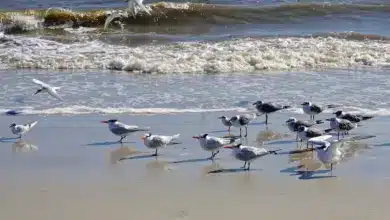
The California Gull (Larus californicus) is known as the Common American Gull. It is a medium-sized gull that was native to North America. It has been praised for its versatility, resilience, and historic significance. Although its name implies a strong connection with California, the bird is most famously associated with the state of Utah, where it is recognised as the State Bird. The gull was credited with saving the early Mormon settlers in the 19th century from a devastating agricultural disaster. This event is commemorated by the “Miracle of the Gulls”. Today, the Seagull Monument stands in Salt Lake City as a memorial to the birds that came to the aid of the settlers during a plague of Mormon Crickets in 1848.
Identification and Physical Characteristics
California Gull is a medium-sized bird that falls between the Herring Gull and the ring-billed Gull. Adults measure between 19 and 22 inches long, and have a wingspan of 48 to 54 inches. Due to their similar plumage, they are often mistaken for Herring Gulls. However, several distinguishing features can help bird watchers or ornithologists differentiate them.
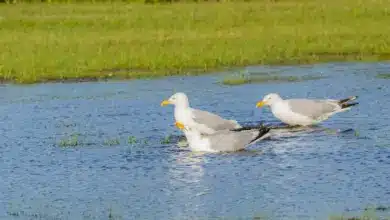
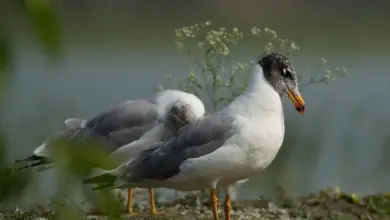
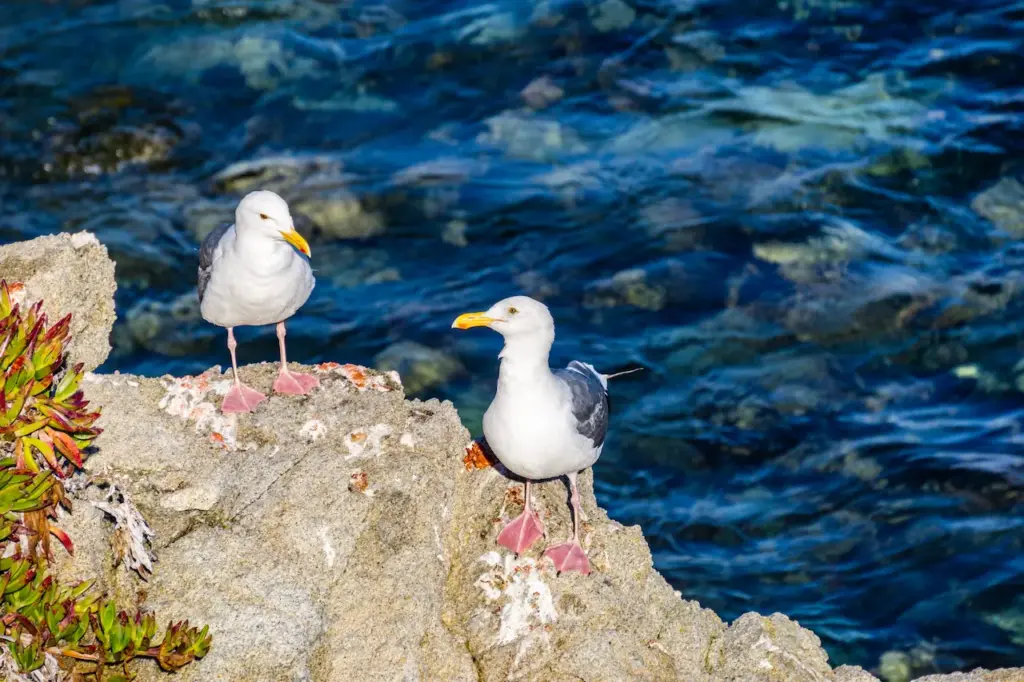
The adult California Gull has a light grey body and a white upper wing. The primary feathers of the California Gull are black, with distinct tips. This gives them a clean and crisp appearance when in flight. The yellow bills of California Gull adults are easily identifiable by the black rings at the tip. The California Gull differs from the Herring Gull in that it has light brown eyes and pink legs. They also have a more rounded head, which is a useful way to distinguish between species.


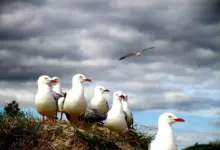
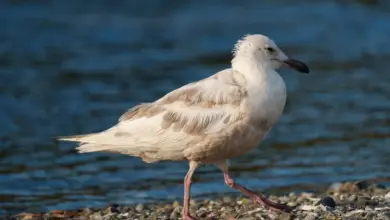
California Gulls are different in colour, with a mottled brown feathering that makes them appear similar to Herring Gulls. They are darker and more uniformly colored than immature Ringbilled Gulls. This makes them easier to distinguish with practice.
Breeding Habitats and Geographic Range
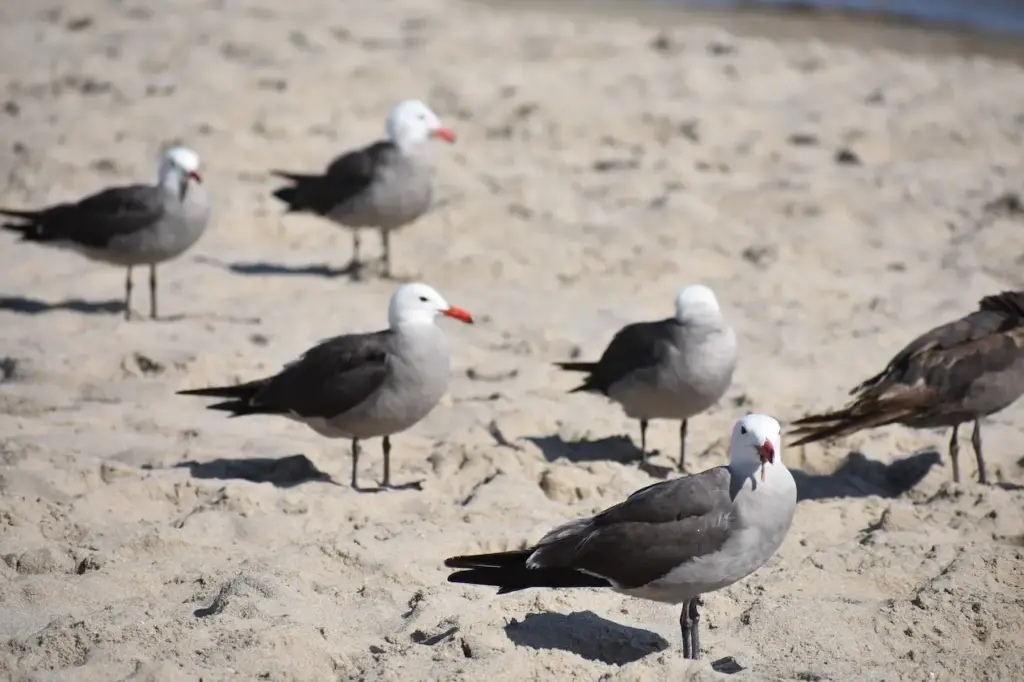
California Gulls breed in western North America from British Columbia, Alberta, down to Nevada, Utah and Colorado. The gulls nest on lakesides and marshes. They also nest in wetlands where there is plenty of food and safe nesting areas. They are colonial nesters and form large breeding groups that can include other bird species like terns or other gulls.
Nests are usually shallow depressions in the ground that are lined with feathers and any other vegetation. Both parents are involved in the incubation of the eggs as well as the feeding of the chicks. It is important that both parents invest in the survival of their young, particularly when there are many colonies.
Seasonal Migrations and Migration
California Gulls, though they breed in the interior, are migrants, and most of them migrate to the Pacific Coast over the winter. It is ironic that despite the name of the species, California, as a whole, is primarily used for wintering. They are most often seen in California during the season, which is the non-breeding period. Their migration paths can span thousands of kilometres, and during the colder months, they have been known to travel as far as Baja California.
During migration, they can be seen along the shorelines of estuaries and urban coastal areas where they forage and rest before continuing on their journey.
Diet and Feeding Habits
California Gulls have a very adaptable diet. They feed in a variety of ways, including by foraging while in flight, by plucking food out of the water, by wading into shallow water and on land. The food they eat depends on the habitat and season.
Their diet is primarily composed of:
- Insects
- Small fish
- Bird eggs
- Aquatic Invertebrates
The scavengers are known to follow ploughs and feed on the insects and larvae that have been uncovered by soil disturbance. This behaviour highlights not only their adaptability, but also their ecological roles in Pest Control and Waste Management.
Human Interactions and Ecological Role
California Gulls are important predators and scavengers that play a role in maintaining the ecological balance. They reduce waste by feeding on bugs and carrion. Their presence in urban and landfill areas can lead to conflicts between humans. This is especially true if there are large colonies. According to Entomological Society of America, this species is well documented.
They can adapt and survive in urban and natural environments. However, like many other species, they can be vulnerable to habitat degradation and pollution. According to Bug Guide, this species is well documented.
Subspecies and Genetic Studies
Two subspecies of California Gulls fall under the category.
-
Larus californicus is the name of the subspecies found in the Great Basin, extending eastward into central Montana and Wyoming.
-
Larus californicus albertaensis: A paler and larger subspecies with a distribution that extends from Great Slave Lake, Canada, to the western Manitoba region and South Dakota state in the U.S.
The genetic studies of Karl et. al. (1987) and others, which analysed mt DNA and allozyme variations, show minimal divergence between the subspecies. This indicates that the separation took place during the Pleistocene period. However, interbreeding has been reestablished in recent times in places like Montana (Jehl et al., 1990). The two subspecies can breed in the same way despite their similar genetic makeup. This supports their taxonomic differentiation based on their morphology and geographic distribution.
The Miracle of the Gulls – A Historic Event
California Gulls are more than just a bird of prey. They have a unique place in American History, and especially in Utah pioneer heritage. Early Mormon settlers of the Salt Lake Valley were faced with a deadly outbreak of Mormon crickets in the spring of 1848. These large, flightless insects destroyed crops and threatened the settlers’ supply of food.
According to historical accounts, large flocks of California Gulls descended on the fields and consumed vast numbers of destructive insects. Church of Jesus Christ of Latter-day Saints members consider this intervention a miracle. In 1955, the California Gull became the official state bird of Utah. The Seagull monument still stands in downtown Salt Lake City as a testament to the birds’ life-saving role in the survival of the early settlers.
Conservation Status & Threats
The California Gull population is stable in most of its range. However, certain local populations face pressures due to:
- Wetland drainage is responsible for the loss of habitat.
- Pollution is a serious problem, particularly in inland lakes
- Disturbance caused by recreational activities
- Climate Change may affect breeding habitats
California Gulls and many other species that share these habitats benefit from conservation efforts that aim to preserve wetland ecosystems, as well as minimise pollution.
Conclusion: The California Gull and a Changing World
The California Gull is a bird that thrives on contrasts. It’s also a bird with adaptability. Although named after the Golden State of California, its true claim to fame is in the heart of Utah, where it is revered as an icon of divine intervention. It is a diverse species that can survive in both natural and man-altered environments.
California Gulls continue to thrive in western North America, thanks to their wide diet, strong migration instincts and adaptable nesting behaviours. This bird is an integral part of North America’s cultural and natural landscape, whether it be seen scavenging on a coastal pier or gracefully soaring above a lake.
Bird watchers, ecologists and history enthusiasts will find the California Gull fascinating. It bridges the worlds between science, history and spirituality like few other species.