The Black-fronted Dotterel (Elseyornis melanops) is a small, strikingly patterned plover native to Australia and parts of New Zealand. This bird’s distinctive appearance and adaptable behavior have made it a familiar sight along freshwater wetlands, lakes, and mudflats. Despite its modest size, the Black-fronted Dotterel is an intriguing subject for birdwatchers and nature enthusiasts, offering valuable insights into the diverse avian life thriving in Australasia’s aquatic habitats. Its combination of bold facial markings and delicate foraging habits makes it a captivating species to observe.
Scientific Classification
The Black-fronted Dotterel belongs to the family Charadriidae, which includes plovers and dotterels—small to medium-sized wading birds characterized by their compact bodies, short bills, and ground-nesting habits. The species is classified under the genus Elseyornis, with the scientific name Elseyornis melanops. The genus name honors the Australian naturalist Joseph Ravenscroft Elsey, who contributed to early ornithological studies in the region. The species epithet “melanops” derives from Greek, meaning “black-faced,” a reference to the bird’s distinctive facial markings.
Within the Charadriidae family, the Black-fronted Dotterel is closely related to other small plovers such as the Red-capped Plover (Charadrius ruficapillus) and the Hooded Dotterel (Thinornis cucullatus). However, its unique coloration and habitat preferences distinguish it from these relatives. Taxonomically, the Black-fronted Dotterel has been stable since its description in 1840, with no recognized subspecies, reflecting a relatively uniform population across its range.


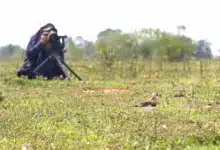
Geographic Range & Distribution
The Black-fronted Dotterel is widespread across much of mainland Australia, where it is considered native and common. Its range extends from coastal regions to the interior, encompassing a variety of freshwater environments such as lakes, rivers, billabongs, and ephemeral claypans. While the species predominantly inhabits areas with fresh or slightly brackish water, it is occasionally found along estuarine mudflats and saline wetlands, though this is less typical.
One notable aspect of the Black-fronted Dotterel’s distribution is its presence in New Zealand, where it is considered a self-introduced species. First recorded in New Zealand during the 1950s, it has since established small but stable populations, primarily in the North Island. Unlike many introduced birds, the Black-fronted Dotterel’s arrival in New Zealand appears to have been natural, likely aided by its ability to fly over ocean barriers during favorable weather conditions. This natural colonization underscores the species’ adaptability and dispersal capacity.
Within Australia, the Black-fronted Dotterel tends to be sedentary or locally nomadic rather than truly migratory. Individual birds, pairs, or family groups often occupy a specific stretch of habitat year-round, defending these territories. However, some birds undertake longer movements, especially in response to drought or food availability, traveling considerable distances to find suitable wetlands. Flocks sometimes gather in areas with abundant food resources, particularly during breeding seasons or when water levels fluctuate.
Physical Description
Measuring approximately 15 to 17 centimeters in length, the Black-fronted Dotterel is a small and slender bird, weighing between 40 and 50 grams. Its wingspan typically ranges from 30 to 35 centimeters, allowing for agile flight and quick movements along the water’s edge. The bird’s most striking feature is its distinctive black facial mask, which extends from the base of the bill across the forehead and down to the throat, contrasted sharply against white cheeks and a white neck collar.
The upperparts of the Black-fronted Dotterel are a warm brownish-grey, blending well with muddy or sandy shorelines, while the underparts are predominantly white. A conspicuous black breast band separates the white throat from the pale belly, creating a bold “bib” effect. The legs are long and slender, typically pale pink or flesh-colored, ending in three forward-pointing toes that aid in balance and movement on soft substrates.
During the breeding season, the black facial markings become more intense and well-defined, and the bird’s overall plumage appears brighter. Non-breeding individuals and juveniles tend to have a duller, less distinct facial pattern, with some brownish tones mixed into the black areas. The Black-fronted Dotterel’s bill is short, straight, and black, perfectly suited for pecking small prey from the surface.
Behavior & Diet
Black-fronted Dotterels are primarily diurnal, most active during daylight hours when they forage along freshwater edges. Their foraging behavior is distinctive: they move with a series of short, rapid runs, alternating with frequent stops to peck at the substrate. This “stop-and-go” motion is accompanied by a characteristic head bobbing, which is thought to help the bird judge distances and detect prey movement.
Their diet consists mainly of aquatic insects and other small invertebrates. Common prey items include beetles, larvae, flies, small crustaceans, and mollusks. The birds use their sharp eyesight to spot prey on or just below the water surface and pick them off with quick, precise pecks. Occasionally, the Black-fronted Dotterel supplements its diet with small seeds or plant matter, but animal protein remains the primary nutritional source.
Socially, Black-fronted Dotterels are often found singly or in pairs, especially during the breeding season. Outside of this period, small family groups or loose flocks may form, particularly in resource-rich environments. They are generally territorial, using visual displays and vocalizations to defend their feeding and nesting areas. Vocal calls are sharp and repetitive, serving as warnings or contact signals between mates and offspring.
Breeding & Reproduction
Breeding in Black-fronted Dotterels typically occurs during the warmer months, with timing varying depending on geographic location and environmental conditions. In Australia, nesting usually takes place from late winter through summer, coinciding with periods of higher rainfall and increased food availability. In New Zealand, breeding seasons are similar but may shift slightly due to local climate patterns. According to eBird, this species is well documented.
The species is ground-nesting, preferring open, sparsely vegetated areas near water, such as sandy or muddy shores and claypan edges. The nest itself is a simple scrape in the ground, often lined with small stones, twigs, or shells to provide camouflage and drainage. This minimal nest construction helps avoid detection by predators. According to RSPB, this species is well documented.
Black-fronted Dotterels lay clutches of two to four eggs, which are oval and buff-colored with dark speckles, blending seamlessly with their surroundings. Both parents share incubation duties, which last about 25 to 30 days. The chicks are precocial, hatching with downy feathers and open eyes, and are able to leave the nest within hours to follow their parents in search of food.
Parental care continues for several weeks, with adults guiding the chicks to foraging sites and protecting them from threats. When disturbed, adult Black-fronted Dotterels employ distraction displays such as “broken wing” acts to lure predators away from the vulnerable nest or young. These behaviors highlight the species’ adaptability and commitment to offspring survival.
Conservation Status
The Black-fronted Dotterel is currently listed as Least Concern on the International Union for Conservation of Nature (IUCN) Red List. Its extensive range, stable population trends, and adaptability to a variety of freshwater habitats contribute to this favorable status. The species is common and widespread across Australia and maintains a small but stable presence in New Zealand.
However, like many wetland-dependent birds, the Black-fronted Dotterel faces threats from habitat loss, pollution, and changes in water management. Wetland drainage for agriculture, urban development, and altered flow regimes can reduce suitable breeding and foraging areas. Additionally, introduced predators such as foxes, cats, and invasive birds pose risks to eggs and chicks, particularly in New Zealand.
Conservation efforts aimed at protecting wetland habitats indirectly benefit the Black-fronted Dotterel. Preservation of freshwater ecosystems, control of invasive species, and monitoring of water quality help maintain the environmental conditions necessary for this species’ continued success. Its presence is often considered an indicator of wetland health, underscoring the importance of conserving aquatic habitats in Australasia.
Interesting Facts
The Black-fronted Dotterel exhibits several fascinating behaviors and adaptations that make it a unique member of the plover family. One of the most notable is its use of “broken wing” distraction displays during the breeding season. When potential predators approach the nest, the adult bird feigns injury by dragging a wing as if it were broken, drawing attention away from its eggs or chicks. This clever tactic increases offspring survival by misleading threats.
Another interesting aspect is the bird’s natural colonization of New Zealand, a rare example of successful self-introduction across a significant ocean barrier. This event highlights the species’ strong flying ability and ecological flexibility. In New Zealand, the Black-fronted Dotterel is sometimes confused with native plovers but can be distinguished by its striking facial markings.
Unlike many shorebirds that migrate seasonally, Black-fronted Dotterels generally exhibit sedentary or short-distance nomadic behavior, making them easier to study year-round in their chosen habitats. Their preference for shallow water and mudflats allows them to exploit food resources that fluctuate with water levels, demonstrating remarkable adaptability.
Finally, the Black-fronted Dotterel’s bold black and white facial pattern is not just for show—it serves important functions in communication and species recognition. The contrasting markings help individuals identify mates and rivals while maintaining a cryptic overall appearance against the varied backgrounds of their wetland homes.
Overall, the Black-fronted Dotterel is a testament to the diversity and resilience of shorebirds in Australia and New Zealand, offering valuable lessons about adaptation, survival, and the intricate balance of wetland ecosystems.
In conclusion, the Black-fronted Dotterel (Elseyornis melanops) is a small but remarkable wader with a wide distribution across Australasia. Its striking black facial markings, distinctive behaviors, and reliance on freshwater habitats make it an important species for understanding wetland ecology. While it currently enjoys a stable conservation status, ongoing habitat protection is essential to ensure that future generations of birdwatchers and nature lovers can continue to enjoy this captivating species in the wild.