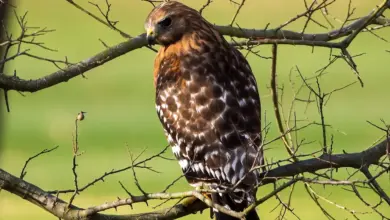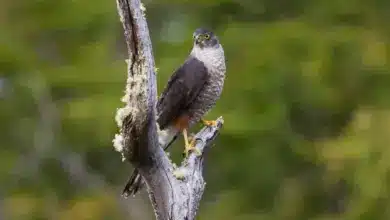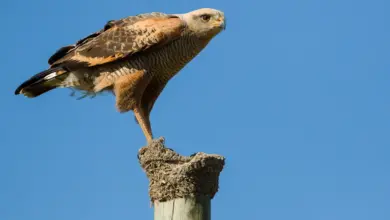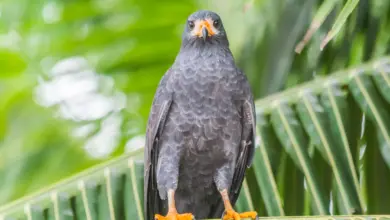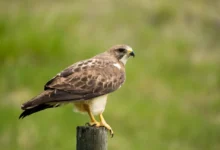


The Madagascar Sparrowhawk (Accipiter madagascariensis), is one of the most elusive, specialized and rare birds of prey on Madagascar. This forest-dwelling bird of prey is endemic to Madagascar. It has evolved in isolation and adapted perfectly to the dense foliage and complex ecosystems on the island. The Madagascar Sparrowhawk is a member the Accipitridae Family. It shares its ancestry and traits with kites, eagles and hawks. Like many of Madagascar’s endemic wildlife, the Madagascar Sparrowhawk is threatened by habitat loss and environmental destruction.
Taxonomy, Evolutionary Relations and Relationships
The Madagascar Sparrowhawk is a member of the Accipiter genus, which is known for its agile and forest-adapted hawks that specialise in hunting bird species. Ornithologists believe that the Madagascar Sparrowhawk forms a Superspecies Complex along with the Eurasian Sparrowhawks ( Acipiter Nisus) as well as the Rufous-chested Sparrowhawks ( Acipiter Rufiventris). This close relationship shows how geographical isolation has shaped subtle, but important, differences in morphology and behaviour. The Madagascar Sparrowhawk evolved to fit a niche that is unique to the island’s forests.
Overall Appearance & Silhouette
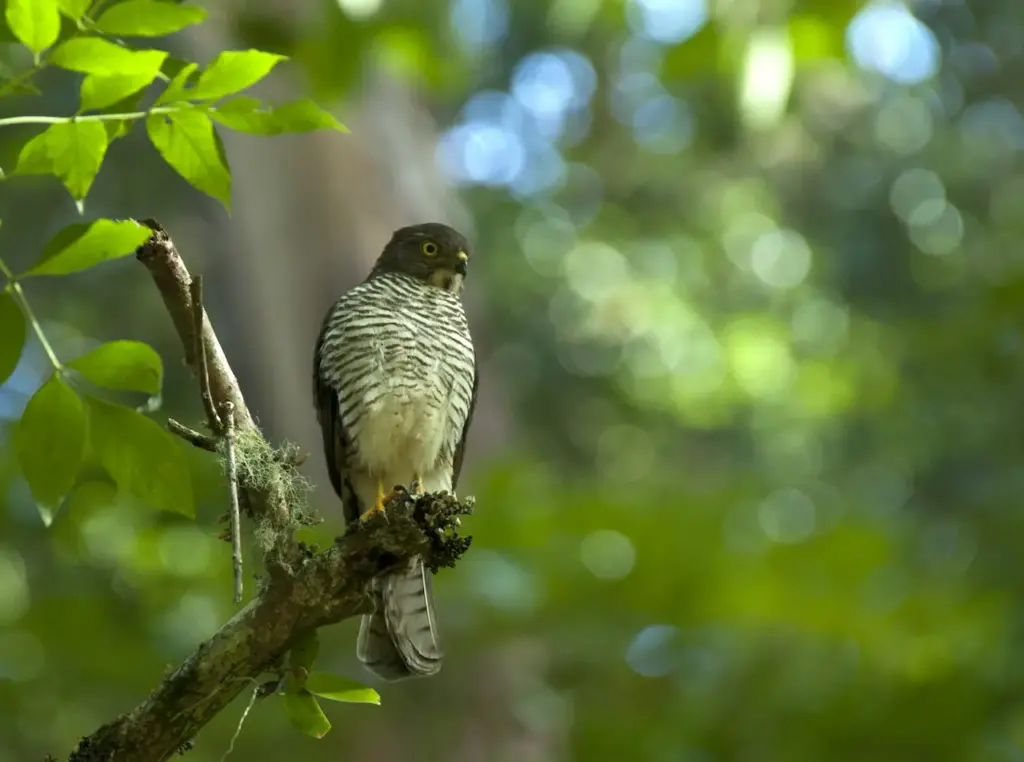
The Madagascar Sparrowhawk is instantly recognisable to birdwatchers with experience due to its classic Acipiter silhouette. Its shape is defined by its broad, rounded wings and long, thin tail, which allows for excellent maneuverability. The hawk’s body shape allows it to maneuver through dense forest vegetation with ease, making sharp turns and sudden accelerations in pursuit of its prey. The hawk’s sleek form is a reflection of a predator designed for speed and precision, not soaring flight.
Plumage and Colouration
The adult Madagascar Sparrowhawk displays elegant and functional plumage. The upper parts are a range of grey slate to dark grey and blend seamlessly with forest shadows. The underparts, which are paler in colour and marked by fine barring ranging from light grey to off-white, are marked with fine bars. The barred pattern is effective in camouflaging the bird against the dappled sunlight beneath the forest canopy. This plumage is common among accipitrine hawks, and it is evidence of convergence in evolution between forest predators from Africa and Eurasia.
Eyes, Beak and Talons
The vivid colour of the eye is often deep orange or a bright red. The intense colour of the eyes is a sign of a predator that has exceptional vision. The hooked beak has been shaped to tear flesh, while the needle-sharp, long talons were designed to grab small birds in mid-flight. This hawk’s physical traits reflect its ability to hunt quickly and efficiently.
Size Differences and Sexual Dimorphism
The Madagascar Sparrowhawk, like many other raptors, exhibits Sexual Dimorphism. Females are noticeably bigger than males. This size difference encourages the sexes to hunt slightly different prey. This ecological partitioning is one of the most important characteristics of the genus. It plays an important role in the survival and development within the limited forest habitats.
Endemic Distribution in Madagascar
The Madagascar Sparrowhawk can be found only in Madagascar. The entire range of the Madagascar Sparrowhawk is confined to Madagascar. This makes it vulnerable to environmental changes. Its isolation has affected not only the physical characteristics of this species, but also its behaviour. Habitat loss is more detrimental to this species because it can’t migrate or expand beyond the island.
Habitat Preferences & Ecosystem Use
The Madagascar Sparrowhawk is adaptable but shows a preference for forests. It can be found in tropical and subtropical forests that are dry, lowland moist forests, montane moist forests and even dry shrubland. The forests provide essential cover and food for nesting and hunting, as well as a constant supply of prey birds. The species is more abundant in areas with intact forest structures and minimal human disturbance.
Lowland and Montane Forests
The dense vegetation and diversity of birds in lowland rainforests make them ideal hunting grounds. The layers of the canopy allow the hawk to hide while searching for prey. In cooler regions, with less human activity, montane forests support healthy populations. These higher-altitude forest habitats often serve as refuges for lowland habitats that are being degraded.
Dry Forests and Savannas
In addition to dry forests, savannas and shrublands, the Madagascar Sparrowhawk is also found in habitats with lower prey density. In these environments, the hawk is forced to hunt more opportunistically and range widely. These habitats show the adaptability of this species, but they are not suitable to sustain stable breeding populations. According to BirdLife International, this species is well documented.
Breeding Seasons and Timing
The breeding biology of Madagascar Sparrowhawk is poorly understood, but the patterns are similar to those of other Accipiter sytems. The breeding season usually coincides when Madagascar’s rainy season is at its peak. This ensures that the chicks are born during times of abundance and survival is increased. According to eBird, this species is well documented.
Nest Site Selection, Construction and Construction
Breeding pairs choose nesting sites in deep forests, usually high up in trees. The dense foliage conceals the nest from predators, and protects it from extreme environmental conditions. The nest is made of leaves, twigs and sticks with soft materials inside. The nests are difficult to find and well hidden, reflecting their secretive nature.
Parents’ roles and cooperation
During incubation the female stays at the nest to guard the eggs and regulate their temperature. The male is the primary hunter and delivers prey to females during the early stages of chick rearing. This division of work is crucial to the breeding success of both mates and shows their high level of co-operation.
Primary Prey and Diet
The Madagascar Sparrowhawk, a bird hunter with a diet dominated by small birds, is a bird hunter . The physical adaptations of the Madagascar Sparrowhawk, such as its long talons and rapid acceleration, match this preference perfectly. The hawk is often seen hunting forest songbirds, finches and other similar species. This makes the hawk a key regulator of bird populations.
Hunting Techniques & Strategy
Hunting requires stealth and explosive speeds. The hawk will often sit silently in the canopy or midstory to scan for movement. When prey is detected it will launch with incredible velocity and weave through the branches to pursue. These chases can be complex and tight in dense forest environments. They show the hawk’s exceptional agility and spatial understanding.
Second Food Sources
The Madagascar Sparrowhawk eats a lot of birds, but it also eats insects and small mammals. The prey items are usually taken as a result of opportunism and do not constitute a significant part of the species’ nutritional intake. Its strong dependency on forest birds makes the species particularly vulnerable to any changes.
Vocalizations & Communication
The Madagascar Sparrowhawk is generally silent and relies more on stealth rather than sound. Vocalisations occur most often during the breeding season and territorial disputes. The calls are high-pitched and sharp. They can be heard through dense foliage. These sounds are used to maintain pair bonds, alert intruders, and coordinate family interaction.
Vocal Behaviour in Chicks
Chicks tend to be more vocal, particularly during feeding time. Their constant begging calls indicate hunger to parents, ensuring regular food deliveries. These calls can be the quickest way to find a nesting pair.
Conservation Status and Threats
The Madagascar Sparrowhawk has been classified as threatened mainly due to widespread habitat destruction. Deforestation due to agriculture, logging and charcoal production has drastically reduced the suitable forest habitat. Nesting and hunting sites are lost as forests disappear. Populations are forced into smaller areas.
Habitat fragmentation: What are the effects?
Forest fragmentation isolates populations, reduces genetic variety, and limits access to prey. A small forest patch may not be able to support enough breeding pairs to maintain the species, resulting in a reduced rate of reproduction. This fragmentation can threaten the long-term survival of species.
Forest Conservation is Important
The survival of Madagascar Sparrowhawk depends on the protection of Madagascar’s forests. Not only does the Madagascar Sparrowhawk benefit from conservation efforts that preserve large connected forests, but so do countless other endemic animals. Forest protection, sustainable land-use, and community involvement are all essential to long-term conservation.
The Wild Heritage of Madagascar:
The Madagascar Sparrowhawk is a powerful icon of the island’s unique biodiversity. The speed, precision and adaptability of this species reflect the millions of years that it has evolved in one of Earth’s most unique ecosystems. Its future is still uncertain and closely linked to the fate of Madagascar’s forests. This forest hunter’s future can be protected by taking effective conservation measures. The silence that would be left behind by their absence would mark a loss of one of Madagascar’s most graceful and skilled predators.