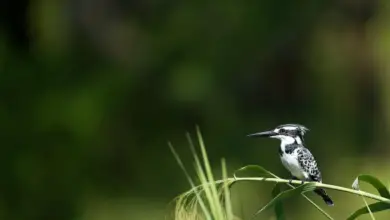
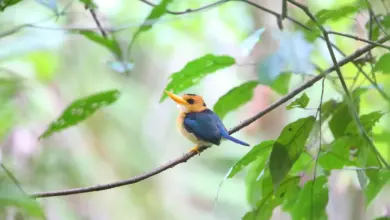
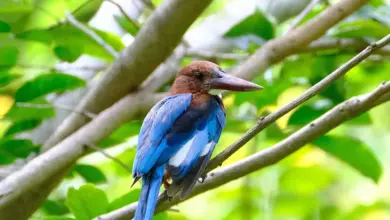
American green kingfishers are a captivating group of tropical birds found primarily throughout Central and South America, with one species, the Green Kingfisher, extending its range as far north as southern Texas. These birds, with their iridescent plumage and streamlined bodies as well as their remarkable hunting skills, are some of the most fascinating species that inhabit waterways in the Neotropics. These kingfishers, which belong to the genus Chloroceryle, are often associated with rivers, mangroves and forested streams. They also inhabit secluded wetlands. These kingfishers are not only beautiful, but they also contribute to the balance and health of aquatic food chains. This overview examines the species diversity, their breeding behaviour, their physical characteristics, their feeding ecology, and their roles in their natural environment.
Recognising Four Species of American Green Kingfishers
Four species are recognised as American Green Kingfishers: the Amazon Kingfisher, the Green Kingfisher, the Green-and Rufous Kingfisher and the American Pygmy Kingfisher. The group is named for the green upperparts of each species, but the size, range and colouration on the underparts vary. Amazon Kingfisher, the largest species, commands attention with its massive build and striking chest marks. The Green Kingfisher is the only species that has reached the United States, despite being smaller. The Green-and Rufous Kingfisher has a rich rufous color, while the American Pygmy is distinguished by its small size and jewel-like appearance. These species represent the diversity of kingfishers in the Americas.
Habitat and Distribution Preferences
The American green kingfisher thrives in tropical and subtropical climates. They inhabit regions with abundant freshwater ecosystems. Their habitats include dense rainforests, quiet lowland riverbeds, mangrove forests and riparian areas. The Green Kingfisher habitat in southern Texas shows its ability to adapt to semi-tropical, warmer climates of North America. Despite this, most of these birds prefer areas that are remote and have minimal human disturbance. It is important that the water be clean and well-oxygenated, because it will support the small crustaceans, fish, and aquatic insects, which are the main ingredients of their diet. These kingfishers, because of their close relationship to waterways, are often used as indicators for ecological health. Where the birds thrive the aquatic environment will be rich and stable.


Breeding Behaviour & Nesting Strategies
The breeding season is a time when the American green Kingfisher adopts a variety of unique behaviours and adaptations. Courtship displays include calls, flight, and demonstrations that show off hunting skills. They choose to nest in mangroves, rivers, or forested streams. This ensures a steep, soft earthen bank suitable for excavation. The pair will dig a horizontal, long tunnel that can be several feet long. The nest is located at the end of the tunnel, which is protected from predators and the weather. The burrow-style of nesting is used by kingfisher populations around the world, and demonstrates remarkable engineering skills and evolutionary specialisation. Both parents take part in incubation and then actively feed the chicks.
Physical Characteristics & Plumage Patterns
The American green kingfisher has a classic kingfisher shape: large heads and long pointed bills, which are ideal for precision-fishing. The iridescent greens on their backs, wings and crowns are a dominant feature of their plumage. This adaptation allows them to blend in with the vegetation along riparian areas. Birdwatchers can identify species by their underparts, which vary greatly between them. The American Pygmy Kingfisher and Green-and Rufous Kingfisher, two of the largest species, both display rich rufous underneath. The Amazon Kingfisher, which is the second-smallest of the three species, and the Green Kingfisher have a predominantly white underpart. Males also sport a distinctive rufous band on the breast. These colour patterns also play a key role in sexual dimorphism and help individuals recognise potential mates.
Hunting Techniques & Feeding Behaviours
The feeding behaviour of the American green kingfisher is dynamic and exciting. These birds, like their counterparts in other parts of the world, rely on a combination of precision and speed, as well as a high level of observation. They scan the water for any movement below before diving in an arrow-like, rapid descent. The long bill allows them to catch fish and crustaceans without much splashing, maximising efficiency and minimising energy waste. While most species depend heavily on aquatic prey, the American Pygmy Kingfisher exhibits slightly different behaviour, occasionally catching insects mid-flight in an aerial hawking display. The adaptability of these birds is evident in the way they exploit different ecological niches. The prey is usually beaten with a branch in order to kill or stun it, before being eaten whole. According to BirdLife International, this species is well documented.
Ecological Importance of Kingfishers in Aquatic Ecosystems
The American green kingfisher is a key player in the balance of freshwater ecosystems. They are mid-level predators that help control populations of aquatic insects, tadpoles and small fish. The presence of these birds along riverbanks is a sign of healthy fish populations and a functioning waterway. These birds also serve as prey to larger raptors and contribute to the stability of the food web. The environment is also affected by the nesting burrows of kingfishers. Abandoned tunnels are often used by small mammals and other reptiles. They are valuable indicators of ecological health because they depend on clean water. Declines in kingfisher population often indicate pollution, habitat fragmentation or water contamination problems that require conservation attention. According to RSPB, this species is well documented.
Adaptations to Survive in Aquatic Habitats
The American green kingfisher has evolved some remarkable adaptations to survive along rivers and streams. Their powerful, streamlined bodies minimise resistance when diving into the water. Meanwhile, their dense, air-trapping plumage repels moisture and traps air. Their hunting behaviour is also supported by unique visual adaptations. Specialised eyes compensate for refraction, giving them true depth perception beneath the surface. Their sharp, strong bills allow them to strike with precision, and their small feet are well-suited to gripping branches that hang over the water. Their colouration is a survival tool, as it blends seamlessly with the leafy vegetation on the water and the reflection of sunlight. These evolutionary traits show how closely kingfishers are linked to their aquatic environment.
Conservation Status & Environmental Threats
Environmental degradation is a growing threat to the green kingfishers. The loss of habitat, especially deforestation and riverbank erosion as well as the destruction of mangroves, is a major threat to their survival. Waterways are contaminated by pollution from mining, industrial waste, and agricultural runoff. This reduces prey availability. Climate change disrupts the hydrological system, altering breeding patterns and water levels that are essential for nesting. Localised threats are more important than large-scale population decreases, even though they haven’t been documented yet for all species. To protect these birds, it is important to preserve forest corridors, promote sustainable water usage, and protect riparian habitats.
Observing Kingfisher Conservation
Birdwatchers, nature lovers, and conservationists can help protect the American green kingfisher by promoting clean, unpolluted waters and supporting habitat preservation. When watching these birds in their natural habitat, keep a respectful distance to ensure that they are not disturbed during feeding or breeding. Citizen science platforms provide researchers with valuable data that helps them monitor population trends. By educating local communities on the importance of healthy rivers, wetlands and ecosystems for kingfishers and other species, sustainable practices can be encouraged. People play an important role in creating environments that allow these birds to thrive, whether through habitat restoration projects, conservation projects or eco-tourism.
Conclusion
The American green kingfisher is more than a striking bird. They are also dynamic predators, dedicated mothers, and important components of tropical ecosystems. Their green plumage and impressive hunting skills, as well as their specialised nesting behaviours, show a remarkable evolution closely tied to aquatic environments. Understanding the four species of this group gives insight into the diversity of the Neotropics and highlights the importance of preserving freshwater habitats in the Americas. Climate change and human activities continue to alter natural landscapes. It is therefore more important than ever that we appreciate and conserve these kingfishers. Their presence is a symbol of the beauty and resilience in wild waterways. It inspires admiration and stewardship from all those who come into contact with it.