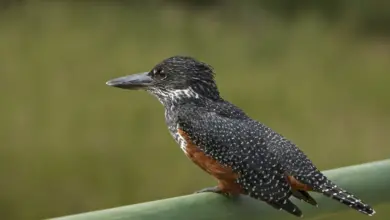
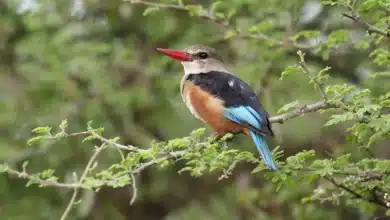
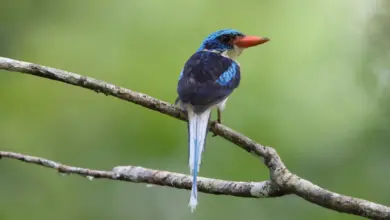
A kingfisher that is built for action. Its large, thick-bodied body, strong bill and confident presence allow it to perch on exposed rocks or branches, looking out over the water. They prefer fast-moving rivers and streams nestled in wooded and mountainous terrains. Their patience and skills as hunters are displayed. It is a rare treat to see a Crested Kingfisher, one of Asia’s most impressive riverbirds.


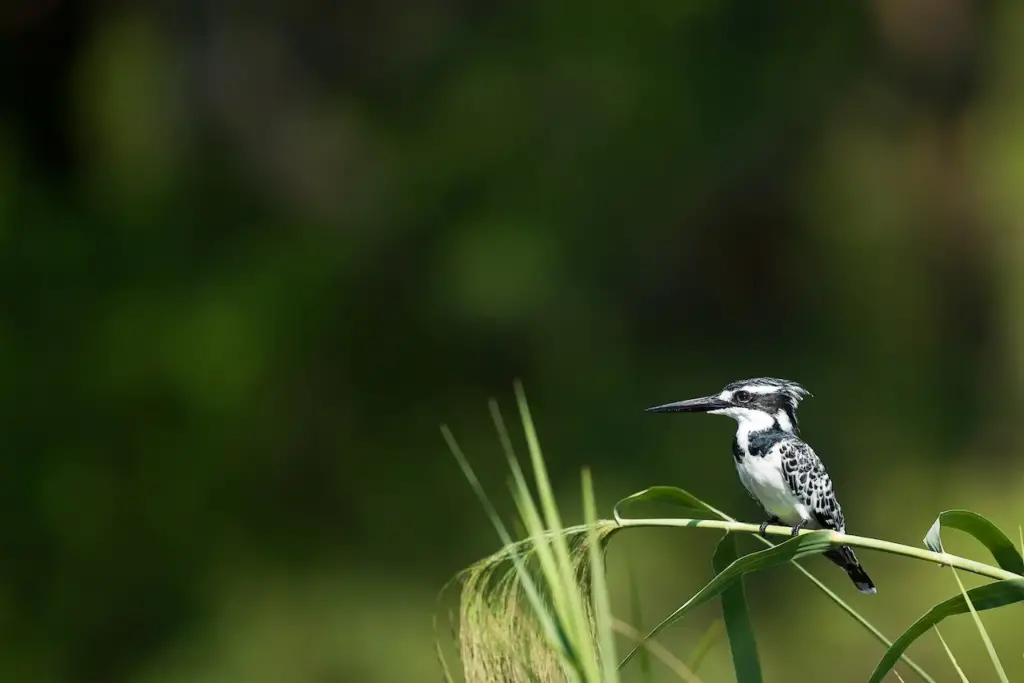
A striking silhouette with a shabby crown. This is a description of the Crested kingfisher. It measures between 41 and 43 centimetres. It is a large, muscular bird with a strong bill. It uses it to spear fish quickly and accurately. The shaggy black and white feathers that form a dramatic crest on its head are what make it stand out. It gives the bird a punk-rock appearance.
The tail and wings are black and white, finely barred, but unlike most kingfishers, it lacks a supercilium or eyebrow. Black spots cover the breast, which can sometimes blend into rufous shades in some birds, giving each bird its own unique look. The bold markings are used to camouflage the bird along rocky river banks and in shaded areas. They also help it stand out from other black-and white kingfishers. This kingfisher’s appearance isn’t just for show. It is designed to live along rapid rivers as a predator.
Description
This kingfisher is very large, averaging 16 inches or 41 cm in length. The plumage is black and white, with evenly barred wings and tail. It has a spotted breast with the occasional brownish-red patches.
Behaviour
During the breeding season, the Crested Kingfisher can be seen in pairs or alone. It spends most of its time silently perched above the water. Then, it launches into a powerful dive to catch fish, crustaceans or aquatic insects. Its powerful wings allow it to hover briefly before diving into the current. And its sharp eyesight allows it to spot prey in fast-flowing or choppy water.
The Crested Kingfisher is quieter than other kingfisher species. However, it will sometimes make a loud, rattling sound, particularly when disturbed or in territorial disputes. It is very territorial and will often return to the same fishing spots and perches day after day. It takes patience, good eyesight, and binoculars to observe one in the wild. But the rewards are well worth it.
Habitat
Most commonly, it is found in mountain streams and remote rivers nestled in forested areas. These habitats/ are where the kingfisher can find the oxygen-rich, clean water it needs to sustain the fish population.
It is not native to Australia, but bird watchers from Australia often include it on their bucket lists when they travel through Asia. This bird’s beauty and elusiveness are also reasons why this bird is so popular. The Crested Kingfisher prefers clear, fast-moving streams, making it an indicator species of healthy aquatic ecosystems. According to eBird, this species is well documented.
Breeding
The breeding season is an exciting time for the Crested Kingfisher. This kingfisher digs deep burrows, unlike many other birds, which build nests in trees. They do this along riverbanks, ravines or up to 1.5 km away from water. The male and female dig the burrow together using their powerful feet and bills. The tunnel entrance is 10 to 15 centimetres in width, while the burrow can reach up to three metres into the ground. According to RSPB, this species is well documented.
The female will lay 4-7 eggs once the nest is complete. The female is responsible for the incubation of the eggs. While the male protects the nest and helps to feed the chicks, she is the sole incubator. The chicks stay in the nest around 40 days after hatching. Both parents bring food to them. The dedication of these birds in breeding season is an amazing experience for those lucky enough to witness it.
Conservation Status
International Union for Conservation of Nature’s (IUCN) Least Concern status is given to the beautiful and bold Crested Kingfisher. Its spiky crest and its presence in mountain streams are well known. This status does not mean that the species is safe. In certain parts of the species’ range, especially in Northeastern China, populations have been slowly declining. This is largely because of habitat loss. The kingfishers depend on fast-flowing rivers, forested areas, and clean water to nest and feed. When these habitats are disturbed by deforestation or pollution, they have a harder time surviving and reproducing.
The story of the Crested Kingfisher is a gentle warning to bird lovers in Australia and elsewhere that even species with a wide distribution need active conservation measures for their survival. To ensure that birds such as the Crested Kingfisher can continue to thrive, it is important to protect freshwater ecosystems and support reforestation programs. We may not see this species in the creeks near us, but learning about the challenges it faces helps us to understand how nature’s delicate balance can be affected by small changes.
Please Note: The articles or images on this page are the sole property of the authors or photographers. Please contact them directly with respect to any copyright or licensing questions. Thank you.