The American Dipper is also known as the water ouzel. It is one of North America’s most captivating and unique songbirds. This bird can be found in the mountainous areas of Central America and western North America. It is a great example of how nature has adapted to extreme aquatic environments. This small, but incredibly resilient bird can be found from Panama all the way to Alaska. It thrives in cold mountain streams, where other birds are afraid to venture. The American Dipper should be on your list of must-knows if you are a birding enthusiast or just curious about other fascinating species.
The American Dipper’s Range and Distribution
The range of the American Dipper extends impressively along the Rocky Mountains and Sierra Nevada mountain ranges. These birds can be found in high altitudes and near freshwater mountain streams. They are classified as mainly resident birds, meaning they don’t migrate far. However, some individuals may move slightly south during the colder months or descend to lower altitudes in search of waters without ice.
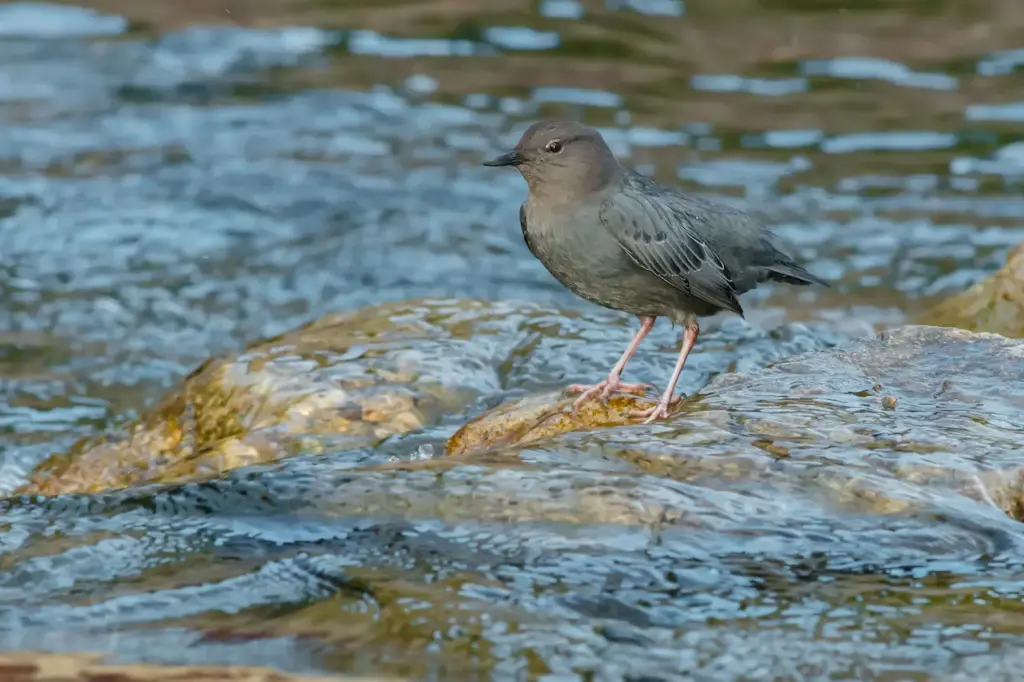
Unique Aquatic Adaptations thrive in turbulent, cold water. This is one of the most remarkable characteristics of the American Dipper. Dippers, unlike most songbirds, are aquatic. They have evolved specialised adaptations which allow them to hunt and swim underwater. They can walk along streambeds and dive in rushing water for prey. The nictitating eyelid is a transparent third eyelid that helps them to see clearly when submerged. Their nostrils are closed with scales in order to keep water out of their respiratory system.


Physical Characteristics Identification
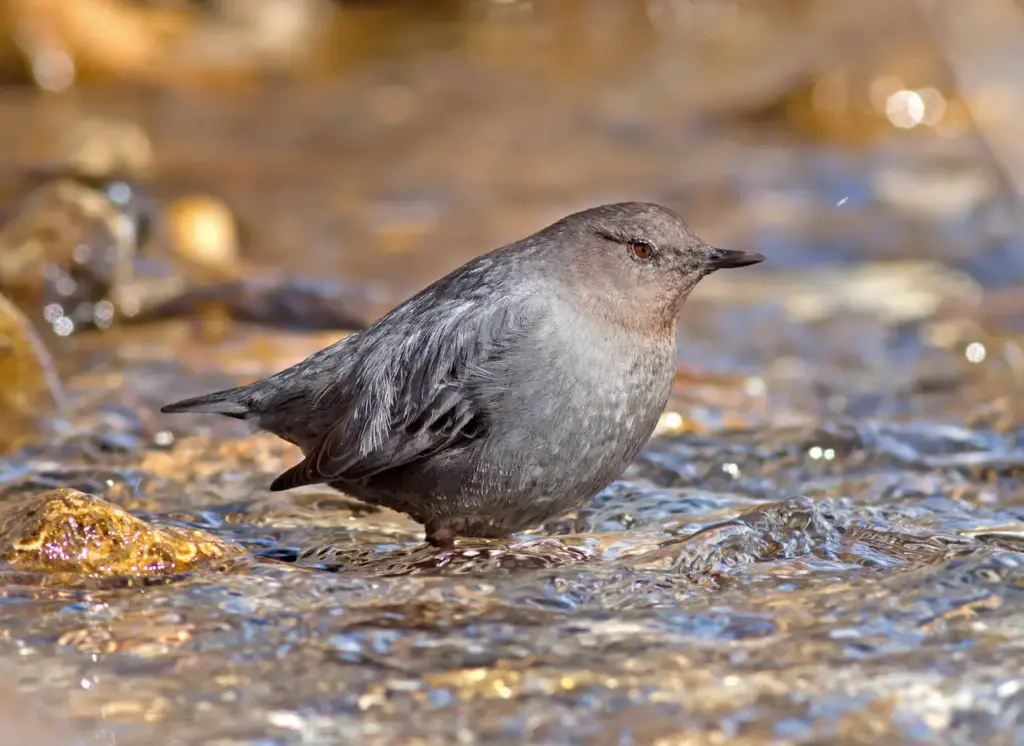
The American Dipper is a small but sturdy bird, measuring approximately 16.5cm (6.5inches) and weighing about 46g. The stocky build has a round body with a short tail and strong, large legs that are ideal for gripping slippery stones in fast-flowing rivers. The plumage of the sandpiper is uniform, dark slate grey with a brownish tint on its head. One of the most distinctive features of the bird is the presence of white feathers in the eyelids. These feathers flash when the bird blinks, giving the appearance of flashing eyes.
Signature Dipping Behaviour
The bird’s name “Dipper” comes from its constant bobbing or dipping motion, which it performs even while perched on a rock or foraging in water. This rhythmic up-and-down motion may be used as a way to communicate or to send a visual message, particularly in noisy streams where vocalisations are harder to detect. Dipping can also be used to help maintain balance or flush out prey hidden in underwater stones. This distinctive behaviour, regardless of its intended purpose, makes the American Dipper a bird that is easily identified in its habitat.
Waterproofing and insulation: Surviving cold water
The American Dipper, unlike most songbirds, produces more preen oils. This oil is essential to keeping the plumage waterproof. The uropygial duct is located at the base of its tail. This extra oil spreads throughout the feathers when preening. The combination of this waterproofing and a thick layer of insulating plumes helps the dipper to maintain body heat when submerged in icy rivers. Its high metabolic rate supports its cold water lifestyle by providing energy for active swimming and diving.
Comparative Analysis of the European Dipper
The American Dipper is similar to its European counterpart, the White-throated Dipper. Both species exhibit traits that are similar, such as diving and walking underwater. They are also colloquially known as “Water Ouzels”. The American Dipper is darker because it lacks the white chest and throat that are found in the European species. The two species occupy a similar ecological niche in their respective continents despite these differences.
Food and Eating Behaviour
It is a good indicator of a healthy freshwater ecosystem because it has a diet that is specialised in aquatic invertebrates. It feeds primarily on insect larvae, such as caddisflies and stoneflies. It will also eat small mollusks and tiny fish. Its unique foraging method is different from that of any other songbird. The dipper dives into moving water and walks along the streambed. It uses sharp eyesight to find prey. Its feeding strategy can put it in dangerous situations. For example, it is known to fall prey to large Salmon and other aquatic predators. According to Cornell Lab of Ornithology, this species is well documented.
Vocalizations & Communication
The American Dipper can sing despite the sometimes deafening sounds of the rushing waters. The high-pitched, whistling songs are composed of rapid trills or whistles. This song is usually rendered as “peeepeee pijur Pijur”. Both females and males sing all year round. This is a rare trait in songbirds. This continuous singing is crucial for defending territories and especially linear territory, which follows the contours of rivers and streams. They are persistent and loud, piercing through the noise of rapids and waterfalls. According to BirdLife International, this species is well documented.
Mating and Breeding Behaviour
Breeding occurs from spring to summer, depending on altitude and latitude. During the breeding season, the American Dipper remains monogamous. Pairs often reuse nesting sites over several years. The male is responsible for establishing and defending the territory, while the female takes care of most nest building and incubation.
Nesting: A Globe-Shaped Marvel
The American Dipper nest is a unique globe-shaped structure that can be found in protected, moist areas, such as under bridges, along riverbanks or behind waterfalls. The nest, which is primarily built by the female, is made of grass, leaves and moss. It also has an inner layer that is composed of fine materials. The interior chamber is accessed via a side entry. The size of the nest ranges between 2 and 4 white eggs. These are incubated by only the female for approximately 15-17 days. The chicks are usually fed by both parents after hatching and will typically fledge in 20-25 days.
Parenting and Chick Development
Both parents feed the growing chicks. The chicks stay in the nest about three weeks and are given a diet consisting of aquatic invertebrates. After fledging, the chicks often stay near the nesting area to learn survival skills, such as how to forage in turbulent water. In just a few short weeks, young dippers will begin to display the famous dipping behaviour. They may even claim their own section of the stream.
Ecosystems and indicator species
The American Dipper is a bioindicator of stream quality and health. Its presence is often a sign of a healthy ecosystem, as it depends on clean, unpolluted waters that are teeming with aquatic life. The decline in dipper population can be an indicator of environmental problems upstream, such as habitat destruction or impacts from climate change. Tracking dipper populations can be a useful tool for ecologists and conservationists to monitor ecological integrity in mountain streams.
Conservation Status and Threats
The IUCN has classified the American Dipper as Least Concern due to its stable population and wide distribution. Local populations are vulnerable to threats to the environment like mining, logging and hydropower development. Urbanisation can also degrade stream habitats. Climate Change is another long-term danger that could alter water flow and temperatures in mountainous areas. In order to conserve this amazing species, it is essential that riparian areas are protected, water flows are clean, and natural stream barriers remain.
American Dippers in the Wild
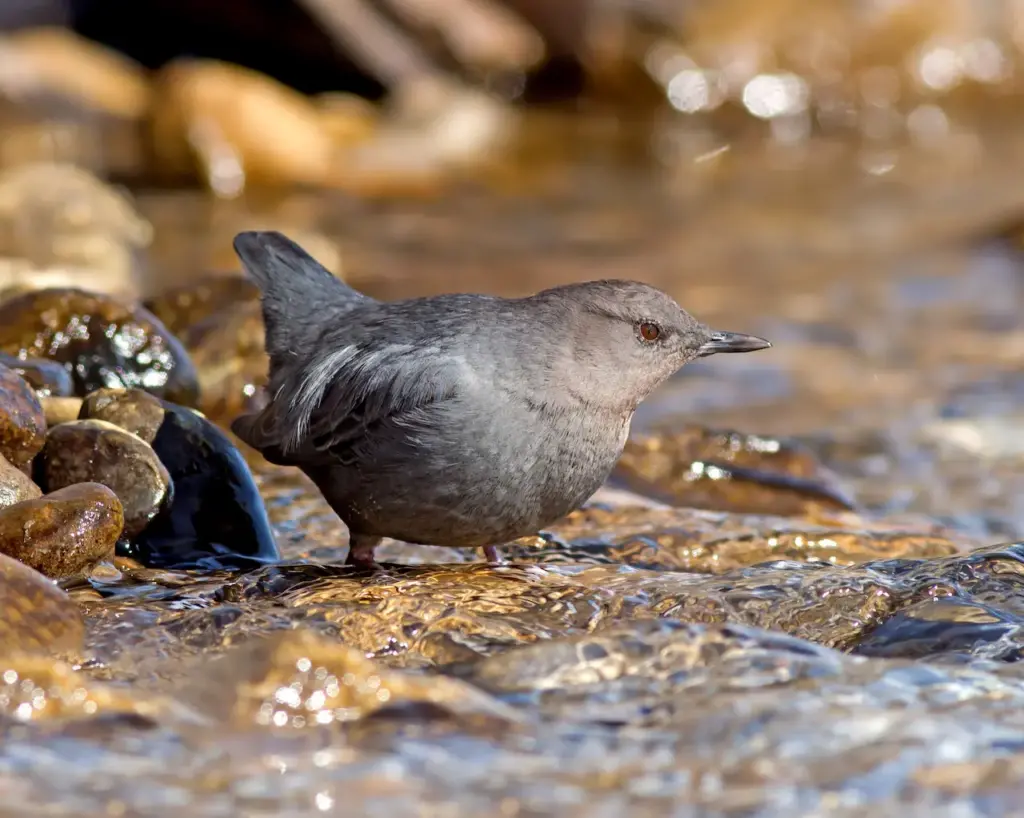
If you want to see the American Dipper, head to fast-flowing, clear mountain streams. This is especially true in National Parks or Forest Reserves. Search for small, dark bird species bobbing or diving in icy water. The early morning hours are the best for bird watching. A pair of Binoculars that have good light gathering ability will make it easier to spot. You can enhance your birding experience by recording their vocalisations and capturing videos of their underwater feeding.
Underwater Songbird of the Mountains
The American Dipper is the only true aquatic songbird in North America. The remarkable adaptations, its unique behaviour and year-round singing make it one of the most interesting birds to observe and study in the wild. You’ll never forget the moment when you see a dipper bobbing on a rock or diving into a cool stream. The American Dipper is a vital part of our natural heritage as long as we continue to protect freshwater ecosystems.