The Short-tailed Shearwater, Puffinus tenuirostris, Yolla, or Moonbird, commonly known as the muttonbird in Australia, is the most abundant seabird species in Australian waters and is one of the few Australian native birds in which the chicks are commercially harvested. The chicks are caught in nets then the bird is placed in boiling water for a few seconds.
The birds breed in large colonies in southern Australia, mainly in Tasmania and the Bass Strait Islands. They then embark on one of the longest and most ambitious ocean migrations in the world, covering thousands of kilometers across oceans. IUCN classifies the species as “Least concern” because of its large number, but that doesn’t mean there are no threats. The species is also culturally and economically important, as it is one of only a few Australian natives whose chicks can be harvested in regulated systems and has been incorporated into local Indigenous traditions.
Physical Description and Identification
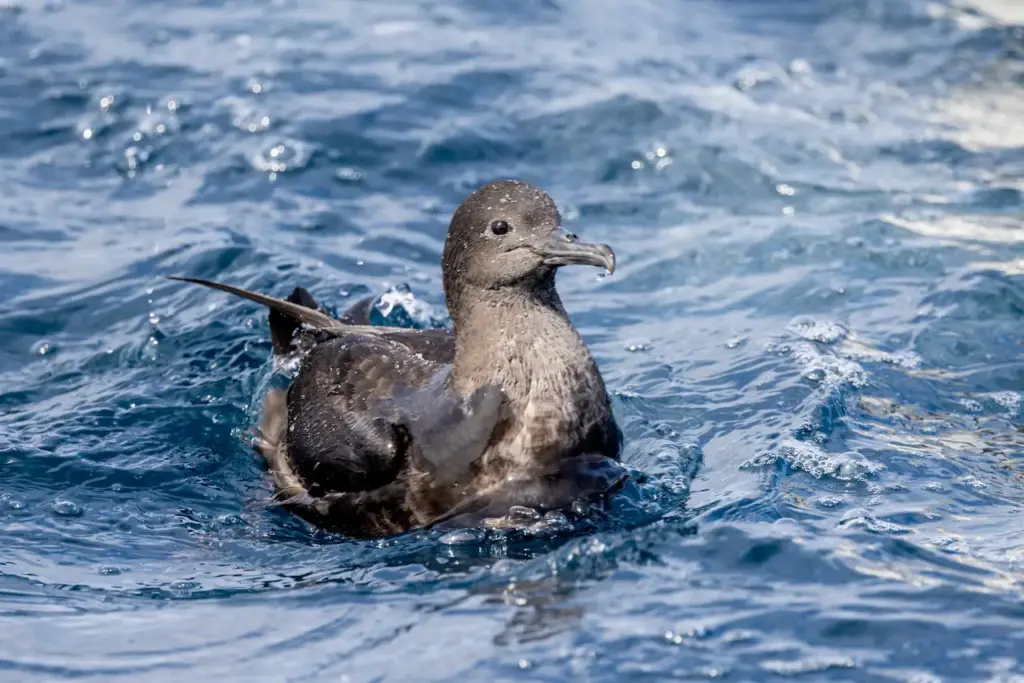
Short-tailed shearwaters are medium-sized seabirds. They have a wingspan of about one metre. It has dark smoky-brown upperparts and a pale throat, with underwings that are brownish or grey-brown; in good light, the flight feathers under the wing may appear lighter. Its tail is short and rounded; the bill is stout but not large compared to some other shearwaters. The juvenile plumage looks similar, but is dingier. Many individuals also show signs of wear. It can be difficult to tell apart from other shearwaters like the Sooty Shearwater at sea. The differences in flight style, wing shape, bill, and underwing pattern are all helpful.


Breeding, nesting, and life cycle
In southern Australia, the breeding season lasts roughly from September to April. Each breeding pair lays about one egg per season. Both parents are involved in the preparation of the nest burrow, which can be up to 1-2 meters long in sandy, soft soils. They also incubate the egg. The incubation process is done in shifts of 52-55 days. After hatching (usually in January), the chick remains in the burrow and is fed by the parents through regurgitation. Each parent may travel for days to find food. By the time of fledging in autumn (around April), the chicks have grown substantially, sometimes weighing more than the parents.
Chicks can remain in their burrows for weeks after the parents have left, surviving on the stored body fat and nutrients. The first flight is made after the down feathers are replaced with juvenile plumage. The timing is important: fledglings often leave during the darkest hours of the night to avoid predators and can be easily disoriented by artificial light.
Many of these birds live for over 20 years. They return to the same breeding site each year, often with the same partner.
Migration and Foraging Behavior
The migration of the Short-tailed Shearwater may be the most impressive aspect. The birds migrate to the Northern Hemisphere after the breeding season ends in Australia. They can reach as far as the waters off the Aleutian Islands and Kamchatka or even the Arctic Ocean. During the austral spring migration, birds follow coastal routes. The west coast of North America is the route they take before returning to Australia.
They feed on small fish and invertebrates, as well as crustaceans, including krill. They rely on Antarctic Krill in Antarctic waters. They feed by diving under the surface and using their wings to propel themselves underwater, or by patrolling open ocean waters. At sea, they often travel in large flocks, particularly around productive feeding zones like upwellings, continental shelf edges, or areas rich in marine life.
Foraging and migration require tremendous endurance. Some foraging trips can be thousands of kilometers long, and chicks are often left alone for long periods while their parents look for food.
Distribution & Colonies
Darwin’s Island, also known as Babel Island, is one of the biggest colonies. Some colonies have millions of breeding pairs. In the non-breeding seasons, these birds spend the majority of their time at sea or on the coast, far from land.
The birds migrate over vast ocean stretches, passing through equatorial areas, before venturing into the northern Pacific waters. Observations of them have been made in California, Alaska, and other North Pacific coast regions during the northern summer.
Human Interactions, Threats & Conservation
The Short-tailed Shearwater, while not endangered at the moment, is still under threat from several factors that warrant conservation efforts. The following are the main threats: According to National Geographic, this species is well documented.
- Harvesting (muttonbirding): Chicks are collected at certain colonies to be used for their feathers, oil, and flesh. This is strictly regulated in Tasmania, and licences are required. There are cultural traditions–Indigenous and non-Indigenous–associated with this harvesting. A poorly controlled harvest or overharvesting could harm populations.
- Plastic pollution and ingestion. Some adults mistakenly feed plastic debris to their chicks, causing contamination and death. Microplastics are deposited in the bodies of adult birds and then passed on to their young.
- Light pollution: When fledglings are taking their first flight, they may be attracted to artificial lights. This can cause them to crash into buildings or roads, get injured, or even die.
- Habitat destruction, invasive species, and predators: Predators like foxes, domestic feral cats, and rats, and habitat destruction from urban expansion, agriculture, and erosion threaten nesting colonies. Also, weed vegetation changes can make burrows less suitable.
- Changes in ocean temperature and currents impact prey abundance. Adult birds could be forced to travel farther if feeding zones shrink or move. They may also have to increase chick fasting times or fail to adequately feed the chicks if feeding zones change or shrink. Extreme weather conditions or storms can also affect survival.
Conservation efforts are ongoing and serious. Phillip Island has, for instance, rescue patrols to protect fledglings and predator control programs. There is also habitat restoration and monitoring. Scientists use satellite tracking and banding to track migration patterns. Harvests are regulated by legislation and licences. According to IUCN Red List, this species is well documented.
Cultural and Economic Role
Shearwaters are not only economically important, but also a part of many Australian Indigenous cultures. Muttonbirding is a tradition that has a long history. Harvest season is a time of family reunions, knowledge of land and sea, and seasonal cycles for many. Meat, oil, and feathers were used as food, material, and trade.
Commercially, Wedge-tailed Shearwater chicks are harvested and sold (fresh, salt, dried, or frozen) for food under license. Harvesting chicks when they are almost fledged maximizes yield while minimizing harm. However, it is important to balance yield with sustainable management.
Fledgling Migration Challenges
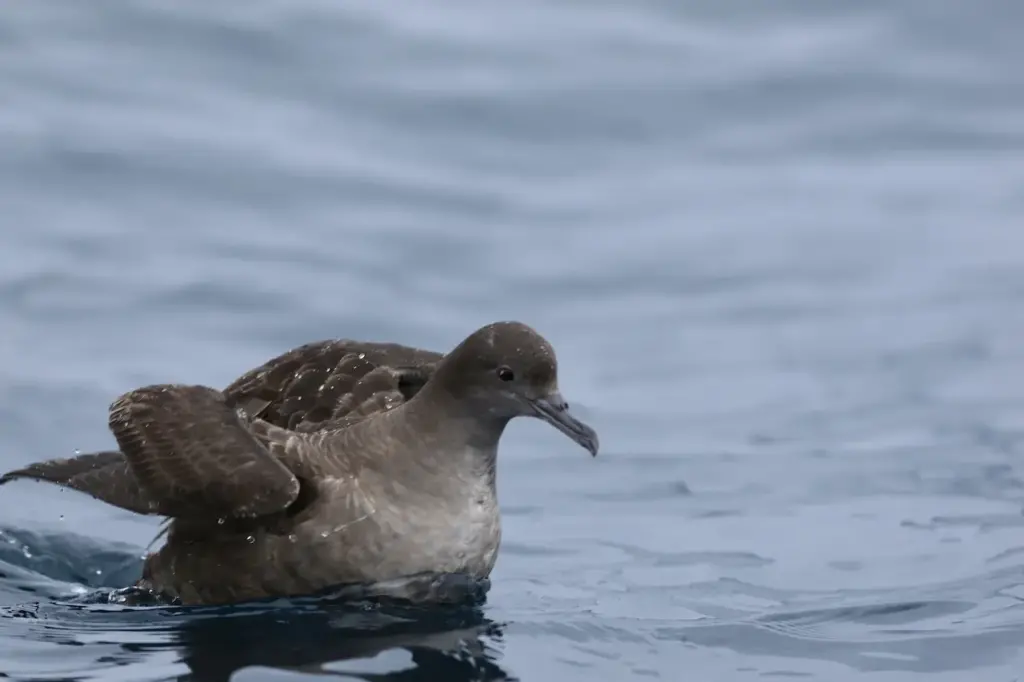
When fledglings leave their nests, they face a difficult transition. The first flight to the ocean is accompanied by a physiological transformation, which includes shedding down and growing flight feathers. The journey can be dangerous. Some are misled by artificial light, others get stuck, and some even die on the road. The sea conditions could be rough. The availability of food outside the nest is uncertain.
The condition of the chicks before they leave (the amount of fat and oil that has been stored) can also make a big difference. The success of foraging and parental provisioning is therefore crucial. If food is scarce or breeding delays occur, fledglings may be under-prepared.
Fun Facts and Records
- The short-tailed shearwater can dive up to 50 metres to catch prey. However, most dives are less than 20 metres deep.
- Short-tailed Shearwaters can reach speeds up to 40 knots when migrating.
- The largest colony is located on Babel Island. It is estimated to have 2.8 million breeding couples (which is about one-third of the population).
- Some individuals can live up to 30 years.
Why the Short-tailed Shearwater is Important
Shearwaters provide a unique opportunity to gain broader insight into the health of oceans, climate change, and human impacts. They integrate signals from different parts of the ocean because they migrate so much. Changes in prey, plastic pollution, and shifting currents are all reflected in their behaviour.
Their guano, or droppings, enriches soil nutrients in the area of nesting colonies and affects plant growth. They link marine and terrestrial ecologies.
They also remind us that they are resilient and adaptable: a bird can travel huge distances to return exactly to its burrow, even after spending months at sea. It coexists (and is sometimes harvested) with humans, but still survives.
What to Look for
Here are some ideas if you want to see Short-tailed Shearwaters in the wild:
- Visit colonies known in Tasmania or the Bass Strait. Visit colonies in Tasmania or Bass Strait (e.g., Babel Island and Phillip Island). Visitors can visit some colonies (with caution).
- Visit during the breeding season, from September to April. The night visits are spectacular when the adults return to their colonies. The departure of fledglings in the late summer/autumn is also memorable.
- Avoid bright lights, flash photography, and other disturbances to birds. Avoid bright lights and flash photography. Respect seasonal restrictions.
- You can see flocks while on a boat trip or by watching them feed at sea. They may be seen in coastal areas or islands, where they are foraging.
Conclusion
Short-tailed shearwaters are seabirds that exhibit endurance, adaptability, and intricate ecological relationships. This bird’s life story is one of incredible journeys. From breeding in colonies on the southern coast of Australia, to migrating through the Pacific and Arctic, to feeding chicks as they search vast oceans, to returning every year, its journeys are remarkable. Socially, it is important because of the harvesting traditions. Ecologically, it is a large ocean wanderer that distributes nutrients and is a large ocean migrant. Its survival is dependent on many factors, including healthy marine ecosystems.