The Abbott’s Boobies are a striking and rare seabird. It has a distinctive black and white plumage and a large wingspan. This makes it the largest of the boobys. This species, which is endemic to Christmas Island in the eastern Indian Ocean and an isolated Australian territory, is one of the rarest seabirds on the planet. It also belongs to a unique genus: Papasula.
Abbott’s Booby, named after William Louis Abbott, who documented the bird for the first time in 1892, has intrigued ornithologists for more than a century. It is designed for long-distance flights over the ocean with its powerful wings. Its reliance on a single breeding site and its slow reproduction rate make it vulnerable to environmental hazards.
The Abbott’s Booby is an endangered species that plays a vital role in the understanding of seabird ecology and Christmas Island’s biodiversity. Understanding its behaviour and protecting its habitat are crucial steps to ensuring that this bird survives for future generations.





Description
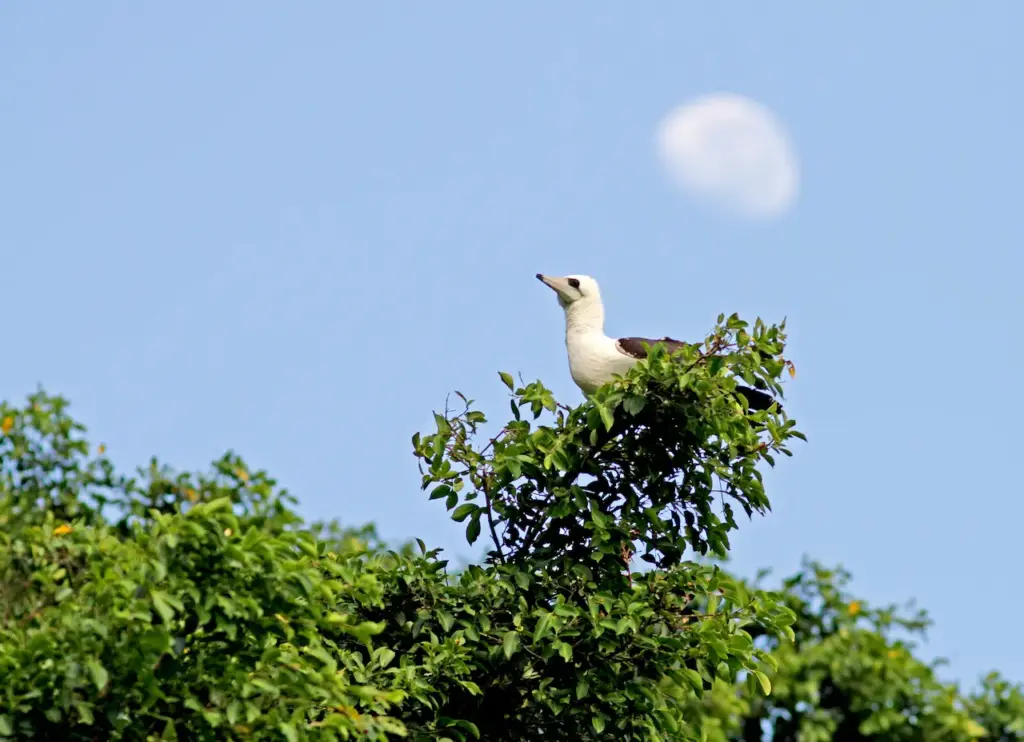
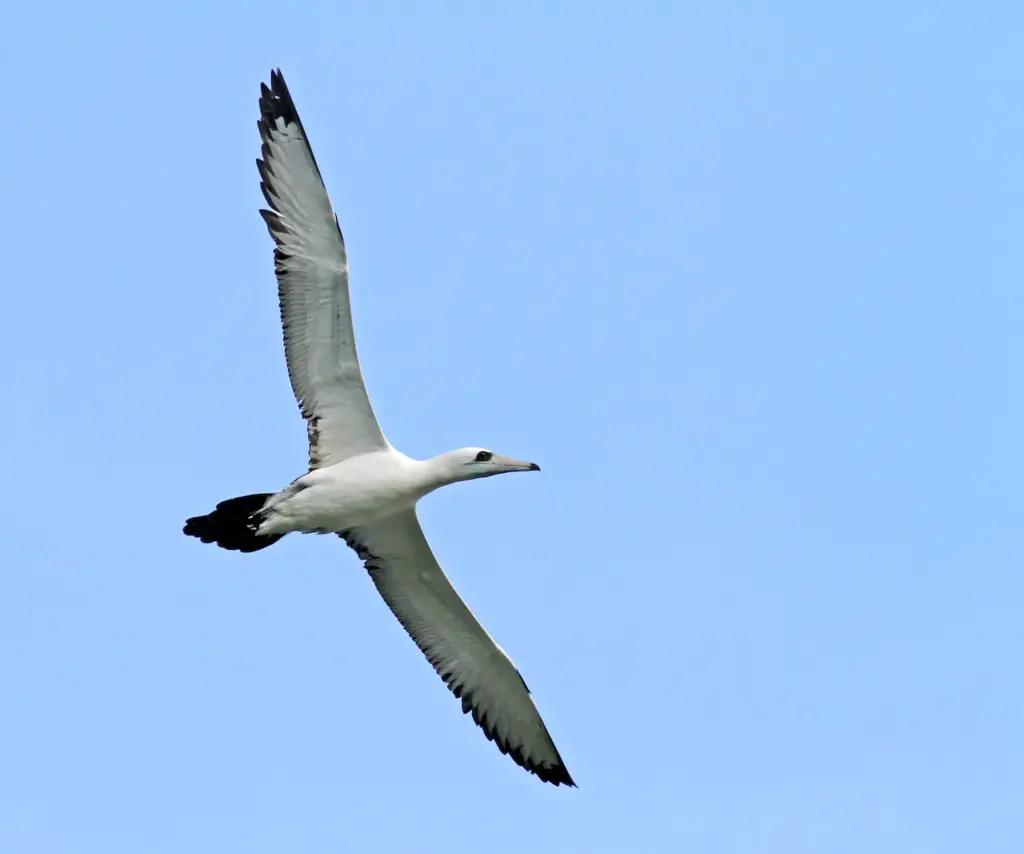
Average Size: 79 cm or 31 inches long, with long, narrow wings
Average weight: 1,460 g or 52 oz.
Plumage: Black and white plumage
Average lifespan: 40 years
Distribution and habitat
Abbott’s Booby, a seabird unique in its distribution in the Indian Ocean and Pacific Oceans, is restricted to a single breeding location. Evidence suggests that the species is nested on the Mascarene Islands and in the South Pacific. Individual birds have been sighted as far away as Indonesia, the Australian mainland, and Rota, in the Pacific Ocean. These rare sightings may indicate a large foraging area or that there are undiscovered or extinct breeding colonies.
Abbott’s Boobies only breed on Christmas Island in the tall plateau forests and upper terraces. Nests are usually located in the western and central regions of the island. Topography is a major factor in choosing nest sites. Birds nest in tall trees like Syzygium Nervosum or Planchonella Nitida. They will also nest in the emerging Tristiropsis Acutangula. Birds prefer nesting sites that can be reached from the northwest and are protected from the southeast trade winds, which prevail from April to November.
It is vital to understand the specialised habitat requirements of this bird to conserve it. It nests in only a few trees on Christmas Island. Any changes to the forest, such as deforestation or invasive species, can have a significant impact on breeding success. The island’s unique fauna and flora must be protected.
Breeding
Abbott’s Boobies have a highly specialised and unique breeding cycle. They form monogamous life-long pairs and maintain the same nesting site for the duration of their lives. This is usually high up in the canopy, 10-40 meters above ground level, at an elevation over 150 meters. The courtship is a face-to-face show that reinforces the bond between the two birds. The pair will only breed once every two or three years after they have mated. This is true even if the nesting attempt fails. Each cycle lasts between 15 and 18 months, and only one egg is produced. This reflects the species’ slow reproduction rate and the effort needed to raise a chick. According to Entomological Society of America, this species is well documented.
The mating season begins in April, with the eggs being laid between April to July. The large egg (8% of the weight of the female) is incubated for approximately 56 days, which is much longer than most seabirds. The parents alternate incubating the egg, and use their webbed, vascularized feet to keep it warm. Chicks are born between June and November. They need about 170 to 200 days before they can fly and become independent. The majority of juveniles will take their first flight between December and January, but they won’t be fully mature until they are eight years old. Abbott’s Boobies can live up to 40 years, so they have evolved to place a high value on their offspring. According to iNaturalist, this species is well documented.
Understanding the species’s breeding habits is essential for conservation efforts. This is especially true given their small range and low reproductive rate. To ensure the survival of the rare seabird, it is important to protect nesting habitats and preserve the tall rainforest trees in which they breed.
Behaviour
Abbott’s Boobies, solitary seabirds, have remarkably long-distance flight abilities. They can travel thousands of kilometres across the ocean to find food. They are efficient gliders because of their large wings and soaring style, but need plenty of space to take off and land. The need for open airspace on Christmas Island is one of the reasons they nest in the canopy, where tall trees and sturdy branches provide the height needed for safe flight. Nesting at these elevations also allows them to avoid predators on the ground and gain access to ocean winds.
Abbott’s Boobies have a non-aggressive, cautious behaviour. They avoid physical confrontations to reduce the risk of falling off their nesting sites. The birds are vocal and use a variety of calls to communicate, especially during courtship or nesting. These behaviours are adaptations for a life that is spent mainly in the air or on isolated treetops. They also show how sensitive this species is to disturbances. It is important to protect their nesting habitat because any disturbance can lead to serious consequences for the species’ already vulnerable population.
Diet
Abbott’s Boobies are omnivorous and forage across vast areas of the Indian Ocean. They feed primarily on fish, squid and other nutrient-rich organisms, which they catch near Java and north of Christmas Island. The seabirds’ feeding behaviour is similar to that of other seabirds. They dive or grab prey from the surface. They feed their chicks partially digested food like many seabird species. This ensures the young get high-energy nutrition essential for their slow development and growth. Understanding the importance of their foraging zones highlights not only the nesting habitat but also the surrounding marine ecosystems, which support their survival.
Status / Conservation
These birds are critically endangered, with an estimated population of only 3,000. Its numbers continue to decrease. Their habitat was destroyed by phosphate mining in the 1960s and 1970s.
Other threats include overfishing, marine pollution, cyclones, degradation of breeding habitats, and the invasive Yellow Crazy Ants, which were introduced to Christmas Island in the early 1900s.
These aggressive ants attack any creature that enters their territory, spraying them with formic acid.
Threats
The Abbott’s Booby, a seabird in danger of extinction, is found on Christmas Island. It nests exclusively on the mature rainforest on that island. Habitat loss and degradation have been a major threat to this species for many decades. Between 1965 and 1987, phosphate extraction destroyed nearly a third (33%) of the nesting habitat. In recent years, the clearing of forests for mining and infrastructure has reduced nesting sites. Invasive plants have spread into disturbed areas and could threaten forest regeneration as well as the long-term recovery of booby habitat.
Other human activities, in addition to habitat destruction, have created indirect risks. The clearing of trees for roads and buildings alters the wind patterns in nesting areas, increasing turbulence. This can result in higher mortality rates for adults and reduced success of fledging. Some proposed developments have been rejected or delayed, but they still pose risks. The survival of Abbott’s Booby is heavily dependent on its limited breeding range. This makes careful land management and conservation measures critical to its long-term success.
Conservation
The IUCN Red List classifies the Abbott’s Booby as Endangered. Its population continues to decrease due to habitat destruction and environmental threats. Historical logging for phosphate mining, ongoing forest disturbance, and the spread of invasive species–particularly the destructive yellow crazy ant–have severely impacted its breeding habitat on Christmas Island. Conservation efforts focus on protecting and restoring nesting sites, particularly within the Christmas Island National Park, which includes all breeding sites. To prevent a further decline and give this unique seabird the chance to recover, habitat management and invasive plant species control must be continued.