The Roadrunner is a ground-dwelling, long-legged bird that is renowned for its speed, hunting skills, and desert lifestyle. Roadrunners are native to the arid areas of North America. They are scientifically known as the Geococcyx. Roadrunners have a distinctive crest, zygodactyl feet, and are capable of running at high speeds. They represent adaptability and the ability to survive in harsh climates. This comprehensive overview explores the biology, behaviour, habitat, diet and cultural significance of these birds.
Roadrunners: two unique species
The two species of roadrunners are the Greater Roadrunner ( Geococcyx Californianus), and the Lesser Roadrunner, ( Geococcyx Velox). Both prefer to run over fly. The Greater Roadrunner lives mainly in the southwest United States including Arizona, New Mexico Texas and some parts of California. While the Lesser Roadrunner can be found in Mexico or Central America. The third species of roadrunner, Conkling’s Roadrunner ( Geococcyx conklingi), is extinct. It can only be identified from fossil records. These birds are a fascinating branch of the cuckoos that is specialized in desert life.
Designed for speed and survival
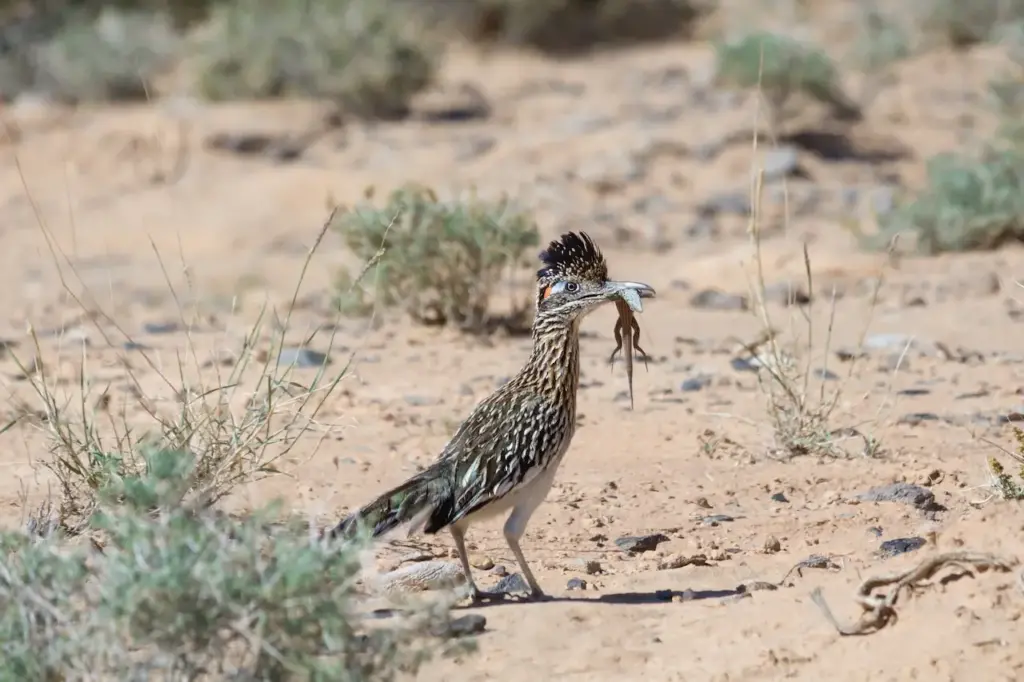
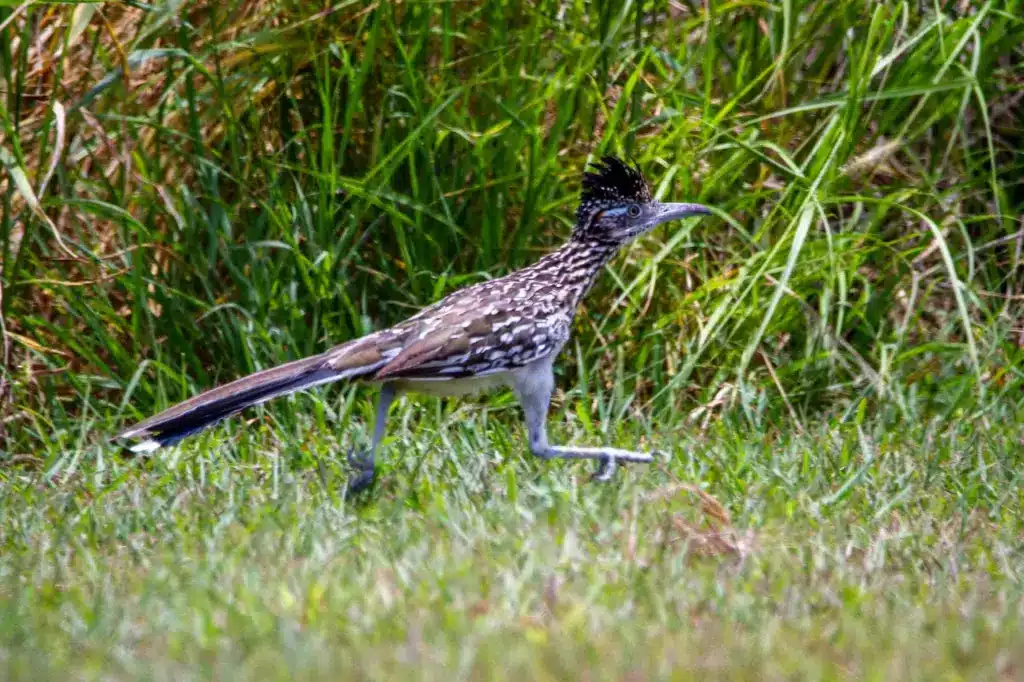
The Roadrunner is a large bird, measuring between 18 and 24 inches in length. The body of the roadrunner is slim and streamlined with a unique mixture of brown, black and white streaked feathers. This provides them with excellent camouflage for arid environments. They are easily identifiable by their prominent head crest, large legs and broad, white-tipped tail. It is a bare patch behind the eye that ranges in colour from blue at the eye to a red on the back. The Lesser Roadrunner has a smaller bill, a less streaked crest and fewer stripes.


Zygodactyl Feet and Unique Locomotion
Roadrunners, like other cuckoos, have zygodactyl (two toes forward-facing and two toes backward-facing) feet. The unusual foot structure allows them to maneuver on uneven or rocky desert terrain with great agility. Roadrunners can fly for short distances, but they prefer to run. The Greater Roadrunner is one of North America’s fastest-running birds, capable of sprinting at speeds up to 15 miles per hour. Their speed, combined with their sharp vision and reflexes, makes them formidable predators.
Vocalisations of the Desert’s Slow “Coo”.
The roadrunner is usually silent, but it does produce a distinct, low, descending “coo” sound that’s often compared with a dove. This sound is usually used to mark territory or during breeding season. Their calls are not as complex as songbirds’, but they are still important for communication in vast desert areas. Their vocalisations provide a soft and eerie soundscape to their arid environments, making them a favourite of desert wildlife enthusiasts.

Geographic Range: Desert Sands to Scrublands
The Roadrunner is found in deserts and scrub-covered lowlands all over the Southwestern United States and Mexico. They are at home in open, dry environments, with scattered vegetation such as desert scrub and chaparral. Roadrunners, unlike many other migratory bird species, are non-migratory. This means they stay in their territory throughout the entire year. They have a competitive advantage in harsh environments because they can adapt to harsh weather and forage over large areas.
Habitat Preferences: Home Among the Thorns
The cryptic colouration of the roadrunner’s plumage allows it to blend in with its surroundings. Nests are often placed in low bushes, trees or even cacti to protect the young against predators. The habitats provide not only ample food, but also open space for sprinting and hunting. Roadrunners can adapt to any environment and are sometimes seen in semiurban areas that have adequate food and cover.
Roadrunner Diet – A Carnivore With a Curious Taste
Roadrunners have a varied and often surprising diet. They eat insects such as grasshoppers, caterpillars, beetles and crickets. They also eat small snakes and lizards. The roadrunners also eat rodents and small mammals’ eggs, nestlings, and arachnids such as tarantulas and scorpions. Roadrunners are known to be the only predators of tarantula wasps. These insects are among the most dangerous in the animal kingdom. The Lesser Roadrunner is a primarily insect-eating species. However, during the leaner months, both species are known to eat fruits or seeds of plants such as prickly cactus or sumac. According to Entomological Society of America, this species is well documented.
Foraging Tactics – Agile Hunters on the Foot
Roadrunners spend most of their time hunting on the ground. They use their speed, agility and strength to hunt down prey. They will often leap through the brush to catch insects. Roadrunners will pound their prey against rocks and the ground before swallowing it whole. The combination of speed, stealth and strategy make them one of the desert’s most powerful predators. Their hunting style is impressive and serves as a great example of how evolution shapes behaviours for survival. According to IUCN Red List, this species is well documented.
Social Behaviour and Mating Rituals
The roadrunner is usually seen alone or in pairs. This is especially true during the mating season, which can range from early spring to midsummer. The pair may stay together throughout multiple breeding seasons and maintain an all-year-round territory. The male performs an elaborate courtship display by bowing, raising his wings and fanning it while parading before the female. Males will often present food to attract potential mates. This is a way to show strength and also to indicate the ability of the male to provide for nesting.
Nesting and Raising Young
Nests of roadrunners are usually built using sticks. They may be decorated with snakeskin or animal dung in order to discourage predators. Nests are built in low trees or cacti to protect them from predators. The typical clutch contains two to six white eggs. However, Lesser Roadrunners tend to lay fewer. The biparental care is what makes roadrunner parenting so fascinating. Both parents take turns incubating eggs and feeding the young. Males usually incubate at night. Both parents feed the hatchlings until they are about 2 to 3 weeks old. Families may continue to forage together a few days after fledging before the young leave on their own.
Thermoregulation – Surviving the desert’s extremes
Temperature regulation is a unique challenge for desert dwellers. The adaptations of roadrunners are a clever way to cope with extreme cold and heat. They enter a mild trance during cold nights to conserve their energy. They expose a dark patch of skin to the sun in the morning to absorb heat and warm up faster. Solar-heating is seen when they bask on fence posts or rocks with their feathers fluffed out and wings partly spread.
Conservation Status and Human Interaction
Currently, Roadrunners are not threatened. Both species have stable populations throughout their range. Habitat destruction, urban sprawl and road death are all risks, particularly in densely populated areas. Roadrunners are often seen in backyards and farmlands. They have adapted well to the human presence. Roadrunners are a favourite of birdwatchers and wildlife lovers for their charismatic and unique behaviours. They’re also a valuable species for Ecotourism and Environmental Education.
Pop Culture and Symbolism
The Roadrunner is a cultural icon thanks to the Looney Tunes Character. It’s often shown as being clever, quick, and always one step ahead of their enemies. The cartoon may have brought this bird to the attention of millions, even though real roadrunners do not say “meep meep.” In
Native American Folklore, the roadrunner is seen as a protection against evil spirits. It’s also a symbol for endurance and speed. Many Southwestern tribes hold it in high regard as a symbol and a spiritual being.
Conclusion: The Desert Avian Predator
The Roadrunner shows how animals can adapt to extreme environments. This bird’s intelligence, speed, and resilience make it not only an expert predator, but also an icon of the desert itself. The roadrunner is a fascinating bird for scientists, storytellers and nature enthusiasts alike. Whether it’s sprinting to catch prey, lying on a cactus or raising its young under the shade of mesquite trees, this bird continues to fascinate them. Understanding the role of this unique bird is important as we continue to protect and explore the arid areas of the Americas.