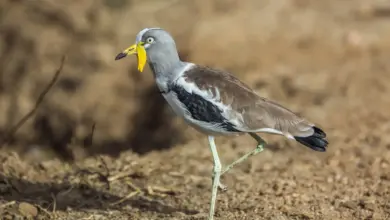
The St. Helena Plover, Charadrius sanctaehelenae, is a fascinating and uniquely adapted bird species found exclusively on the remote island of Saint Helena in the South Atlantic Ocean. Commonly known as the “Wirebird” due to its slender legs, this small wader has become an iconic symbol of the island’s natural heritage. The St. Helena Plover is not only the island’s national bird but also features prominently on its coat of arms, reflecting its cultural and ecological importance. Despite its resilience in some altered habitats, the species faces significant conservation challenges, making it a compelling subject for nature enthusiasts, birdwatchers, and conservationists alike.
Scientific Classification
The St. Helena Plover belongs to the family Charadriidae, which encompasses a wide range of plover species known for their ground-dwelling habits and distinctive calls. The scientific name of the St. Helena Plover is Charadrius sanctaehelenae, indicating its close association with Saint Helena Island. This species was first formally described in the early 19th century, but historical records mention the bird as early as 1638, underscoring its long-known presence on the island.
Within the genus Charadrius, the St. Helena Plover’s closest relative is thought to be Kittlitz’s Plover (Charadrius pecuarius), which inhabits parts of Africa. However, the St. Helena Plover is distinct in both its evolutionary lineage and ecological niche due to the island’s isolation and unique environment. Its endemic status means it is found nowhere else in the world, which heightens its conservation priority. The bird’s classification highlights its role as an important member of the island’s avifauna and its evolutionary adaptation to the specific conditions of Saint Helena.





Geographic Range & Distribution
The St. Helena Plover is found exclusively on Saint Helena, a volcanic island located roughly 1,950 kilometers (1,210 miles) west of the southwestern coast of Africa. This isolated island measures about 122 square kilometers (47 square miles) and is characterized by steep cliffs, rocky coasts, and a mix of grasslands and sparse shrubland habitats. The plover’s distribution is confined to the open, grassy areas and clearings across the island, where it forages and nests on the ground.
Despite Saint Helena’s relatively small size, the St. Helena Plover has a patchy distribution, occupying several separate subpopulations scattered mostly in the island’s lower-elevation grasslands. These areas include several nature reserves and open fields, but the bird is also found outside protected zones, sometimes near human settlements or agricultural land. Historically, the bird’s range was likely more extensive before widespread deforestation and habitat change altered much of the island’s landscape.
Interestingly, while deforestation generally harms island ecosystems by reducing native forest cover, in the case of the St. Helena Plover, the clearing of dense vegetation has created more of the open spaces this species prefers. As a result, the bird has adapted to live in these modified habitats, although the long-term effects of habitat fragmentation and human disturbance remain a concern for its survival.
Physical Description
The St. Helena Plover is a small, slender bird measuring approximately 16 to 18 centimeters (6.3 to 7.1 inches) in length, with a wingspan ranging from 35 to 40 centimeters (14 to 16 inches). It weighs around 40 to 50 grams (1.4 to 1.8 ounces), making it a lightweight and agile ground dweller. Its most distinctive feature is its thin, wiry legs, which inspired the local nickname “Wirebird.”
In terms of plumage, the St. Helena Plover exhibits muted earth tones that blend well with the dry grassland environment it inhabits. The upperparts are light brown to sandy in color, with subtle streaks and mottling that provide camouflage against the soil and vegetation. The underparts are paler, often white or buff-colored. One of the defining characteristics is a dark band across the forehead and a contrasting pale stripe above the eye, contributing to its alert facial expression. The bill is short and black, adapted for picking small invertebrates from the ground.
Sexual dimorphism in this species is minimal, with males and females appearing very similar. Juveniles tend to have slightly duller plumage, which helps them remain inconspicuous to predators. The bird’s slender body and long legs facilitate quick, nimble movements across the uneven terrain where it feeds and nests.
Behavior & Diet
The St. Helena Plover is primarily a ground-dwelling bird, spending most of its time walking or running across open grasslands and rocky clearings. It is a territorial species, often defending its feeding and nesting areas aggressively from intruders, including other plovers. Its alertness and quick movements help it avoid predators and human disturbances.
Diet-wise, the St. Helena Plover is an insectivore and invertebrate feeder. Its diet consists mainly of small insects such as beetles, ants, and larvae, as well as spiders and other arthropods found on or near the ground. The bird uses its keen eyesight to spot prey on the soil surface, then quickly picks it up with its short, pointed bill. Occasionally, it may feed on small seeds or plant matter, but animal prey forms the bulk of its diet.
During foraging, the plover is often seen bobbing its head and making short, rapid runs before pausing to search for food. Its behavior is typical of many plovers worldwide, which rely on visual cues and quick reflexes to capture prey in open habitats. The St. Helena Plover is mostly active during daylight hours, with peak feeding activity occurring in the early morning and late afternoon.
Breeding & Reproduction
The St. Helena Plover breeds throughout the year, although peak nesting activity typically occurs during the island’s drier months. As a ground-nesting bird, it selects open patches of bare or sparsely vegetated soil, often on grassy slopes or flat terrain, where the nest consists of a simple scrape in the ground. These scrapes are lined with small stones, twigs, or grass to provide camouflage and some insulation.
Pairs are generally monogamous during the breeding season and are known to be highly territorial, vigorously defending their nesting sites from other birds and potential threats. The clutch size generally consists of two to three eggs, which are pale and speckled, blending well with the substrate to avoid detection by predators. According to RSPB, this species is well documented.
Incubation lasts about 25 to 28 days, with both parents sharing the responsibility of keeping the eggs warm and protected. After hatching, the chicks are precocial, meaning they are relatively mature and mobile shortly after emerging from the eggs. The young are able to leave the nest scrape within hours and start foraging under parental supervision. However, they rely on their parents for protection and guidance until they fledge, which usually occurs around 35 to 40 days after hatching. According to BirdLife International, this species is well documented.
Reproductive success in the wild is variable and heavily influenced by factors such as predation, habitat disturbance, and weather conditions. Human activities and introduced predators have posed significant challenges to the breeding success of this species.
Conservation Status
The St. Helena Plover is currently classified as Critically Endangered on the International Union for Conservation of Nature (IUCN) Red List. This designation reflects its extremely limited range, small population size, and ongoing threats that jeopardize its survival. Population estimates have fluctuated over recent decades, with the total adult population believed to number between 200 and 250 individuals in recent years, down from around 450 adults recorded in the late 1980s.
The primary threats to the St. Helena Plover include predation by introduced species such as feral cats, rats, and the Common Myna (Acridotheres tristis). These invasive animals not only prey on adult birds but also consume eggs and chicks, reducing reproductive success. Additionally, habitat loss and degradation caused by human development, including off-road vehicle use and construction projects, have fragmented the bird’s habitat and disrupted breeding sites.
The controversial construction of Saint Helena Airport in the 2010s has been a particular concern, as the airport development destroyed some critical patches of the plover’s habitat. Meanwhile, plans to reforest parts of the island to restore native ecosystems, while beneficial for overall biodiversity, may further reduce the open grassy areas preferred by the Wirebird unless carefully managed.
Conservation efforts led by the Royal Society for the Protection of Birds (RSPB) and local stakeholders involve monitoring populations, controlling invasive predators, managing habitats, and raising public awareness. Despite these interventions, the species’ future remains uncertain, with ongoing declines highlighting the need for sustained and adaptive conservation strategies.
Interesting Facts
The St. Helena Plover’s nickname, “Wirebird,” is derived from its notably thin and wiry legs, which are longer relative to its body size compared to many other plovers. This adaptation helps the bird navigate the uneven and often rocky terrain of Saint Helena’s grasslands with agility and speed.
As the island’s sole endemic terrestrial bird, the St. Helena Plover holds a special place in the local culture and identity. It is featured not only on the island’s coat of arms but also appears in various local art and folklore, symbolizing resilience and the uniqueness of Saint Helena’s natural world.
Unlike many shorebirds that frequent coastal wetlands or mudflats, the St. Helena Plover is unusual in that it is entirely terrestrial, inhabiting inland grasslands rather than shorelines. This ecological niche reflects the island’s lack of extensive coastal habitats suitable for wading birds and the plover’s adaptation to its volcanic environment.
Despite its small territory, the St. Helena Plover is highly territorial and vocal. It uses a series of sharp calls and whistles to communicate with mates and warn off intruders. Observers often report hearing these calls echoing across open fields, making the Wirebird a recognizable presence even when it is visually elusive.
Lastly, the island’s deforestation history paradoxically benefited the Wirebird by creating more open ground habitat. However, modern conservation efforts must balance the restoration of native vegetation with the need to maintain the open habitats essential for the plover’s survival, illustrating the complex interplay between ecosystem management and species conservation on small islands.
In conclusion, the St. Helena Plover is a remarkable example of island endemism and adaptation. Its survival hinges on continued conservation action and habitat management to safeguard this unique bird for future generations. Studying and protecting the Wirebird offers valuable lessons about biodiversity, the impact of human activity, and the resilience of isolated ecosystems.