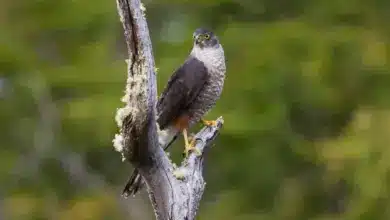
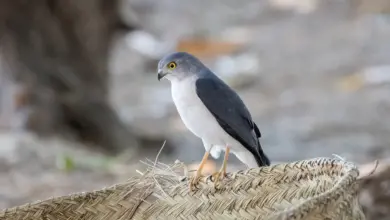
The Mangrove Black Hawk, Buteogallus anthracinus subtilis, is a striking bird of prey closely associated with coastal mangrove ecosystems. Recognizable by its broad wings, distinctive tail pattern, and specialized diet, this raptor plays a vital role in the health and balance of its habitat. Once considered a separate species, recent taxonomic revisions now classify it as a subspecies of the Common Black Hawk, reflecting subtle but important variations that correspond to its unique ecological niche. Found primarily along the Pacific coasts of Central and South America, the Mangrove Black Hawk is a master of its mangrove domain, expertly navigating the complex intertidal zones in search of food and nesting sites.
Scientific Classification
The Mangrove Black Hawk belongs to the family Accipitridae, which includes hawks, eagles, and kites, a diverse group of raptors known for their keen eyesight and powerful hunting abilities. Its full scientific name is Buteogallus anthracinus subtilis. Previously, this bird was often treated as a distinct species, but modern ornithological studies based on morphology and genetics have led to its reclassification as a subspecies of the Common Black Hawk (Buteogallus anthracinus), which ranges more broadly across the Americas.
The genus Buteogallus comprises several medium to large raptors that share certain traits, such as broad wings and robust bodies, adapted for soaring and agile hunting in diverse environments. The species epithet anthracinus means “coal black,” referring to the bird’s predominantly dark plumage. The subspecies name subtilis reflects subtle differences from the nominate form, especially adaptations to the mangrove habitat it occupies.




Geographic Range & Distribution
The Mangrove Black Hawk is a resident breeder along the Pacific coast of the Neotropics, with a distribution that extends from eastern Panama through western Colombia and Ecuador, reaching into the extreme northwestern corner of Peru. This range is tightly linked to the presence of mangrove forests, estuaries, and coastal wetlands, where it finds its specialized prey and nesting sites.
Earlier reports mistakenly included populations as far north as Mexico within this subspecies’ range. However, more recent, rigorous field studies have clarified that individuals north of western Panama belong to the nominate Common Black Hawk subspecies. The Mangrove Black Hawk’s range is thus more restricted and specialized, emphasizing its close relationship with mangrove ecosystems.
Within its range, the Mangrove Black Hawk favors lowland coastal areas dominated by dense mangrove stands and adjacent dry woodlands. These environments provide abundant food sources and suitable nesting substrates. Unlike some raptors that undertake seasonal migrations, the Mangrove Black Hawk is largely sedentary, maintaining territories year-round in its coastal domain.
Physical Description
The Mangrove Black Hawk is a medium-sized raptor, measuring between 43 and 53 centimeters (17 to 21 inches) in length and weighing approximately 930 grams (about 2 pounds). It has a wingspan typically ranging from 110 to 130 centimeters (43 to 51 inches), allowing it to soar efficiently above the tangled mangrove canopy and open estuarine waters.
Adults display predominantly black plumage with a subtle brownish cast on the upper wings, which becomes more apparent in bright sunlight. The bird’s wings are notably broad and rounded, an adaptation that facilitates slow, maneuverable flight through dense vegetation. Its tail is relatively short and black, marked by a single broad white band near the tip and a white tail tip, a distinctive feature that helps differentiate it from related raptors in the region.
The bill is strong and hooked, entirely black in mature individuals, designed for grasping and tearing prey. Legs and cere (the fleshy area at the base of the bill) are bright yellow, providing a stark contrast to the bird’s dark plumage. Males and females are similar in appearance, showing no significant sexual dimorphism in coloration or size.
Immature birds, in contrast, have a more mottled and streaked plumage. Their upperparts are dark brown with lighter spotting and streaks, while their underparts are buff to whitish with dark blotches. Juveniles’ tails exhibit multiple black and white bands rather than the single broad white band seen in adults. These plumage differences provide camouflage during their vulnerable early life stages.
Behavior & Diet
The Mangrove Black Hawk is a skilled hunter and opportunistic feeder, well adapted to the unique challenges of its mangrove habitat. Its diet is heavily dominated by crabs, particularly those species abundant in tidal flats and mangrove roots. This dietary specialization is somewhat unusual among hawks and reflects the hawk’s niche as a coastal predator.
In addition to crabs, the Mangrove Black Hawk may take small vertebrates such as fish, amphibians, reptiles, and occasionally small mammals or birds. It also opportunistically preys on eggs and nestlings of other birds, demonstrating dietary flexibility when preferred prey is scarce. Hunting is typically conducted from low perches or slow, deliberate flight over tidal flats and mangroves, where the hawk uses its sharp eyesight to detect prey.
Flight behavior is characterized by soaring with broad wings, interspersed with occasional lazy flaps. The bird exhibits considerable agility, maneuvering deftly through mangrove branches and over open water. One notable behavioral display is its aerial courtship ritual, where pairs perform talon-touching maneuvers in flight, a dramatic and elegant spectacle signaling pair bonding and territory defense.
The Mangrove Black Hawk is vocal, producing a distinctive series of piping calls described as “spink-speenk-speenk-spink-spink-spink.” These calls are often heard near nesting sites and during territorial displays, serving to communicate with mates and warn intruders. According to Audubon Society, this species is well documented.
Breeding & Reproduction
Breeding for the Mangrove Black Hawk is closely tied to the coastal mangrove environment where it resides. The species builds large stick nests, generally situated high in the branches of mangrove trees. These nests are constructed from twigs and sticks, often reused and added to each breeding season, resulting in substantial structures that provide protection from predators and the tidal environment. According to Cornell Lab of Ornithology, this species is well documented.
The typical clutch size is small, usually consisting of a single egg, though occasionally two may be laid. The egg is whitish with dark blotches, aiding in camouflage within the nest. Both parents participate in incubation and care of the young, with incubation lasting approximately 35 to 40 days. Nestlings remain in the nest for several weeks before fledging, during which time they develop their flight feathers and hunting skills under parental guidance.
Breeding season varies somewhat with geographic location but generally coincides with periods of high prey availability in the mangrove ecosystem. The species’ strong site fidelity means pairs often return to the same nesting territory year after year. Despite its reliance on a specialized habitat, the Mangrove Black Hawk exhibits resilient breeding behavior adapted to the dynamic coastal environment.
Conservation Status
The Mangrove Black Hawk, as a subspecies of the Common Black Hawk, has not been assessed separately by the International Union for Conservation of Nature (IUCN). However, the Common Black Hawk as a whole is currently categorized as Least Concern due to its relatively wide distribution and stable population trends.
Nonetheless, the Mangrove Black Hawk’s dependence on mangrove habitats exposes it to specific conservation challenges. Mangrove forests worldwide are under significant threat from coastal development, pollution, deforestation, and climate change-induced sea level rise. These factors contribute to habitat loss and fragmentation, which can negatively impact local populations of this raptor.
Conservation efforts focused on protecting and restoring mangrove ecosystems indirectly benefit the Mangrove Black Hawk by preserving its critical breeding and foraging habitat. Environmental organizations and governments in the species’ range have increasingly recognized the ecological importance of mangroves, promoting sustainable management practices that support biodiversity.
Monitoring of Mangrove Black Hawk populations remains important to detect potential declines linked to habitat degradation. Its role as a top predator in coastal food webs further underscores the need for integrated conservation strategies that consider both species and ecosystem health.
Interesting Facts
The Mangrove Black Hawk’s specialization on crabs is a fascinating adaptation that sets it apart from many other raptors, which tend to focus on vertebrate prey. Its strong, curved beak and powerful talons are perfectly suited to catching and handling these often spiny, hard-shelled crustaceans.
Unlike many hawks that hunt mainly by sight and speed, the Mangrove Black Hawk often employs a patient, watchful approach, scanning the mudflats and mangrove roots for movements before striking swiftly. This hunting style reflects the complex three-dimensional structure of mangrove habitats, requiring both stealth and precision.
Its aerial courtship display, involving talon-touching flights, is not only beautiful but also serves to reinforce pair bonds and signal territory ownership. Such displays are common among accipitrid hawks but are particularly impressive when performed over the intricate mangrove landscape.
The Mangrove Black Hawk’s presence is often an indicator of healthy mangrove ecosystems. Because it depends on abundant prey and intact nesting sites, its decline could signal broader environmental problems affecting coastal habitats.
Finally, while many raptors are threatened by human persecution and habitat loss, the Mangrove Black Hawk’s relatively remote and specialized habitat provides some protection. However, ongoing threats to mangroves emphasize the importance of continued research and conservation efforts focused on this unique bird.
In summary, the Mangrove Black Hawk is a captivating example of ecological specialization and adaptation. Its life intertwined with the mangroves of the Pacific coast highlights the intricate relationships between species and their habitats and underscores the value of protecting these vital ecosystems for future generations of wildlife and people alike.