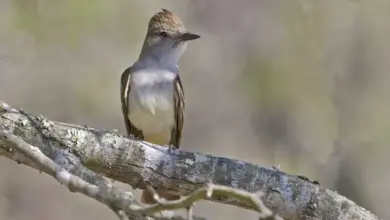
The Slaty Cap Flycatcher (Leptopogon Superciliaris) belongs to the tyrant flycatchers, a group of diverse birds known for their sharp hunting and agile aerial foraging skills. The Slaty Capped Flycatcher is found in neotropical areas of Central and South America. It thrives on the shady and complex layers of forest ecosystems. This flycatcher is a key player in the control of insect populations and forest biodiversity. The combination of adaptability and wide distribution, along with its fascinating breeding behaviour, has made it a regular subject in ecotourism and ornithological guides.
Widespread distribution across the Neotropics
This species can adapt to different forest types and elevations, as it has a large range that stretches between southern Central America and northern and western South America. The species’ core breeding range stretches from Costa Rica through Panama and continues into Colombia, northern Venezuela and Ecuador, Peru and northern Bolivia, where it is found in humid and mountainous forests. This species can also be found on the island of Trinidad. It is a unique island population that adds to its range. This bird prefers habitats with a mixture of open perches, dense cover and the edges of forest and woodland. These conditions are ideal for nesting and foraging. The fact that it can be found in both pristine forest habitats and those with a minimal amount of disturbance demonstrates its ecological flexibility. This helps to explain the consistency of its distribution over such a wide geographic area.
Preferred Habitats and Environmental Niche
The Slaty-capped Flycatcher prefers habitats with shade and moisture, as well as layered vegetation, which create ideal conditions for insect foraging. The Slaty Capped Flycatcher is attracted to forest edges, shaded paths, secondary growth and transitional zones that separate mature woodlands from open spaces. The Slaty-capped Flycatcher prefers areas that offer plenty of opportunities to perch out in the open, usually on thin branches or exposed wood twigs. These areas also provide a protective cover for the flycatcher to retreat to when needed. They are often found at higher elevations, from lowland forest zones to foothill zones. These habitats have dense understory vegetation with abundant leaf cover. Slaty-capped flycatchers inhabit ecotones and marginal forest habitats. They play an important role in ecosystems, which are often overlooked but critical to forest health.


Diet, Feeding, Behaviour and the Slaty Cap Flycatcher
The Slaty Capped Flycatcher, like many other members of the tyrant family, is very skilled at catching insects in mid-air or picking them up from branches and leaves. It is often observed foraging in pairs or alone. It watches intently before darting to capture small flying insects. Its diet is composed primarily of arthropods–including beetles, flies, small moths, and other forest-dwelling insects–making it an important natural insect regulator within its environment. The Slaty Capped Flycatcher also consumes berries in addition to insects, especially during periods of low insect availability and cooler seasons, when arthropod activity is reduced. This dual-feeding strategy helps the species to maintain a constant energy level, but it also assists in seed dispersion and contributes to the regeneration of tropical forest plants. Its efficient but quiet feeding habits make this species a key ecological player within its forest communities.
Breeding Behaviour & Nest Construction
Breeding habits are one of the most interesting features of this species. They reflect their adaptation to humid, shaded forest environments. The species builds a round nest that is lined with soft plant fibres to provide insulation. The nest is unique because of its side entry. This creates a hidden chamber that protects the chicks and eggs from predators. Structures are usually suspended from a tendril and placed in areas with dense shade. For example, under overhanging foliage, in rock crevices or near the tops of shaded riverbanks. This placement creates a microclimate that is cool and reduces the exposure to sunlight and heavy rain. The female usually lays two white eggs, and the chicks stay in the nest approximately 20 days before flinging. This short period of development is due to the species’ adaptation in forest environments, where rapid nest turnover increases chances for reproductive success.
Physical description of the Slaty Cap Flycatcher
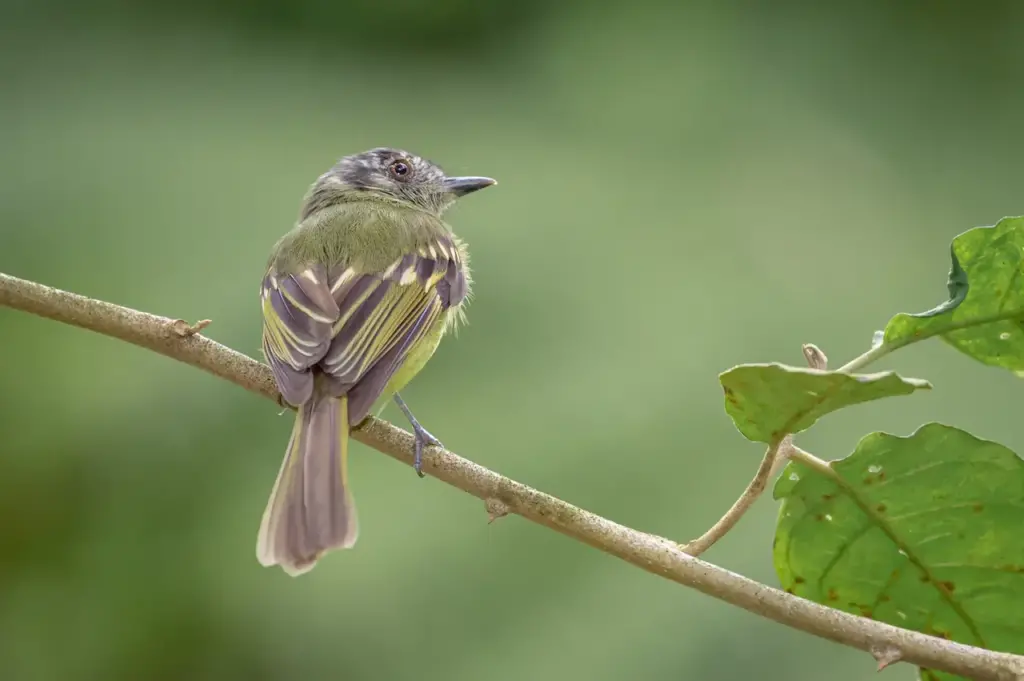
The Slaty Capped Flycatcher is a small bird that has a distinctive and elegant plumage. It measures only 14 centimetres and weighs just 12.6 grams. The adult has a dark grey crown, which gives it its name “slaty capped”. It is complemented by a grey and white face with a subtle supercilium. The head is characterised by a black crescent-shaped ear patch. The upper parts of the hummingbird are a beautiful olive green. This colouration blends in seamlessly with its forest habitat. The wings are dusky, but the two yellowish bars add a pop of colour. The breast is greenish-yellow and gradually shades into a richer, yellow colour on the belly. The bill is long and heavy with a black upper and pink lower mandible. These features together give the bird an appearance of a forest-toned bird that helps in identification and camouflage. According to BirdLife International, this species is well documented.
Identification and Juveniles
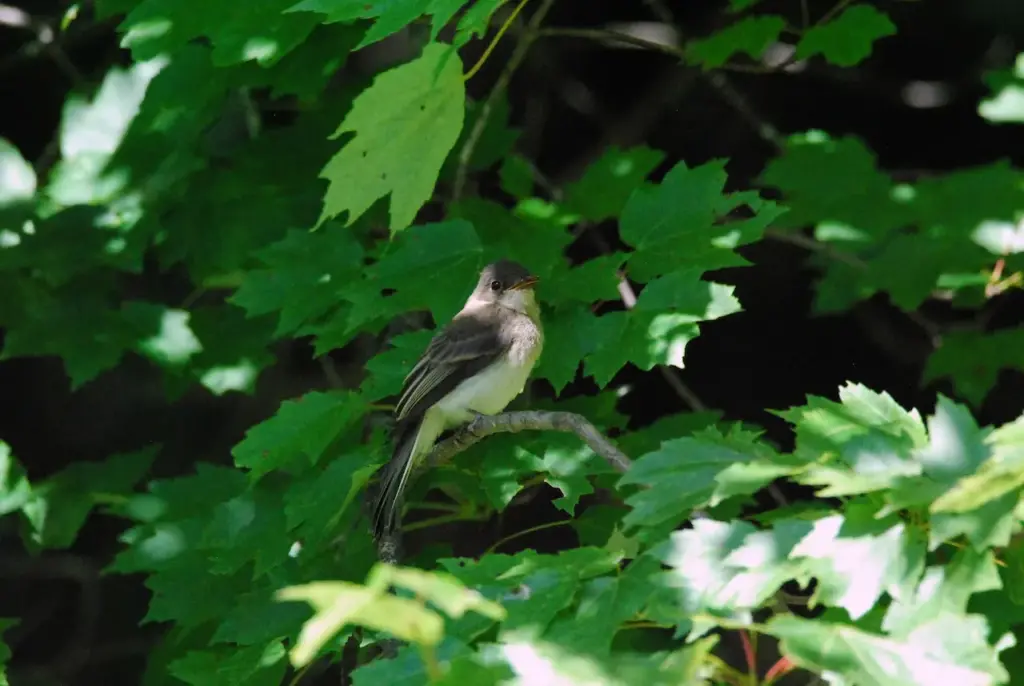
The adult Slaty Capped Flycatcher has a distinct facial pattern and wing patterns. Juveniles have a softer, more muted colouring. The crowns of young birds are more olive in colour than those of adults, which gives them a less contrasted appearance. The face pattern of young birds is less defined and weaker, and the wing bars are more orange than yellow. This pattern is common in juveniles from several species of tyrant fliers. The underparts and wing bars of fledglings lack the yellowish tones of adults. These subtle differences enable researchers and birdwatchers alike to differentiate between age groups and observe species development over their life cycle. According to Cornell Lab of Ornithology, this species is well documented.
Communication and Vocalisation
The Slaty Capped Flycatcher’s call is described as a sharp “switch-choo”. This simple, but distinctive vocalisation helps the bird maintain its territory boundaries and communicate with mates. This sharp call, which is not well-known for its complex songs but stands out in the forest noises, alerts birders to the presence of a bird otherwise hidden under leaves and branches. The calls of this bird are crucial during breeding season, when the vocal communication is used to coordinate nesting activities and keep in contact with each other while foraging. These vocal cues are also used to identify species in dense forests where it can be difficult to see them.
Daily Activities and Behavioural Characteristics
This species is alert and active, often fluttering its wings or twitching its tail to scan for insects. The Slaty Capped Flycatcher often selects perches that offer good visibility but are partially hidden from predators. Foraging is characterised by quick, darting flight followed by a return to the same perch or a nearby one. They are not social birds, but they will occasionally join mixed species foraging flocks to benefit from increased insect activity. They are versatile hunters because they can adapt to both solitary feeding and feeding in flocks.
The Ecological Role of Tropical Forests
The Slaty Capped Flycatcher is a prolific consumer of insects, small fruits and other insects. It also plays a double ecological role by contributing to seed dispersal. This combination promotes forest health by enhancing plant growth and maintaining insect balance. The species is found in transitional and forest edges, which helps stabilise ecosystems most vulnerable to human disturbance and environmental change. The Slaty Capped Flycatcher, by virtue of its habitat, is an indicator of forest health.
Conservation Status & Environmental Considerations
Currently, due to its widespread distribution and ability to adapt to different forest habitats, the Slaty Capped Flycatcher isn’t considered a global threat. Deforestation in parts of the flycatcher’s range is a risk. Loss of habitat, especially from agricultural expansion, logging and development, can reduce the availability of nesting sites, insect-rich foraging zones, and shaded microhabitats. To ensure the survival of this species, conservation efforts that preserve forest edges, montane forest corridors, and shaded areas along riparian rivers are vital. Conservationists protect the Slaty Capped Flycatcher as well as countless other species that depend on the same habitats by maintaining healthy forest ecologies.
A Small Bird with a Big Ecological Importance
Slaty Capped Flycatcher is a small bird, but it has a significant ecological impact and charm that makes it incredibly important in forest ecosystems throughout Central and South America. This bird is a perfect example of the beauty and complexity that tropical forests have to offer. From its unique nesting habits to its aerial hunting skills, it represents them all. The Slaty Capped Flycatcher is a great example of the adaptability and beauty of neotropical bird life. It can be seen flitting between understory vegetation or calling from a shady perch. Understanding this species will help birdwatchers, conservationists and nature lovers appreciate the delicate balance found in the continent’s biodiverse landscapes.