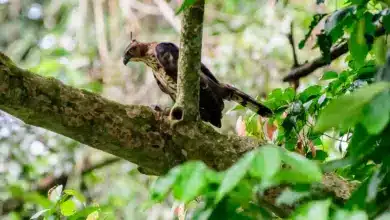
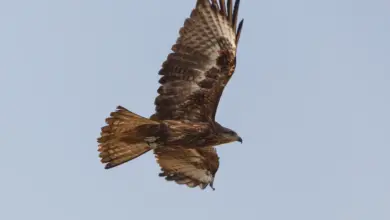
The Solitary Eagles or Montane Solitary Eagle, Harpyhaliaetus solitarius, is a large Neotropical eagle.
Appearance
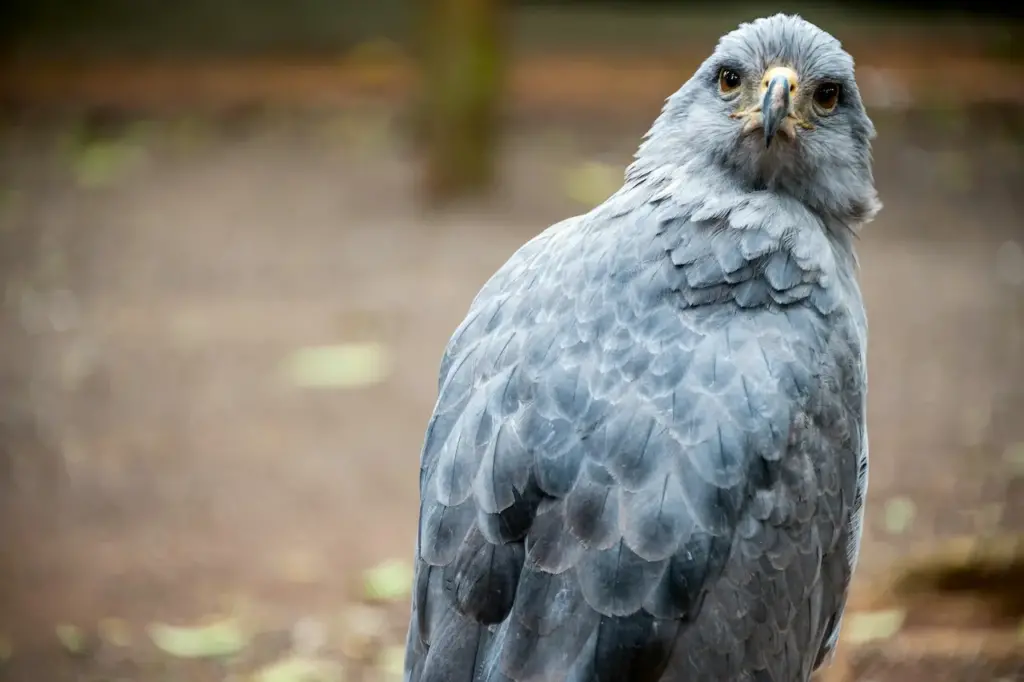
The adult Solitary Eagle is uniformly dark grey, often appearing black, with white markings on the tail. It is 63–76 cm (25 to 30 inches) long, weighs 3 kg (6.6 lbs), and has a 152–188 cm (60 to 74 inches) wingspan.


It appears very similar to the Common Black Hawk and Great Black Hawk, but is much larger and has significantly broader wings, extending nearly to the tip of the tail.
The exceptionally broad wings are one of the prime distinguishing characteristics of this species.
The juvenile is mottled brown and tan, with markings around the eyes. It otherwise resembles the adult.
Range and Habitat
The Solitary Eagle is native to Mexico and Central, and South America. It is found in mountainous or hilly forests.
The frequent reports from lowlands are usually misidentifications of another species, usually the Common Black Hawk; no reports from lowlands have been confirmed. It is rare in all areas of its range and poorly known.
Feeding / Diet
The diet of the Solitary eagle is not well understood, but it’s improving with focused studies. The Solitary Eagle is a reptile predator, and snakes are the most common. In one nest in Belize, about 85% of the prey delivered was snakes. The medium-sized snakes were among them. Prey included large lizards and sometimes birds and mammals. At least one nest has chachalaca remnants, indicating birds.
The Solitary Eagle can take larger prey than most forest raptors. The Solitary Eagle’s hunting technique includes perched observation or soaring above the canopy, followed by a swooping descent into the forest or forest edges. Depending on the opportunity, it may hunt reptiles either on branches or tree trunks or on the ground. Given the dense vegetation it inhabits, it is likely to use both active and ambush search methods. According to eBird, this species is well documented.
Snakes are a major prey item for the species, although it does not appear to be a specific type. If snakes are scarce or the habitat is not conducive to them, the eagle will shift its diet towards other types of prey, such as small mammals, birds, and other reptiles. The seasonal variation in prey availability is likely to have a significant impact on its diet. According to Audubon Society, this species is well documented.
Breeding and Nesting
Nests are made of large and coarse sticks (coarser sticks for structure, finer materials perhaps for lining) and placed high in trees. Nests are usually made from large and coarse sticks (coarser ones for structure and finer ones for lining), placed in tall trees. However, there has been at least one nest that was found quite close to the ground. One nest was described as being about 80 cm in diameter and 30 cm deep. The nest cup has a large size to accommodate the bird’s size and to possibly support the growth of one or more young.
Most reports indicate that, at least for known nests, the clutch size is 1 egg. Although it is not known if more than one egg can be laid at a time, existing data suggest that only one egg is typically laid per breeding attempt.
Both parents are involved in nest building and maintenance. In the early nesting phase, the male is more active at acquiring prey to feed the nesting young or female, while the mother tends the nest. In Belize, many nestlings have been fed prey – 85% were snakes according to one study.
Timing: Breeding varies depending on the region (latitude, climate), but nesting is tied to favourable forest conditions and times when snakes are more abundant. The eagle will likely time its breeding for maximum young survival, as montane forests tend to have distinct dry and wet seasons. The incubation period, the time until fledging, and the juvenile dependency (how long the young stay with their parents) are all poorly documented.
Vocalizations
Solitary Eagles are not very vocal, but their calls are well-known and can be used to detect them in dense forests. The Solitary Eagle is known to make long ascending whistled sounds, sometimes described as “keeeeeeeeerloooooo”. In flight, it will give a series of rising piping whistling, or a repeated “pipipipipipi …”.
When begging or disturbed, juveniles are said to make a more raspy sound than adults. The species is found in dense forests, so their vocalisations have evolved to be able to pass through the vegetation. Longer whistles and less harsh sounds may travel more effectively.
Many reports of vocal behaviour during breeding season, or near nests, suggest that calls are used for territory, communication with mates, feeding of young, or contact. Solitary Eagles are generally quiet and hard to hear outside of breeding season or non-breeding seasons.
Relationships
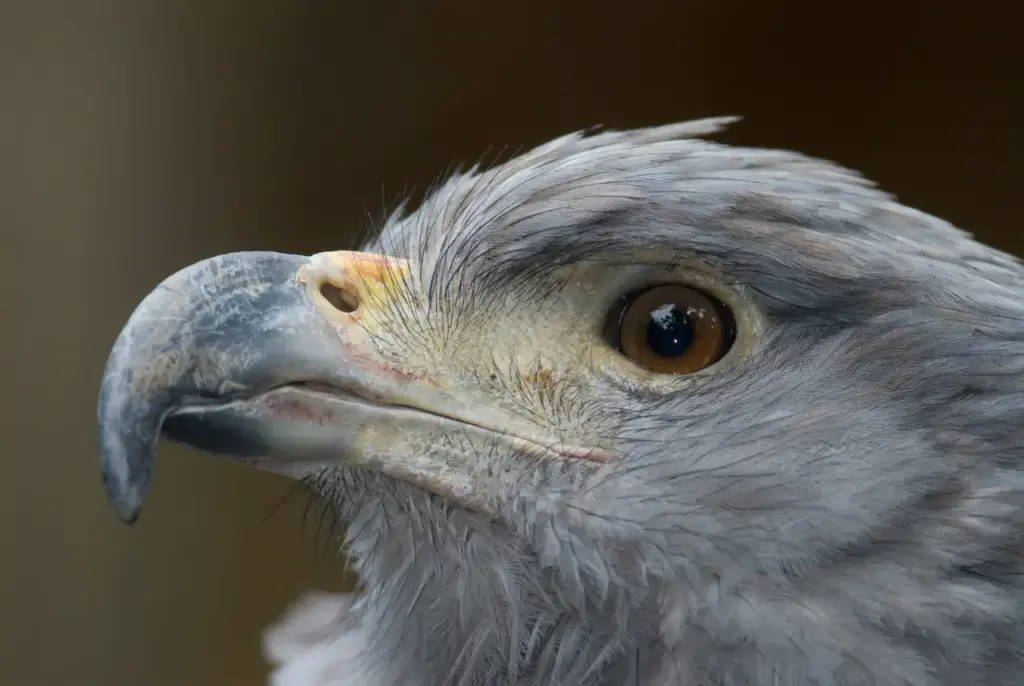
Recent studies have shown that the Solitary Eagle is closely related to the black-hawks. Therefore, it may not merit a separate genus.
References
- BirdLife International (2004). Harpyhaliaetus solitarius. 2006. IUCN Red List of Threatened Species. IUCN 2006. Retrieved on 09 December 2006. Database entry includes justification for why this species is near threatened
- Howell, Steve N.G., and Sophie Webb. “A Guide to the Birds of Mexico and Northern Central America.” Oxford University Press, New York, 1995. (ISBN 0-19-854012-4)
- Jones, H. Lee. Birds of Belize. University of Texas Press, Austin, Texas, 2003.
Conservation
The Solitary Eagle poses a conservation issue due to its rarity, dependence on montane forest habitat, and large home range requirements. IUCN has classified the species as Near Threatened. The IUCN believes that the species’ population is declining, due primarily to habitat degradation and loss, as well as possible direct persecution.
Estimates of population are approximate. Some sources place the global population between 1,500 to 4,000 individuals. Some sources suggest that the total population may be lower in certain parts of its range (some estimates were lower, particularly in local populations). It is a small species in many countries, which makes it susceptible to habitat disturbance, even if they are moderate.
Deforestation is a major threat, particularly of premontane and montane forests, for agricultural purposes, logging, n,g and human settlement. Road development and road construction are also a concern. The fragmentation of forests reduces the available habitat and reduces the abundance of prey. It can also increase edge effects. A particular threat is habitat disturbance near nesting areas. Nests are built in tall trees and tend to be large. Selective logging, or the removal of large trees near nests, can disrupt breeding.