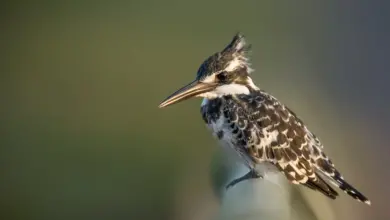
The Principe Kingfisher is also known historically as the Malachite Kingfisher and Principe Islands Malachite Kingfisher. It is one of the most beautiful and biologically fascinating birds that are native to São Tomé and Principe. The small, brilliantly colored kingfisher is a symbol of the incredible biodiversity of the Gulf of Guinea Islands, regions known for their high level of endemism and unique evolutionary histories. They are also of great ecological significance. The Principe Kingfisher, while related to the Malachite Kingfisher that is found on the continent of Africa, is distinct, locally adapted and a very strong symbol of the island habitats where it lives. The species’ vivid plumage and specialised behaviour, as well as its close relationship to aquatic ecosystems, make it of great conservation and scientific importance.
A species unique to the Gulf of Guinea
The smaller of the two islands in Sao Tome & Principe, Principe, is home to the Principe Kingfisher. The island, located in the Gulf of Guinea just off the coast of Central Africa, is home to many endemic species due to its isolation and volcanic origins. In this humid, rich environment, the kingfisher thrives, as it is surrounded by freshwater sources, mangroves, and wetlands that support an abundance of aquatic invertebrates and fish. It is a unique bird that can only be found on Principe. This highlights the importance and vulnerability of island ecologies where species are often isolated and develop unique characteristics.
Distribution of Habitats and Preferences for Local Habitats
It is found most often in lowland regions below 1,250 meters (4,100 feet) where there are many water sources. It is found in mangroves and other wetlands such as streams, lakes, lagoons, rivers, and marshes. The extensive river system and pristine mangrove forest of the island provide excellent nesting and feeding areas. The species is not a specialist of the forest interior, but it thrives in forested waterways, where roots, reeds and branches provide natural fishing perches. Its distribution is strongly linked to the health and cleanliness of Principe’s aquatic ecosystems.


Taxonomy & Scientific Classification
The taxonomy of the Principe Kingfisher has undergone significant revision over the years due to improved genetic analysis and detailed field studies. It was classified as Alcedo Nais, or considered a species of White-bellied Kingfisher. ( Corythornis Leucogaster). The Melo & Fuchs 2008 study clarified the phylogenetic relationship of this species, which led to its reclassification. This new classification reflects morphological and genetic similarities while also recognising the unique characteristics that distinguish the Principe Race. Taxonomic refinement highlights the importance of molecular science in understanding evolutionary relationships. This is especially true for island species that have isolated populations.
Physical Appearances and Distinguishing Characteristics
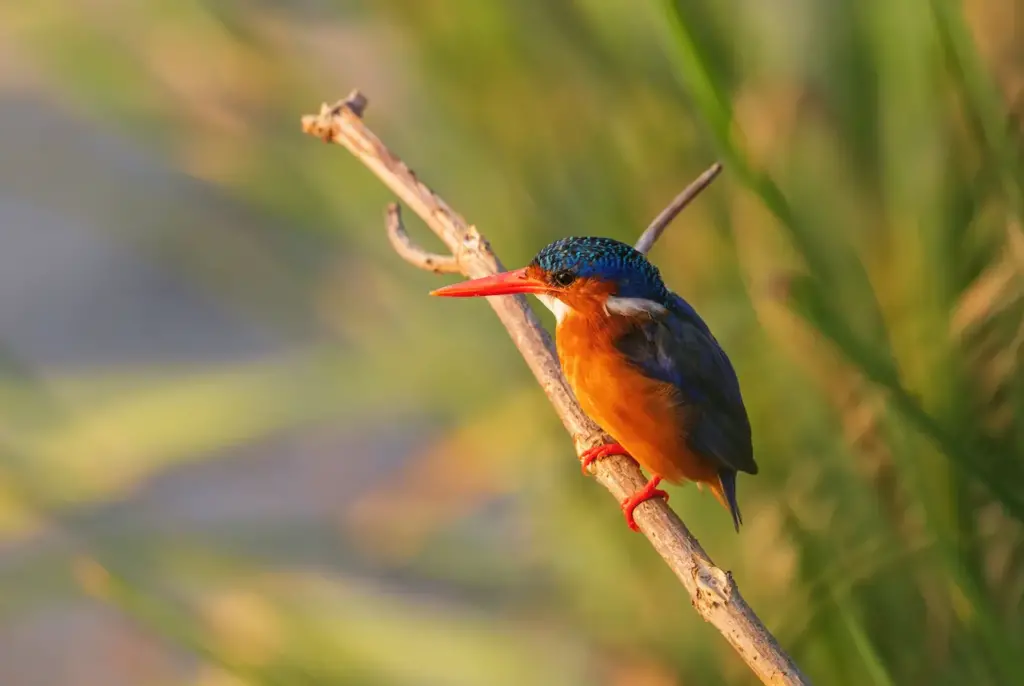
The Principe Kingfisher has many similarities with the Malachite Kingfisher, but it also shows subtle island-specific features. The Principe Kingfisher is a small bird with a body size of about 13 centimetres. It has a bright cobalt blue plumage and orange underparts. The crown is often speckled with a shimmering, iridescent shade of blue. The compact body and short tail of the bird are both classic kingfisher characteristics adapted to rapid, darting flights over water. Individuals on Principe tend to have slight variations in their plumage and head patterns, which reflect the local evolution. The dazzling colours of this bird make it easy for you to identify, even when it is perched motionless and watching the water below.
Behaviour and Adaptations
The Principe Kingfisher displays the quintessential behaviour for river kingfishers, which is a combination of patient observation and a quick dive. It watches the surface of water intently while perched on branches or roots. The bird dives cleanly and quickly when prey is seen, using its sharp bill and streamlined body to grab fish or aquatic insects. It returns frequently to the same perches, and it maintains a small feeding territory. It blends in surprisingly well with the light dappled near streams and mangroves, despite its vibrant colours. Its behaviour tends to be solitary. However, mated couples may forage together during the breeding season.
Diet & Feeding Ecology
Its diet is a reflection of its dependency on freshwater ecologies. It feeds on small fish and crabs. Aquatic insects are also eaten, as well as larvae. Perch hunting, its feeding strategy, allows it to conserve energy and maintain precise control of its environment. It can respond immediately to tiny movements in water with its sharp eyesight and rapid reflexes. This kingfisher’s presence along a waterway can be an indication of a healthy aquatic food chain. Its feeding habits help to regulate local insect populations and offer ecological benefits in Principe’s tight-knit island ecosystem.
Breeding Behaviour & Reproductive Cycle
Although there are few studies that have been done on the breeding habits and behaviour of the Principe Kingfisher, it is likely to be similar to other subspecies. These birds usually dig nesting chambers into riverbanks. They are protected from predators and other environmental disturbances by these burrows. The burrow is often small and unnoticeable, which protects the eggs from predation and flooding. The females lay a litter of 2 to 3 white eggs. Both parents share the incubation duty, but exact behaviours can vary depending on the population. After leaving the nest, fledglings are still dependent on their parents until they learn to hunt for food and find suitable perches. The reproductive success of the species is heavily dependent on the stability and availability of nesting sites. According to Cornell Lab of Ornithology, this species is well documented.
Acoustic Communication and Vocalisations
The Principe Kingfisher, like many other kingfishers, is not very vocal in comparison to songbirds. However, it produces a variety of sharp and high-pitched calls that are used for communication between mates or within a territory. The calls can be heard as sharp, quick notes when the bird is in flight or alarmed. Birdwatchers can use its vocalisations to help locate the bird in dense vegetation along the riparian zone. These calls are simple but play an important role in maintaining space between individuals, signalling the ownership of feeding territory, and strengthening pair bonds during the breeding season. According to BirdLife International, this species is well documented.
The Ecological Role of Island Habitats
The Principe Kingfisher is a vital ecological species in the freshwater ecosystems on the island. It helps to maintain a balanced population of aquatic species, as it is a predator. The kingfisher also serves as prey to larger avian species, which contributes to the island’s complex trophic structure. The Principe Kingfisher, which is closely linked to the health of river systems, is an indicator species. Its presence and abundance can provide information about the quality of the streams, mangroves and marshes. The decline in kingfisher numbers can indicate problems like pollution, habitat destruction, or hydrological disruption.
Conservation and Threats
The Principe Kingfisher is still under threat, even though Principe is one of the more ecologically intact islands of the Gulf of Guinea. Its population could be negatively affected by habitat degradation due to agricultural expansion, pollution of water, erosion along riverbanks, and hydrological change. Tourism and infrastructure developments near waterways can pose additional threats, particularly if the wetlands are destroyed or altered. Invasive species such as rats can also pose a threat to eggs and chicks. The species is endemic, and its range is limited. Its survival is therefore closely linked to the conservation of the freshwater habitats in Principe. Despite not being listed as endangered at this time, the species’ restricted distribution makes it essential to continue monitoring its conservation.
Importance of Cultural and Ecotourism
The Principe Kingfisher represents the natural heritage of the island. It is not just a valuable ecological asset. Sao Tome-Principe ecotourists and birdwatchers often regard it as a highlight species, which contributes to local conservation tourism initiatives. The kingfisher’s presence in the mangroves and riverbeds of Sao Tome and Principe adds to its scenic beauty, and it is a popular species among wildlife photographers and enthusiasts. The kingfisher can provide opportunities for local communities to engage in sustainable tourism, which aligns with conservation goals.
Scientific Research: Its Importance
Further research is needed to better understand the behaviour of this bird, its population trends and its ecological needs. It would be particularly valuable to conduct studies on the breeding biology of this bird, its habitat use, and how it responds to environmental change. Further genetic research could reveal more about its evolution and how its isolation on islands has influenced its development. Long-term monitoring is vital to ensure that species such as the Principe Kingfisher don’t silently decline.
Conservation Strategies for the Future
To protect the Principe Kingfisher, a multifaceted strategy is needed. This includes habitat conservation, environmental surveillance and sustainable practices for land use. Preventing deforestation and maintaining clean, undisturbed ecosystems near rivers and wetlands is important. Protected areas around streams, mangroves and lowland forest will help protect the species’ habitats. Ecotourism and community education can help promote conservation efforts by highlighting the ecological and cultural significance of the kingfisher. Principe, with proactive measures, can continue to support thriving subspecies of this island.
Conclusion
The Principe kingfisher is a symbol of the rich biodiversity of São Tomé & Príncipe. Its brilliant plumage and feeding habits, as well as its deep connection with mangroves, river systems and other island ecosystems, represent the delicate balance in island ecosystems. The evolution of the Principe Kingfisher reflects centuries’ worth of isolation and adaptation. Its reliance on healthy, clean waterways highlights the importance of environmental protection. The Principe Kingfisher is a scientific treasure as well as an ecological sentinel. It deserves to be protected, appreciated, and studied so that it remains a vital part of Principe’s natural heritage in the future.