The Bushy Crested Hornbill is a fascinating species of hornbill found in the tropical areas of Southeast Asia. This bird is a favourite among ornithologists and wildlife enthusiasts for its unique crest, social cohesiveness, and ecological significance. The Bushy-crested Hornbill is found in countries such as Brunei and Indonesia, Malaysia and Myanmar. It thrives where the biodiversity of the forests and canopy is abundant. It is a species that has been relatively understudied compared to the other hornbills. However, it plays a vital role in Southeast Asian forest ecosystems by dispersing seeds and regenerating forests. Understanding this mysterious species enriches not only our appreciation for wildlife but also highlights the importance of conserving its fragile habitats.


Unique Physical Characteristics
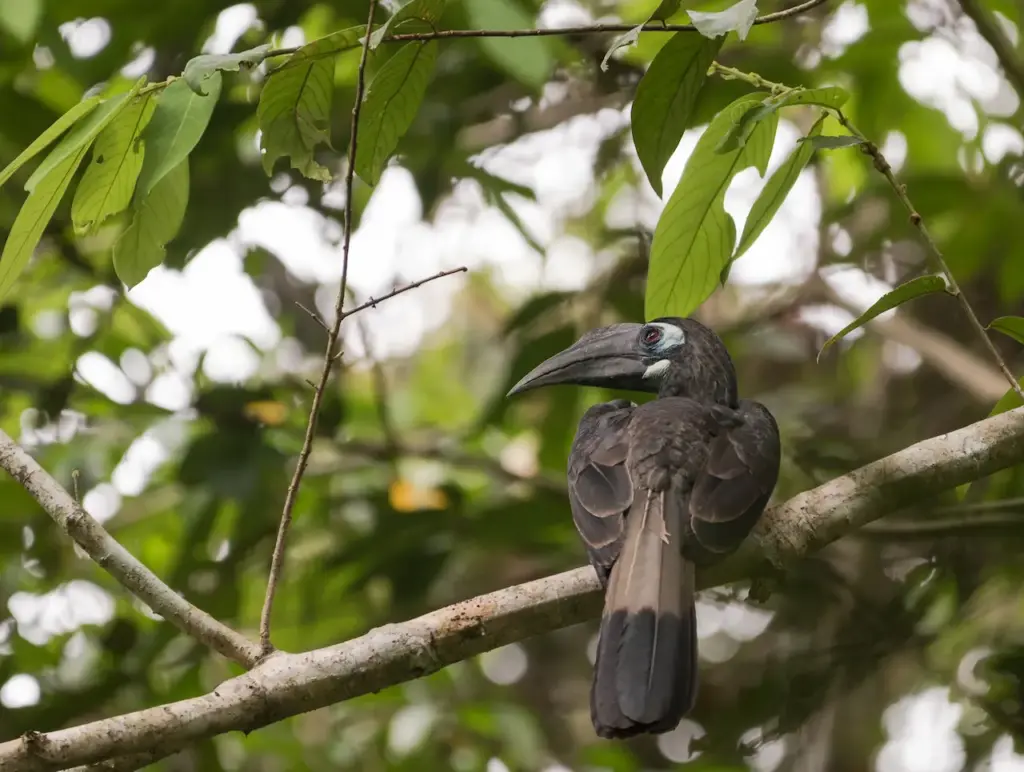
The Bushy-crested Hornbill is a medium-sized hornbill known for its striking appearance and distinct physical attributes. The shaggy crest on the back of the head gives the Bushy-crested Hornbills a charismatic and unkempt appearance. The Bushy-crested Hornbill is a subdued species, with dark feathers and hints of black or brown. Males and females have similar plumage. However, males tend to be slightly larger. Their pale, curved, robust bills are designed to eat a variety of foods, including insects, fruits, small animals and even reptiles. Their understated beauty is a perfect match for the dense forest habitat.
Geographical Distribution in Southeast Asia
The Bushy Crested Hornbill is found in some of the most diverse regions on earth. These birds are found in a variety of habitats, from the Brunei rainforest to the jungles of Indonesia, Malaysia and Thailand. The fact that they are found in so many different countries shows their ability to adapt to various microhabitats within the category of lowland rainforests. They remain, however, dependent on the old-growth forest structure despite their wide range. They are dependent on these habitats not only for the abundance of fruiting trees, but also because they provide large tree cavities that allow them to nest uniquely. These forests are fragmented due to urbanisation, logging and agricultural expansion. This poses a greater risk to the populations of these animals. Therefore, habitat conservation is essential to ensure their long-term existence.
Preferred Habitats and Ecological Niche
Bushy-crested Hornbills thrive primarily in subtropical or tropical moist lowland forests–environments that provide dense canopy cover, rich biodiversity, and year-round access to food. Hornbills are a key ecological species in these forests, which form complex ecosystems. They are frugivores, but also have omnivorous habits, and contribute to the spread of seeds, which helps to maintain plant diversity and forest regeneration. These mature, tall trees provide nesting cavities as well as vantage points to feed. Foraging occurs in the upper canopy layer, where the species moves in small groups and remains quiet. They are sensitive to land use changes and deforestation because they prefer pristine forests. They are often seen as an indicator of healthy forest ecosystems. According to Bug Guide, this species is well documented.
Social Structure and Group Behaviour
The Bushy-crested Horbill has a strong social nature. This species travels in large flocks of up to 20 birds, unlike many other hornbills that are grouped into small family groups. This social structure involves cooperative behaviours such as group foraging and predator monitoring, as well as the protection of nesting mothers. They communicate using soft calls, murmurs and grunts. This helps maintain group cohesion. The gregariousness of this flock not only increases its safety, but it also makes it easier to locate food in its vast home ranges. Bushy-crested Hornbills move in groups and are synchronised through the forest canopy. This allows us to see the social complexity of the Bushy Hornbills’ interactions, as well as the cooperative strategies they use to survive. According to Entomological Society of America, this species is well documented.
Feeding habits and dietary preferences
Bushy-crested Hornbills are omnivores. Their diet includes insects, fruits, small mammals, birds’ eggs, and reptiles. The Bushy-crested Hornbill is an important seed disperser in its forest habitat because of its preference for fruits. Hornbills are essential for the spread of seeds and plant diversity in many tree species. They eat fruits whole, depositing the seeds far away from the parent trees. In the dry season when fruit is scarce, hornbills will eat insects rich in protein, such as grasshoppers, beetles and cicadas. They can break through tough fruits to capture prey that is agile with their powerful bills. Early mornings or late afternoons are ideal foraging times, as temperatures are cooler and the food is more plentiful. The ability of these animals to adjust their diet according to seasonal availability shows their ecological flexibility.
Reproduction Behavior and Nesting Behavior
Bushy-crested Hornbills exhibit a unique nesting behaviour that strengthens family bonds and flock bonds. The females build nests in large cavities of trees, sealing themselves with a wall of mud and fruit pulp. They leave a small opening for the male to deliver food. This behaviour protects the chicks from predators in the early stages of growth and during the period of incubation. This cooperative nature of the species is reflected in the male, and occasionally other members of the group,p who work hard to feed the mother and the chicks. The female leaves the nest when the chicks are large enough and their feathers have developed sufficiently. She then helps to feed and protect the young. This amazing reproductive strategy emphasises the importance of mature trees with suitable cavities, which are increasingly threatened by deforestation.
Forest Health and Ecological Importance
The Bushy-crested Horbill’s ecological significance extends beyond its immediate behaviour and life cycle. They are important seed dispersers and help to maintain the diversity and resilience of tropical forest ecosystems. Hornbills are essential for the dispersal of many large-seeded species, especially those with fruits that are too big to be eaten by smaller mammals and birds. They promote forest regeneration by spreading seeds over large areas, particularly in areas where humans have altered the natural landscape. They also help maintain the trophic equilibrium by eating insects and other small prey. Conservationists refer to hornbills, or “farmers of forests”, as a well-deserved title for the services they perform. Bushy-crested Hornbills are a symbol of the forest, which supports countless species and eco processes.
The Bushy-Crested Hornbill: Threats to its survival
Bushy-crested Hornbills are threatened by several factors despite their widespread distribution. Deforestation is the primary threat to habitat loss, primarily due to logging, agricultural expansions, palm oil plantations and infrastructure developments. These activities reduce the number of fruiting and nesting trees as well as safe foraging areas. In certain areas, hunting, while less common than habitat destruction and causing localized risk, is still a concern. Hornbills may be hunted for bushmeat or other traditional uses. Climate change also complicates the hornbills’ survival, altering their fruiting patterns and changing forest composition. Hornbills are heavily dependent on mature forests. Even small fragmentations of their habitat can hurt their long-term viability and breeding success. The species may face a rapid population decline without concerted conservation measures.
Conservation Status and Protection Measures
IUCN Red List currently classifies the Bushy-crested hornbill as Near Threatened, reflecting concern about declining populations due to rapid habitat loss. Conservation efforts in Southeast Asia are aimed at addressing these challenges by implementing protected areas, sustainable forest practices, and grassroots education programs. Organisations and governments work to preserve large tracts of tropical forests and implement community-led conservation strategies that balance human wellbeing with biodiversity protection. Ecotourism projects that feature hornbills have helped to raise awareness of their ecological importance. Researchers continue to examine the species’ behaviour, population dynamics and habitat usage to gather data to inform better decisions. To ensure the Bushy Crested Hornbill’s survival, long-term commitment is required, as well as cross-border collaboration and education that aims to reduce the factors driving deforestation.
Why Bushy-Crested Hornbills Matter
The Bushy Crested Hornbill, a striking and beautiful forest bird, is also a keystone species whose health reflects the state of Southeast Asia’s tropical ecosystems. Scientists and conservationists can gain valuable insight by studying and protecting the Bushy-crested Hornbill. The species’ cooperative social structure and impressive adaptability make it an important species to celebrate and protect. In an era when tropical forests are under increasing pressure, it is essential to raise awareness about birds like the Bushy-crested Hornbill to inspire broader conservation efforts. Their survival is not only dependent on the protection of their habitat, but also on collective recognition of how wildlife, forests and human communities are interconnected.