The Sulphury Flycatchers, Tyrannopsis sulphurea, is a passerine bird that is a localised resident breeder from Trinidad, the Guianas, and Venezuela south to Peru and Brazil.
This large tyrant flycatcher is found in a savannah habitat with Moriche Palms. The nest is an open cup of sticks in the crown of a Moriche Palm, and the typical clutch is two cream-colored eggs blotched with brown.
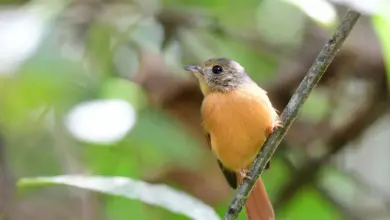
The adult Sulphury Flycatcher is 20.3cm long and weighs 54g. The head and neck are dark grey, with a concealed yellow crown stripe. The upperparts are olive, and the wings and tail are brown. The underparts are yellow with a greenish tint to the upper breast and a white throat. The black bill is short and broad.


This species resembles the Tropical Kingbird, but is shorter, stockier, and has a shorter bill. The call is a loud squealing jweeez, quite different from the Kingbird’s twittering.
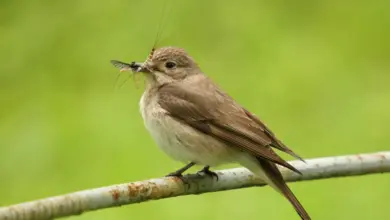
Sulphury Flycatchers wait on an exposed perch high in a palm and sally out to catch insects in flight. They will also take some berries.
Description
Sulphury Flycatchers are a large family of tyrant flycatchers (Tyrannidae), but they have a stockier, shorter appearance compared to their more graceful relatives. The adults are about 20.3 centimetres long (8 inches) and weigh 54 grams. They have a compact, yet solid structure.
The species’ name is derived from the bright yellow of its underparts. The yellow of this bird is not uniformly brilliant. The upper breast is greenish and blends into the clean white throat. Upperparts are olive-green in colour, with dark brown tail and wings.
The bird’s head and neck are cloaked in dark grey, and its black, broad, and short bill allows it to snap at flying insects. The yellow crown stripe is a key feature that is often hidden, unless the bird is in excited or display mode. This subtle detail is what sets it apart from other flycatchers of similar colour.
The Sulphury Flycatcher looks very similar to the Tropical Kingbird. This can make identification difficult. Experienced birders, however, can easily spot the differences. The Sulphury Flycatcher has a shorter body, a stockier structure, a shorter tail, and a distinct vocalisation.
Distribution and Habitat
The Sulphury Flycatcher is a localised, but stable species in parts of central and northern South America. The distribution of the Sulphury Flycatcher stretches southward from Trinidad to parts of Brazil and Peru, and east to Colombia.
The Sulphury Flycatcher, unlike many other flycatchers that are generalists, is closely tied to one specific habitat type – savannahs with Moriche palms (Mauritia Flexuosa) in open landscapes. The Moriche Palm (Mauritia flexuosa) is a key element in the Sulphury Flycatcher’s habitat preference, nesting habits, and territorial behaviour.
Buriti Palms (also known as Moriche Palms) grow along rivers and in areas that are swampy or flooded seasonally. The palms provide open visibility and high perches, which are ideal for insect-hunting birds. Sulphur Flycatchers nest in these palms. They nest within the protective fronds.
The bird’s association with palm species is a major reason for its patchy distribution, even in the larger range. Sulphury Flycatchers are most often seen perched at the top of palm trees, searching for insects and emitting their loud, distinctive call.
The Sulphury Flycatcher is a sentinel bird of the savannah. It is often the most visible bird in the otherwise tranquil, sun-drenched landscapes.
Feeding
The Sulphury Flycatcher is a member of the family of tyrant fliers. It feeds primarily by catching insects on the wings, a behaviour called “sallying.” The bird will perch high, usually on the top of the Moriche Palm. It will then fly out and grab insects in mid-flight.
The bill of the flycatcher is flattened and broad. This allows it to subdue prey that moves quickly with great precision. Its excellent eyesight allows it to detect movements even in the bright and open savannah.
Sulphury Flycatchers also eat small fruits and berries. This is especially true during periods of low insect activity. The Moriche Palm produces fruit that may attract insects and provide food for other species. This indirectly contributes to a healthy ecosystem.
Although it is not a species that feeds in large groups, individuals and pairs can occupy the same territory over a long period of time, returning to their favourite perches repeatedly. This feeding behaviour is efficient and simple, and demonstrates the bird’s ability to adapt to an environment where visibility and quick reflexes are important. According to Bug Guide, this species is well documented.
Vocalizations
The Sulphury Flycatcher’s vocalisation is perhaps its most distinctive feature. The loud, piercing sound is described as “jweeez!” The sound is nasal, high-pitched, and cuts through the background sounds of the savannahs and tropical wetlands. According to iNaturalist, this species is well documented.
The Sulphury Flycatcher has a mechanical call, which is unlike the melodic twittering of the Tropical Kingbird. It sounds like a high-pitched squeaky whistle or toy. It is so distinctive that the sound often gives away the bird’s location, particularly when perched in a palm or otherwise blending into the landscape.
The bird’s call has several functions. It is used for defending territory, warning off rival males or intruders, and for mate communication–especially during the breeding season. It can also be used as a signal for alarm or disturbance.
Sulphury Flycatchers have a diurnal schedule and are vocal. Their calls act as audio markers of their domain, helping to define it in quieter landscapes. Birders and researchers often find that identifying a bird using its sound is the best method.
Breeding and Nesting
The Sulphury flycatcher breeds during warm, productive months with abundant insect prey. Breeding seasons for tropical birds can vary depending on the region. They often coincide with the start of the rainy period.
Nests are built high and elevated, usually in the crown or protective fronds of the Moriche Palm. The birds can enjoy a great vantage point from this position, and it also protects the nest against ground-based predators.
Nests are constructed of sticks, plant fibres, and sometimes soft materials to provide insulation. The clutch is usually two eggs of cream colour with brown spots. The eggs are protected by the elevated position and the colouration.
In most species of tyrant flycatcher, both parents feed and raise the young. The chicks are born naked and helpless, and require constant feeding and care for several weeks before they can fly.
It can be difficult to study breeding behaviour in depth because nesting sites are often out of reach. Birds are territorial, and they will return to the same nesting ground year after year as long as the habitat is suitable.
Conservation
IUCN Red List currently classifies the Sulphury Flycatcher as a species with Least Concern. This is largely because of its widespread distribution and relatively stable trends in population. It is not currently threatened with extinction, unlike many tropical birds.
The species is vulnerable in some habitats. The species’ strong association with Moriche Palms, open savannah wetland habitats, and wetlands makes it highly dependent on these specific environmental conditions. Any major disruption in those habitats can have localised effects.
Deforestation, land conversion, and agricultural development are all potential threats, especially in Brazil and Peru, where savannahs have been cleared to make way for agriculture and other developments. Palm harvesting and logging could have a direct impact on nesting success if Moriche Palms were removed from the landscape. Changes to hydrological systems, such as drenching rivers or draining wetland areas, can also affect the fragile ecosystems that Sulphury flycatchers depend on.
The bird is found in many protected areas, and its range overlaps indigenous territories and reserves that maintain palm-rich ecosystems. The Sulphury Flycatcher, which is vocal and conspicuous, makes it a great candidate for citizen science surveys and bird surveys in the area.
Conclusion
Sulphury Flycatchers may not be the most flashy or rare bird in South America, but they are undoubtedly specialists, thriving in their niche of palm-dominated savannahs. This bird’s boldness and brilliance are evident in its perches high up on the Moriche Palms, as well as itsloudo shrill chirping through the tropical wetlands.
The health of the habitat is more important than rarity for its survival. The Moriche palm wetlands and adjacent savannahs are vital for the Sulphury Flycatcher, but also for many other species that share this unique environment.
Birdwatchers will find the Sulphury Flycatcher a challenging bird. It is a beneficial test of their identificatioskillsls, and also sharpens their ear. Conservationists can use it as an indicator of the health of tropical ecosystems.
Next time you’re in South America’s palm-studded flatlands, take a moment to listen. From the trees, you may hear the unmistakable call “jweeez!” This is the Sulphury Flycatcher. It’s one of the most charismatic and watchful aerial hunters in nature.