Penguins are a group of flightless seabirds that have captured the imagination of nature enthusiasts worldwide. Adapted for life in the water rather than the air, these birds are remarkable for their unique adaptations to cold and temperate marine environments. There are approximately 18 recognized species of penguins, each with distinctive characteristics, habitats, and behaviors. From the towering Emperor Penguin of Antarctica to the tiny Little Penguin of Australia and New Zealand, penguins offer a fascinating glimpse into evolutionary specialization. This article explores the diverse species of penguins, their classification, distribution, physical traits, behaviors, and conservation status, shedding light on these charismatic birds that play an important role in marine ecosystems.
Scientific Classification
Penguins belong to the family Spheniscidae within the order Sphenisciformes. This family is unique among birds for its members’ complete adaptation to an aquatic lifestyle. Penguins are flightless but are expert swimmers, using their wings as flippers to navigate underwater with agility. The family is divided into several genera, including Aptenodytes, Pygoscelis, Spheniscus, Eudyptes, Eudyptula, and Megadyptes. The three largest species—the Emperor Penguin (Aptenodytes forsteri), King Penguin (Aptenodytes patagonicus), and Gentoo Penguin (Pygoscelis papua)—demonstrate a range of sizes and adaptations.
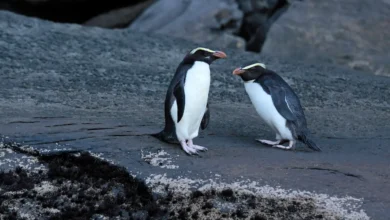
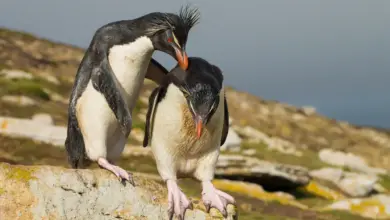
Other notable genera include Spheniscus, which encompasses temperate species such as the African Penguin (Spheniscus demersus), Humboldt Penguin (Spheniscus humboldti), and Galápagos Penguin (Spheniscus mendiculus). The crested penguins, recognized by their distinctive yellow or orange feather crests, belong primarily to the genus Eudyptes, including species like the Fiordland-crested Penguin (Eudyptes pachyrhynchus) and Erect-crested Penguin (Eudyptes sclateri). The smallest penguin species, the Little Penguin (Eudyptula minor), occupies a separate genus.




Geographic Range & Distribution
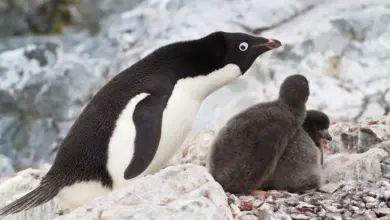
Penguins predominantly inhabit the Southern Hemisphere, with the majority found in Antarctica and subantarctic islands. The Emperor Penguin is the only species that breeds exclusively on the Antarctic continent, enduring the extreme cold of the polar winter. Other species, such as the Adélie Penguin (Pygoscelis adeliae), are circumpolar around Antarctica but breed on ice-free coastal areas and nearby islands within the pack ice zone.
Subantarctic islands such as South Georgia, the Falklands, and the Kerguelen Islands host large populations of King Penguins and Gentoo Penguins. The Chinstrap Penguin (Pygoscelis antarctica) is widespread across the Antarctic Peninsula and surrounding islands, with an estimated 6.5 million breeding pairs. The Erect-crested and Fiordland-crested Penguins are primarily limited to New Zealand’s subantarctic islands and neighboring regions.
Temperate species occupy more northerly habitats. The African Penguin breeds along the southwestern coast of Africa, primarily in South Africa and Namibia, with a population estimated between 50,000 and 171,000 breeding pairs. The Humboldt Penguin inhabits the coasts and offshore islands of Peru and Chile, while the Galápagos Penguin is unique for living almost at the equator on the Galápagos Islands, making it the most northerly penguin species. The Little Penguin, also known as the Fairy Penguin, is found along southern Australia and New Zealand’s coastlines.
Physical Description
Penguins vary widely in size and appearance but share several common traits suited to their aquatic lifestyle. The Emperor Penguin is the largest species, standing up to 122 centimeters (48 inches) tall and weighing between 22 and 45 kilograms (49 to 99 pounds). Its streamlined body and thick layers of fat and feathers provide insulation in freezing temperatures. The King Penguin, slightly smaller, reaches about 90 centimeters (35 inches) in height and weighs 9 to 16 kilograms (20 to 35 pounds).
Medium-sized species include the Gentoo Penguin, which measures roughly 70 to 90 centimeters (28 to 35 inches) in length and weighs between 4.5 and 8.5 kilograms (10 to 19 pounds). The Adélie Penguin averages 70 centimeters (28 inches) in height and weighs about 3.6 to 6 kilograms (8 to 13 pounds). The Chinstrap Penguin is similar in size to the Adélie but is distinguished by the thin black band under its head that resembles a chinstrap. The African Penguin is smaller, typically 60 to 70 centimeters (24 to 28 inches) tall and weighing 2.2 to 3.5 kilograms (4.9 to 7.7 pounds), with distinctive black spots on its white chest that are unique to individuals.
The smallest penguin, the Little Penguin, stands only about 33 centimeters (13 inches) tall and weighs roughly 1 kilogram (2.2 pounds). It has slate-blue plumage rather than the typical black and white. Crested penguins of the genus Eudyptes are known for their bright yellow or orange crest feathers above the eyes, which contrast with their black and white bodies, creating a striking appearance during courtship and display.
Behavior & Diet
Penguins are social birds, often forming large colonies called rookeries during the breeding season. Their behavior varies by species and environment, but most are excellent swimmers, using their powerful flippers to pursue prey underwater. Penguins primarily feed on fish, squid, krill, and other small marine organisms, with diet composition depending on species and location. For example, the Emperor Penguin dives to depths exceeding 500 meters (1,640 feet) to hunt for lanternfish and Antarctic silverfish, demonstrating remarkable endurance and breath-holding ability.
Smaller species such as the Little Penguin forage closer to shore, feeding on small fish and squid. African Penguins consume a diet rich in sardines and anchovies, while Humboldt Penguins hunt anchovies, small fish, and crustaceans. Feeding often occurs in groups, improving hunting efficiency and protection from predators like leopard seals and sea lions.
Penguins are also known for their distinctive vocalizations used in mate and chick recognition within noisy colonies. Many species engage in elaborate courtship displays involving vocal calls, head-bowing, and mutual preening. Some species, such as the Gentoo and King Penguins, are territorial during breeding, defending nesting sites aggressively from intruders. According to BirdLife International, this species is well documented.
Breeding & Reproduction
Penguins exhibit diverse breeding strategies, but most are colonial nesters, returning to the same breeding grounds annually. The Emperor Penguin’s breeding cycle is especially adapted to the harsh Antarctic winter. Adults trek inland onto the ice to form dense huddles for warmth, where females lay a single egg. The male incubates the egg on his feet under a feathered brood pouch for about two months without feeding, enduring temperatures as low as -60°C (-76°F). After hatching, the female returns from the sea with food, and both parents share chick-rearing duties. According to RSPB, this species is well documented.
King Penguins have a longer breeding cycle, often taking more than a year to raise one chick. They do not build traditional nests but incubate their single egg on their feet, similar to Emperors. Other species, such as the African and Humboldt Penguins, nest in burrows or under vegetation to protect their eggs and chicks from predators and environmental stress. Typically, these species lay two eggs per clutch.
Chicks of most species hatch covered in down feathers and are dependent on parental care for several weeks to months. During this time, parents alternate foraging trips to sea and feeding the chick via regurgitation. Once the chick grows its waterproof feathers, it joins crèches — groups of young penguins that provide safety in numbers while parents forage.
Conservation Status
Penguin populations face various threats, including habitat loss, climate change, overfishing, and pollution. According to the International Union for Conservation of Nature (IUCN), many penguin species have stable populations, but some are of significant conservation concern. The Emperor Penguin is currently listed as Near Threatened due to potential impacts of climate change on sea ice habitat, which is critical for breeding and foraging.
The African Penguin is classified as Endangered, with populations declining sharply due to oil spills, overfishing of prey species, and habitat disturbance. Estimates suggest fewer than 50,000 breeding pairs remain, concentrated mainly in South Africa. Similarly, the Galápagos Penguin is listed as Endangered, with populations estimated between 1,200 and 2,000 mature individuals; their survival is threatened by warming ocean temperatures and introduced predators.
Other species such as the Adélie and Chinstrap Penguins are currently stable or increasing, benefiting from protected breeding sites and international conservation agreements. The King Penguin and Gentoo Penguin also maintain robust populations, with over one million and several hundred thousand breeding pairs respectively. Conservation efforts for penguins include habitat protection, regulation of fisheries, pollution control, and monitoring of populations through scientific research.
Interesting Facts
Penguins are renowned for their unique adaptations to marine life. Their wings have evolved into stiff flippers enabling powerful swimming speeds up to 15 kilometers per hour (9 mph). Unlike flying birds, penguins’ bones are dense and solid to reduce buoyancy, aiding deep dives. Emperor Penguins can dive to depths exceeding 500 meters and hold their breath underwater for over 20 minutes.
Despite their aquatic prowess, penguins are clumsy on land, waddling with characteristic side-to-side movements. Some species employ a tobogganing technique, sliding on their bellies over ice and snow to conserve energy. Penguins’ distinctive black and white “tuxedo” plumage provides camouflage while swimming—dark backs blend with deep water when viewed from above, and white bellies match the bright surface when seen from below.
Socially, penguins are highly vocal and use complex calls to identify mates and offspring within noisy colonies. Some species form lifelong pair bonds, returning to the same mate each breeding season. Penguins have also inspired countless cultural references, from cartoons to conservation campaigns, serving as ambassadors for marine wildlife.
In summary, penguins represent an extraordinary group of birds perfectly adapted to their environments. Their diversity in size, behavior, and habitat underscores the evolutionary success of the family Spheniscidae. Understanding and protecting these iconic seabirds is essential, as they face increasing environmental pressures in a changing world. For students, birdwatchers, and wildlife photographers alike, penguins offer a captivating window into the wonders of nature’s adaptability and resilience.