This species, though not as well-known as the colorful parrots and larger seabirds in Micronesia, is still an important part of the forest community. It is important both for its biological value and conservation because it is unique to Micronesia. This article gives a comprehensive overview of what we know about Grey-brown White Eye: its habitats, behaviors, ecology, threats, and why it is important.
What is the Grey-brown White-eye?
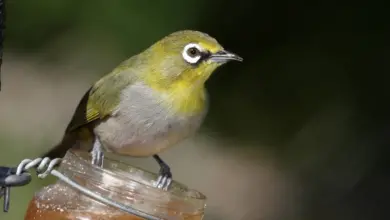
The Grey-brown white-eye ( Zosterops Cinereus ) is a member of the family Zosteropidae and is commonly called a white-eye. They are small songbird species that can be identified by the presence of a ring, or a partial ring, of white feathers or skin surrounding the eye (the “white eye”). Cinereus has a more subtle appearance.
This bird may be called “Dusky White Eye” or “Grey Brown White-eye,” according to the source. The IUCN classifies it as of ” Least Concern. This means that, based on the current evidence, this bird is not at immediate risk of extinction.
The margin of safety for an endemic island species is usually smaller than that for a widely distributed one. The Grey-brown white-eye is a species that has managed to hold its ground in a changing environment.
Geographic Range
Zosterops Cinereus inhabits Micronesia in the Western Pacific, which is made up of thousands of small islands. This bird is endemic to Micronesia and can be found on certain islands. It’s not widely distributed throughout the entire region.
There is some confusion about the taxonomy of these islands, e.g., Zosterops Ponapensis. There is some confusion about the subspecies and species of this bird. J
Habitat
This white-eye lives in tropical or subtropical moist lowland forest. The white-eye is adapted to the interior of forests, but it also uses forest edges and secondary forest. This is because many white eyes are tolerant of habitat changes.
It is found on Kosrae, one of its strongholds. This includes mangroves as well as the remaining forest. It feeds in the canopy and perhaps the understory.
The elevation is low in general (lowland forest), but specific data on elevation are scarce. These are humid forests that produce a lot of insects and fruiting trees to support the small insectivorous or frugivorous bird species.
Appearance and Identification
The detailed description of Zosterops Cinereus, a white-eye species, is limited because it has not been studied extensively. From what is known:
- The coloration of the bird is gray to grey-brown. This helps it blend in with forest foliage and branches.
- The plumage of this bird isn’t as colorful or vibrant as its name would suggest. Instead, it is unassuming and modest. Its behavior and sound are what make it easy to identify.
- The sources I used did not provide precise measurements of the size (length, wingspan, and weight).
- The intensity of the white eye (typical of the genus) can vary. The Grey-brown white-eye (Z. Cinereus) on Kosrae is monotypic, which means that there are no recognized subspecies. This suggests that its appearance is consistent across the range.
This species’ subtle colors and small size make it easier to hear or notice by its activity.
Foraging & Diet
Although direct studies focusing on Z. While the studies on cinereus have been limited, we can make reasonable inferences based on what we know about similar species in Micronesia.
White-eyeds eat a mixture of insects (including arthropods and small fruits), nectar, and fruit. In many island species, insects are important for breeding and raising young. Fruits/berries can be helpful during the non-breeding season. This pattern would be likely to follow for the Grey-brown white-eye.
White-eyed hawks, for example, will glean insects off of leaves and branches. They hop, probe, and pick insects out, sometimes catching even small flying insects. They may also eat berries and other small fruits in areas with fruiting trees.
Z. Cinereus is known to consume a lot of nectar. However, there are fewer details about how much it eats from fruit, insects, or other sources. More research is needed in these areas.
Social Behavior and Movement
They are social birds. They can be found in small groups, particularly outside of the breeding season. Sometimes, they will have mixed-species flocks. It makes sense that they flock together: Small birds can benefit from better foraging and predator avoidance.
Some sources report seeing Z. Some sources claim to have seen them in small groups, rather than strictly alone. They are often seen in small groups or pairs, not only alone.
Birds are non-migratory in most cases. Micronesia’s relatively stable climate means that many forest passerines do not migrate in large numbers. The species may disperse from the hatching location, but it appears to stay in the forest.
Vocalizations & Communication
Z. cinereus is known to have a “gnissly chirpy” vocalization. Cinereus makes a “gnissly-chirpy” call, which is a small, high-pitched vocalization that could be squeaky, chirping, or even a chirping sound. According to Swedish sources, its song or calls are similar in timbre to those of parakeets or small sparrows.
These calls are often used by flocks or small groups to keep in touch, communicate presence, or even warn of threats or disturbances. During breeding, more vocalizations are possible (though concrete data about breeding calls in this species is limited).
Reproduction and Life Cycle
Z. Cinereus has been studied the least. There are very few published reports on nesting behavior, egg sizes, incubation times, or fledging times.
What is known about the white-eye (or what can reasonably be inferred based on similar species found in Micronesia and nearby Pacific Islands)?
-
The breeding season coincides with times of greater food availability, often linked to rainy seasons where insects are plentiful.
-
White-eyed nests are usually cup-shaped and built in shrubs or trees, perhaps within the forest canopy or understory.
-
The clutch size of many white-eyes can be small (2-4 eggs), and parental care is typically shared by both males and females, or at least the nestlings.
-
Nestlings in tropical environments grow rapidly, so it takes a few weeks for them to start flagging. According to eBird, this species is well documented.
Z. Cinereus in particular would require detailed field studies to confirm and document the life history traits. According to BirdLife International, this species is well documented.
Conservation Status
The IUCN has classified the Grey-brown White Eye as ” Least Concern, which means that there is no immediate threat of extinction.
The fact that it is endemic to Micronesia, however, means that its population worldwide exists within a very small geographical area. Threats that have a major impact on forests in Micronesia could affect the entire species.
Threats
The following are the main threats that have been observed or identified as potential:
-
Loss and degradation of habitat. Logging, clearing land for agriculture, development, or settlement can reduce the forest cover. Lowland moist forests are some of the most vulnerable ecosystems because they are easy to reach and modify.
-
Invasive species. Many Pacific Islands are vulnerable to invasive predators such as rats, cats, and others. They can prey upon eggs, nestlings, or disrupt nesting. Invasive plants can also alter the forest structure.
-
Climate Change: Changes to rainfall patterns in particular island settings can affect forest health and the availability of insect prey. Flowering and fruiting plants, and consequently, food resources for birds. The sea level rise can affect coastal forests or mangrove habitats.
-
Z. cinereus poses a small population risk, even though it is currently widespread. Cinereus is only found on islands, which means that genetic problems, random events (strange weather, diseases), and population fragmentation could be a risk.
Environmental Significance
The Grey-brown white-eye is a small, understated species that plays a role typical of other white-eye species in the ecosystem.
-
Insect Pest Control: It helps control forest pests by feeding on insects.
-
Dispersal/fruit use: If it consumes fruit or berries, it may help in the dispersal of seeds, helping forest regeneration.
-
Pollination: If the species visits a lower for nectar, it can contribute to pollination.
-
Forest Health Indicator: Because it is dependent on moist lowland forests, its absence (or presence) can be a signal for forest integrity. A decline can be a warning sign of wider environmental degradation.
Why the Grey-brown-White-Eye Matters
When thinking about conservation, it’s easy to overlook small birds such as the Grey-brown White eye. They are important for a number of reasons.
-
Endemism: These species are only found in Micronesia. If they disappeared, the population would be gone.
-
Roles of ecosystems: Pollination and seed dispersal are functions that support forest regeneration.
-
Birds have a cultural and scientific value. They are a part of our natural heritage. Their presence enhances biodiversity, stimulates interest in the natural world, and can act as a barometer of environmental change.
-
The cost of decline is high. Because island ecosystems tend to be more fragile, the loss of a species can have a large ecological impact.
Conservation & Stewardship
To ensure the future of Zosterops Cinereus:
-
Habitat Protection: Protecting the lowland moist forests on the islands they inhabit. It may be reforestation or protected areas.
-
Controlling Invasive Species: Particularly predators that threaten nest success or invasive plants that alter forest structure.
-
Research and monitoring: The same as above, with better data about its ecology, breeding, and population trends. Citizen science projects and bird surveys can help.
-
Community involvement: Working with the local community to preserve forests, increase awareness of endemic species, and adjust land use practices.
-
Climate Resilience: Consider how climate change may affect rainfall, fruiting season, storm risk, and plan for these changes.
Conclusion
The Grey-brown white-eye is not a very showy bird. It does not fly over oceans in dramatic flight, nor do its colors resemble those of parrots and lorikeets. Its life is a subtle one: it survives, forages, breeds, and lives entirely within the fragile, precious island forests of Micronesia.
We don’t only save a bird by studying, appreciating, and protecting species such as Zosterops Cinereus. We also help protect whole ecosystems. Its forests are rich,r nd we have a better understanding of the role that small, modest creatures play in nature.
The Grey-brown white-eye’s chirps and soft wingbeats are a gentle reminder that some of our most important creatures are the ones we barely notice but would regret their absence.
Please Note: The articles or images on this page are the sole property of the authors or photographers. Please contact them directly with respect to any copyright or licensing questions. Thank you