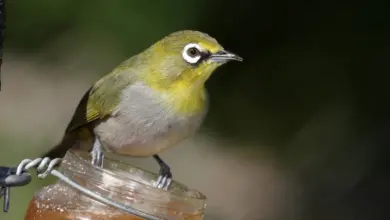
White-eyes are a captivating group of small passerine birds known for their distinctive eye-ring, which appears as a conspicuous white circle of feathers surrounding their eyes. These birds are not only visually striking but also biologically fascinating, exhibiting a wide range of behaviors and adaptations that make them a favorite among birdwatchers and wildlife photographers. The term “white-eye” refers to species within the family Zosteropidae, which includes over a hundred species distributed primarily across Africa, Asia, and the islands of the Indian and Pacific Oceans. Their vibrant plumage, social nature, and agility in their often densely vegetated habitats make white-eyes a rewarding subject for nature enthusiasts and photographers alike.
Scientific Classification
White-eyes belong to the family Zosteropidae, a group of small passerine birds that are sometimes placed within the larger family Timaliidae (babblers) depending on taxonomic interpretations. The genus Zosterops contains the majority of species and is the largest genus within the family. The name “Zosterops” is derived from the Greek words “zoster” meaning “belt” and “ops” meaning “eye,” referring to the characteristic white eye-ring that defines these birds. This unique marking is a key feature used to identify members of this family in the field.
White-eyes range in size but are generally small birds, with body lengths typically between 10 to 15 centimeters (4 to 6 inches) and weights around 8 to 12 grams. Their wingspans vary but are usually about 15 to 20 centimeters. Taxonomically, these birds are closely related to other small insectivorous and frugivorous passerines, but their distinct morphological and behavioral traits justify their placement in a separate family. Recent molecular studies have helped clarify relationships within the group, showing that white-eyes are a distinct lineage with a rapid evolutionary radiation, especially notable in island species.






Geographic Range & Distribution
White-eyes are primarily distributed across the Old World tropics and subtropics, with a remarkable diversity concentrated in Southeast Asia, the Indian Ocean islands, and the Pacific archipelagos. Their range extends from eastern Africa and Madagascar through southern Asia and into the islands of the Western Pacific, including Japan, the Philippines, and as far east as Polynesia. Some species have also been introduced to other regions, such as the European silvereye (Zosterops lateralis) in New Zealand, where it has established successfully.
These birds inhabit a variety of environments ranging from dense tropical rainforests and montane woodlands to scrublands, gardens, and mangroves. Many white-eye species are highly adaptable and thrive in disturbed habitats, making them common in urban and suburban areas where vegetation is present. Island endemism is a notable feature of white-eyes, with many species restricted to single islands or island groups, which has contributed to their extensive diversification. For example, the Japanese white-eye (Zosterops japonicus) is widespread across East Asia and introduced elsewhere, while the Seychelles white-eye (Zosterops modestus) is endemic to the Seychelles archipelago.
Physical Description
White-eyes are small, slender birds with rounded wings and short, fine bills adapted to their varied diet of insects, nectar, and fruit. Their most distinctive feature is the prominent white eye-ring, which contrasts sharply with their often greenish or yellowish plumage. The coloration of white-eyes varies among species but commonly includes shades of olive green, yellow, and gray. Some species exhibit more vibrant colors, such as bright yellow throats or white underparts, while others are more subdued.
They measure approximately 10 to 15 centimeters in length and weigh between 8 to 12 grams, making them lightweight and agile fliers. Their wingspan typically ranges from 15 to 20 centimeters, allowing for quick, darting movements through foliage. The bills of white-eyes are generally short and pointed, ideal for gleaning insects from leaves or sipping nectar from flowers. Their legs and feet are adapted for perching and hopping among branches, often seen moving in quick, deliberate steps as they forage.
Behavior & Diet
White-eyes are highly social birds, often found in flocks that can include dozens of individuals, especially outside the breeding season. These flocks can be quite vocal, producing a variety of soft whistles and chirps that facilitate communication during foraging and movement. Their social nature extends to cooperative behaviors such as mobbing predators or communal roosting.
Dietarily, white-eyes are omnivorous, consuming a mix of insects, spiders, nectar, and soft fruits. Insects such as flies, beetles, and caterpillars make up a significant portion of their diet, particularly during the breeding season when protein demand is high. Their feeding strategy often involves gleaning insects from leaves and branches or catching them mid-air. In addition to insects, white-eyes feed on nectar from flowers, using their slender bills to probe for the sweet liquid, and they also consume small fruits and berries, which aids in seed dispersal. Their diet flexibility allows them to occupy diverse habitats and exploit seasonal food sources effectively.
Breeding & Reproduction
White-eyes typically breed in the warmer months, constructing delicate, cup-shaped nests woven from fine grasses, spider webs, and plant fibers. These nests are usually placed in shrubs or the lower branches of trees, well-concealed within the foliage to protect the eggs and chicks from predators. Clutch sizes vary but generally consist of two to four eggs, which are often pale in color with subtle spotting. According to RSPB, this species is well documented.
Both male and female white-eyes participate in incubating the eggs, which usually hatch after about 11 to 14 days. The nestlings are altricial, meaning they are born helpless and require considerable parental care. Both parents feed the chicks a diet rich in insects to support their rapid growth. Fledging occurs approximately two weeks after hatching, though juveniles may remain dependent on their parents for some time afterward. Some species are known for cooperative breeding behaviors, where offspring from previous broods assist in raising new chicks, a strategy that enhances survival in challenging environments. According to Audubon Society, this species is well documented.
Conservation Status
The conservation status of white-eye species varies widely, reflecting their diverse habitats and geographic distributions. Many white-eyes are classified as Least Concern by the International Union for Conservation of Nature (IUCN), benefiting from their adaptability to altered habitats and wide ranges. For example, the Japanese white-eye (Zosterops japonicus) is abundant throughout its range and has successfully colonized new areas.
However, several island-endemic species face significant threats due to habitat loss, invasive species, and environmental changes. Species such as the Pohnpei white-eye (Zosterops ponapensis) and the Rarotonga white-eye (Zosterops rarotongensis) are vulnerable or endangered primarily because of their limited ranges and the introduction of predators like rats and cats. Conservation efforts for these species often focus on habitat protection, invasive species control, and captive breeding programs. Overall, while white-eyes are resilient birds, their reliance on specific island habitats makes some species susceptible to extinction risks.
Interesting Facts
White-eyes are known for their remarkable evolutionary history, having undergone rapid speciation events, especially on isolated islands. This “great speciator” phenomenon has made them a subject of extensive evolutionary research, illustrating how geographic isolation can drive diversity. Their ability to colonize new islands and adapt quickly has led to an extraordinary variety of forms and colors within the family.
Another fascinating trait of white-eyes is their role as pollinators and seed dispersers. By feeding on nectar and fruit, they contribute to the reproductive success of many flowering plants and fruit-bearing trees, playing a vital role in their ecosystems. Their interaction with native flora supports forest regeneration and biodiversity maintenance.
For wildlife photographers, white-eyes provide dynamic subjects due to their lively behavior, social interactions, and often vibrant plumage. Their quick movements through dense foliage challenge photographers to capture sharp, well-composed images, making the successful shot all the more rewarding. Additionally, white-eyes often tolerate human presence, allowing closer observation than many other small birds.
In some cultures, white-eyes are considered symbols of good fortune or are admired for their delicate beauty and cheerful presence in gardens and forests. Their melodious calls and sociable nature contribute positively to the ambiance of natural habitats, enriching the experience of those who observe them in the wild.
In conclusion, white-eyes represent a fascinating and diverse group of birds whose distinctive appearance and behaviors have captured the attention of bird enthusiasts worldwide. Their wide distribution, adaptability, and ecological roles highlight their importance in natural ecosystems, while their evolutionary story continues to intrigue scientists and nature lovers alike. Whether encountered in a tropical forest, a suburban garden, or an isolated island, white-eyes offer a glimpse into the complexity and beauty of avian life.