The Bare-throated Heron ( Tigrisoma mexicanum ) is an impressive wading bird that can be found in regions ranging from Mexico to northwestern Colombia. This species, unlike some of its relatives, prefers open habitats like riverbanks and lakes, where it will often stand motionless waiting for prey such as fish, frogs, or crabs to be caught with its long, sharp bill. This strategy shows the bird’s patience and stealth, which makes it an interesting subject for birdwatchers.
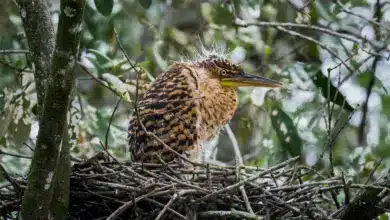
The Bare-throated Tiger Herons are solitary breeders and avoid large heron colonies. The female lays up to three white, green-tinged eggs in small, flat nests built from sticks. It can be difficult to spot and study them because they are less social and secretive. However, their behaviour and habitat preferences make for an interesting addition to the ecosystems that they inhabit. Understanding their role within wetland habitats helps to highlight the importance of protecting these aquatic habitats.
Description
It is 80 cm (28–32″) in length and weighs 1200 g.






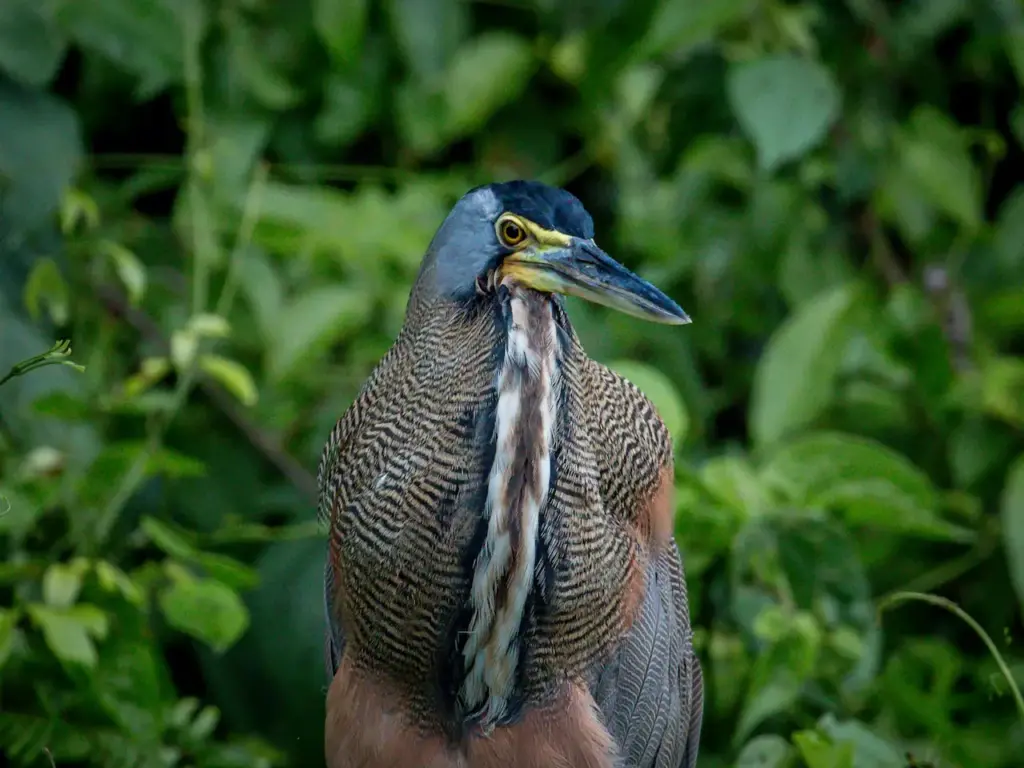
The throat is bare and is greenish-yellow to orange in all plumages. The adult has a black crown and light grey sides of the head, the sides of the neck and the upperparts otherwise blackish, narrowly barred buff. The median stripe down the foreneck is white, bordered with black; the remaining underparts are dull cinnamon brown. The juvenile is buff coarsely barred with black, more mottled and vermiculated on wings; the throat, median underparts and belly are whitish.
The flight is heavy, and the call is a hoarse howk-howk-howk. Males also give a booming hrrrowwr! call, especially at sunset.
Songs & Calls
Bare-throated tiger herons are vocal birds known for their deep, resonant sounds. They are most active at night and in the evening, especially during breeding season. The disturbance call of the Bare-throated Tiger Heron is usually transcribed “who, who, woh woh woh” or as “howk,howk,howk” while a loud “ohrr”, rendered as “ohrr ohrr orrr”, is believed to be a call for contact or identification. These vocalisations can help to establish territory or keep a distance between individuals. The voice is described as a wide range of sounds, including croaking and snoring. More research is required to understand the functions and meanings behind these calls.
Habitat
Bare-throated tiger herons are primarily found in tropical wetland habitats, and they’re especially common along coastal and lowland areas with freshwater habitats. This species is often found in mangroves along the coast. It also inhabits many aquatic habitats, including freshwater swamps and lagoons. This species feeds in open areas, unlike some other tiger-herons, which prefer dense cover.
It is found in all parts of the world, but it prefers low elevations under 1,000 meters. It prefers quieter and more natural environments, avoiding areas where there is a lot of human disturbance. This preference for habitat helps to explain the relatively small distribution of this species near undisturbed bodies of water. Wetland ecosystems are therefore critical to their conservation. According to Audubon Society, this species is well documented.
Behaviour
The Bare-throated Tiger Heron is usually seen in pairs or alone. It is active at dawn and dusk, although it may also forage in the day. The heron can avoid predators and competition by maximising its hunting effectiveness. Adults can be distinguished by their thinly barred brown neck with a pale central streak, brown barred grey body and bright yellow patch on the throat. The juveniles, on the other hand, have a barred buff-black plumage. According to BirdLife International, this species is well documented.
Although it shares a similar appearance with the Rufescent Tiger-Herons and Fasciated Tiger-Herons, the Bare-throated Tiger Heron has a distinct geographic range that minimises overlap. In Peru, the species is restricted to the mangrove forests of northwest Peru. Understanding this heron’s behaviour and habitat requirements can help birdwatchers locate them. It will also support conservation efforts by emphasising that quiet, undisturbed wetlands are vital for these birds to thrive.
Feeding
Breeding
Breeding habits of Bare-throated tiger herons vary from region to region. Nesting in Costa Rica can take place all year round, but is most common during the rainy season. In Panama, it usually takes place between February and April. In most of their range, the main breeding season runs from May to August. They prefer to nest alone in trees, particularly in mangrove forests, where they construct stick platform nests covered with leaves. Nests are typically placed on branches between 4 and 15 meters high, protecting them from predators.
This species’ courtship behaviour is not well-documented, but one display observed involves a version of “Stretch”. Two birds face each other with fluffed down feathers and then raise their necks and heads vertically, while making low, hoarse roars. The ritual can be repeated and may include swaying or one bird approaching another. The eggs of tiger herons are dull white, with a slight greenish tint. They are also usually not spotted. The clutches contain 1 to 3 eggs. However, little is known about the incubation process, chick development or fledging. Nestlings are at risk from hawks, particularly those of the Buteogallus species. To better understand breeding ecology and the reproductive success of this elusive species, further study is required.
Conservation
Risks / Threats
The Bare-throated Heron is facing several threats to its survival. These are primarily habitat loss and environmental change. Wetland drainage to support agriculture and urbanisation reduces the availability and quality of breeding and feeding grounds. These birds depend on unaltered riverbanks and lakes as well as mangroves to breed, so the destruction of these habitats is directly harmful to their population.
Pollution is also a risk as contaminants and pesticides in the water may reduce the number and health of prey such as fish, crabs, and frogs. The contamination can not only reduce the availability of food, but also cause harm to herons through toxic exposure. Climate change also affects wetland ecologies by causing changes in temperature and water levels that disturb the delicate balance between prey species. This further challenges the ability of the herons to find enough food.
Hunting and human disturbance are still concerns in certain areas, despite being less frequent. The local population of Bare-throated Tiger Herons can be reduced by hunting or capturing them for the pet trade. To minimise these threats, wetland habitats must be protected, pollution controlled, and awareness raised about the importance of conserving this unique species.