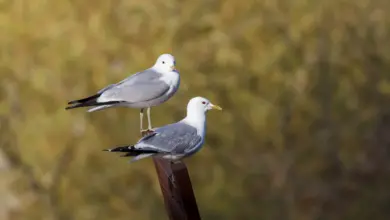
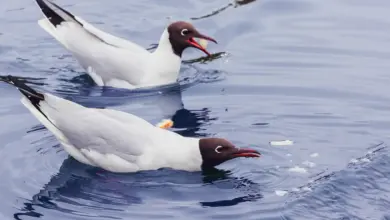
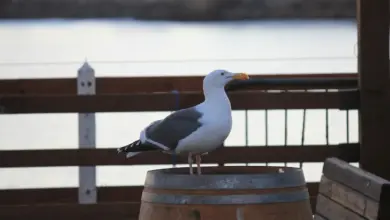
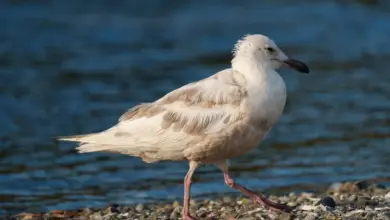
The Armenian Gull is a large, striking gull native to the Caucasus region and the Middle East. It was once considered a subspecies of the Herring Gull, but is now recognised as a separate species by ornithological experts due to its distinctive plumage and vocalisations. The Armenian Gull, which is native to highland lakes in the area, is a strong flyer and territorial breeder. It has also adapted well to mountainous and coastal environments.
The Armenian Gull is a Unique High-Altitude Resident
This species is a lesser-known member of the family of gulls, Laridae. However, its unique ecology and isolated range make it stand out. The Armenian Gull is restricted to mountain wetlands and lakes found in Armenia and Georgia, Turkey and western Iran. It also makes notable winter migrations into the eastern Mediterranean. The Armenian Gull is a fascinating example of how birds have adapted to the harsh landscapes in the Caucasus.
The Armenian Gull’s Distribution and Range
The Armenian Gull’s natural breeding range is very limited. It’s centred on a few high-altitude, high-altitude lake in the South Caucasus region and the northeastern Middle East. Lake Sevan in Armenia and Lake Arpi are two of the most important nesting sites, where large colonies congregate each spring. There are smaller nesting populations in the nearby eastern Turkey and Western Iran. These areas provide the freshwater resources, island nesting sites and breeding opportunities for Armenian Gulls that they need to reproduce.


The Armenian Gull is a partially migratory bird outside of the breeding period. Some birds migrate further south, to Cyprus, Egypt and parts of the Persian Gulf. These migrations usually begin in the late summer or early autumn. Birds return to their breeding territory by either March or April.
Habitat: Lakes, Wetlands, Coastal Areas
During the breeding period, Armenian Gulls tend to be associated with mountainous lakes of freshwater and vast wetlands. This is often at elevations above 1,500 metres (4,900 feet). Nesting is usually done on islands or lake edges. They also nest in large floating vegetation mats.
During winter, they are most commonly seen in coastal areas. They also frequent harbours and estuaries as well as urban shorelines. The ability of these gulls to survive in both natural and man-made environments has been a major factor contributing to the steady population despite their small range.
Physical Description: How To Identify the Armenian Gull
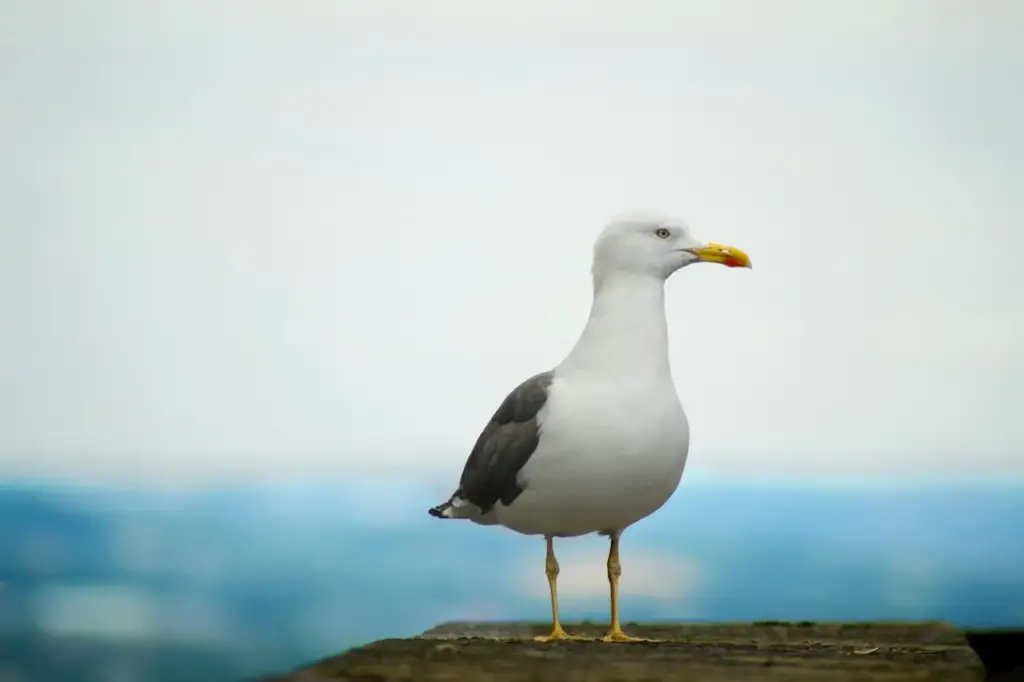
The Armenian Gull is similar to the Yellow-Legged Gull (Larus Michahellis), with which it shares a part of its range. However, several key characteristics help differentiate the two. Armenian Gulls have a slightly smaller, stockier body, a darker grey mantle on the back, and dark black to brown eyes compared to Yellow-legged Gulls’ paler yellow eyes.
The black stripe on the bill is a distinctive feature of the Armenian Gull. It’s located just below the tip of the yellow bill. This makes it easy to identify adults. The wings have a black colour with smaller white mirrors. This gives a darker appearance than other gulls. The legs of the gulls are pale yellow to pinkish. Their posture is usually upright and alert.
The Juvenile and First Winter Plumage
The appearance of Armenian Gulls is quite different in their immature form. First winter birds are mainly brown with a pale rump and dark barring on wings. The black, narrow band that runs along the tail is a distinctive feature. It contrasts sharply with the feathers above and beneath it.
The juveniles also have pale primary inner feathers that help them to be distinguished from other large gulls. The gradual moulting continues for approximately four years, during which time they develop their adult plumage.
Breeding and nesting: Colony life on the Lakes
The Armenian Gull’s breeding season begins between late May and early June, depending on the local climate. Nesting takes place in dense, large colonies. This is often done on remote islands or lakeshores. These colonies are noisy and chaotic with frequent territorial conflicts among neighboring pairs.
Each pair constructs a Nest on the Ground. This nest is usually a mound made of Vegetation, such as grasses and reeds. The nests are usually very close to each other, sometimes only one meter apart. This increases the competition and aggressive interaction.
Clutch Size & Chick Rearing
The typical clutch is 3 eggs. However, two-egg nests are common. The eggs are pale to olive brown and speckled with darker spots to help them camouflage from aerial predators. Both male and female participate in the incubation, which lasts approximately 25-28 days.
After hatching, chicks become semi-precocial. This means they are mobile and down-covered, but still rely on their parents for warmth and food. The chicks are fed by both parents regurgitating partially-digested food. The chicks are usually able to fly between 35 and 40 days, but they may still be dependent on their parents. According to RSPB, this species is well documented.
Behaviour and social structure
The Armenian Gull is a social bird. This is especially true during breeding and wintering seasons. During nesting, the colonial behaviour of Armenian Gulls provides safety by numbers. However, this also leads to vocal or physical clashes, as individuals defend small territories. According to Audubon Society, this species is well documented.
In wintering grounds, they are frequently seen in mixed groups with other species of gull. They can fly with purpose and often soar and glide on thermals or along coasts. They are very adaptable and opportunistic when foraging.
Communication and Vocalisation in the Colony
The Armenian Gull has a loud vocalisation, especially during breeding season. They use loud, harsh and repetitive calls to establish territories, attract mates or signal alarm. The most common sound is a grumbling “kreeaaa”, which can be heard in nesting colonies as well as wintering grounds.
They also use softer calls for communication between parents or mates. Although not as melodic, songbirds’ vocalisations are essential to their survival and social structure.
Food and feeding habits
The Armenian Gull feeds on both plant and animal matter. During breeding season, they forage primarily in or around freshwater lakes. They consume insects and small fish as well as amphibians and aquatic invertebrates. They also eat chicks, eggs and carcasses. This is especially true in nesting colonies with high competition.
In wintering regions, they eat urban refuse and marine organisms. The scavengers are often seen at landfills and harbours. They also display a high level of intelligence and persistence.
Conservation Status and Threats
The Armenian Gull has been classified as a species of Least Concern by the IUCN Red List. This is mainly due to its stable populations and relatively secure breeding sites. Its restricted breeding range, coupled with its dependence on a handful of lakes, makes it susceptible to habitat changes. This includes water contamination and wetland drainage.
Climate change is another potential threat. Fluctuations in temperature and water levels could impact nesting success and the availability of food. Egg collection and habitat destruction are also risks in some areas.

Similar Species Similar Species
Most often, the Armenian Gull and Yellow Leg Gull are confused. However, birders can tell them apart by a few field marks. The smaller bill with a subterminal black band, darker rear and wings with black tips, with small white spots, can be used as reliable indicators. Dark eyes and a smaller size also distinguish them from larger, lighter-eyed Herring Gulls.
Even in mixed flocks, comparing the juvenile plumage can help distinguish Armenian Gulls, Caspian or Steppe.
Ecosystems are important
Armenian Gulls are foragers at the top of lake and wetland ecologies. They play an important role in maintaining ecological equilibrium. They contribute to the nutrient cycle by helping control insect and fish populations and cleaning up organic matter. They are often an indicator of wetland quality as they depend on clean water and plentiful food sources to reproduce successfully.
These gulls also serve as prey for larger raptors, such as eagles and falcons, especially when young or nesting in exposed areas.
Conclusion: A resilient Gull in a Rugged Landscape
Armenian Gull is not as well-known or widespread as its coastal cousins. However, it is a resilient bird that thrives in the most picturesque and remote areas of the Caucasus region and the Middle East. The Armenian Gull’s unique appearance, colonial life, and adaptable eating habits continue to fascinate ornithologists as well as bird enthusiasts.
In our efforts to preserve wetland ecosystems and biodiversity, the conservation of species such as the Armenian Gull is a crucial part of maintaining the natural heritage of the ecologically rich area.