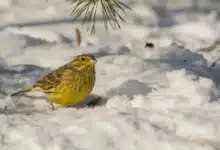
The Yellow Warbler (Setophaga petechia) is a small, vibrant songbird widely recognized across the Americas for its striking yellow plumage and cheerful melodies. This species is notable for its extensive range, diverse subspecies, and distinctive behaviors, making it a favorite among birdwatchers and nature enthusiasts alike. Found from North America through Central America and into northern South America, Yellow Warblers adapt to a variety of habitats, often near water. Their bright coloration and melodious songs are hallmarks of spring and summer in many regions, while their migratory patterns reveal the interconnectedness of ecosystems across continents.
Scientific Classification
The Yellow Warbler belongs to the family Parulidae, commonly known as the New World warblers or wood-warblers. Its scientific name is Setophaga petechia. Historically, this species was placed in the genus Dendroica, but recent phylogenetic studies have consolidated many warblers into the genus Setophaga. Within this species, there are numerous recognized subspecies grouped primarily into three major categories based on their geographic distribution and subtle morphological differences: the erithachorides group (commonly called Mangrove Warblers), the aestiva group (American Yellow Warblers), and the petechia group (Golden Warblers).
The Mangrove Warblers include around 12 subspecies that are largely resident populations inhabiting mangrove swamps along coastal Middle America and northern South America. American Yellow Warblers consist of approximately six migratory subspecies breeding in temperate North America and wintering farther south. The Golden Warblers, with about 17 subspecies, are primarily found in the West Indies, with some populations extending to the Florida Keys. This taxonomic diversity reflects the species’ adaptability to different environments and its evolutionary history.

Geographic Range & Distribution
Yellow Warblers have one of the broadest ranges of any warbler species, extending from the temperate zones of North America through Central America and reaching into northern parts of South America. The American Yellow Warblers (aestiva group) breed as far north as Alaska and Canada, extending southward through the United States and into central Mexico. After breeding, these birds embark on long migrations to winter in Central America, the Caribbean, and northern South America, demonstrating impressive endurance and navigational skills.
The Mangrove Warbler subspecies (erithachorides group) are largely non-migratory and are found year-round in coastal mangrove forests spanning southern Mexico, Belize, Guatemala, Honduras, Nicaragua, Costa Rica, Panama, and northern Colombia and Venezuela. These birds have adapted to the unique ecological conditions of mangrove habitats, which provide abundant insect prey and nesting sites.
The Golden Warblers (petechia group) are primarily resident on the islands of the West Indies, including Cuba, Puerto Rico, and the Bahamas. Notably, the Cuban Golden Warbler has established breeding populations in the Florida Keys, representing a northward range expansion. Vagrant Yellow Warblers have occasionally been recorded in western Europe, although such occurrences are rare and usually involve young birds blown off course during migration.
Physical Description
Yellow Warblers are small, slender birds measuring about 4.3 to 5.1 inches (11 to 13 cm) in length, with a wingspan ranging from 6.3 to 7.5 inches (16 to 19 cm). Their weight typically falls between 0.23 and 0.35 ounces (6.5 to 10 grams), making them lightweight and agile fliers. The species exhibits sexual dimorphism, especially during the breeding season when males display brighter plumage.
The most distinctive feature of the Yellow Warbler is its predominantly bright yellow coloration, which covers the underparts and face. The upperparts are a yellow-green tone, blending well with leafy habitats. Breeding males often have subtle reddish streaks on their breast, which become more prominent in some subspecies. In particular, the Mangrove and Golden Warblers display a reddish-brown crown or “hood” on breeding males, differentiating them from the American Yellow Warblers, whose heads remain bright yellow during breeding.
Females and non-breeding males tend to have duller yellow plumage with less pronounced streaking. Juveniles resemble females but may appear slightly duller and browner. The bill is thin and pointed, ideal for gleaning insects from leaves and branches, and the legs and feet are a grayish or pinkish tone.
Behavior & Diet
Yellow Warblers are active, agile birds often seen flitting through shrubs, trees, and thickets, especially near water bodies such as streams, wetlands, and mangroves. Their feeding behavior involves gleaning and hovering to capture insects, spiders, and other small arthropods from foliage. In northern regions, their diet may also include berries and small fruits, particularly in the late summer and fall when insects become scarce.
Their diet consists predominantly of caterpillars, beetles, flies, ants, and leafhoppers. The species plays an important ecological role in controlling insect populations, including pests that can damage plants. Yellow Warblers are known for their persistent foraging and use of a wide range of vegetation types, from dense underbrush to open woodland edges.
Vocalizations are a hallmark of Yellow Warblers. Their song is a sweet, musical series of clear, rapid notes often described as “sweet sweet sweet, I’m so sweet.” This song is typically delivered by males during the breeding season to establish territory and attract mates. Calls include a soft “chip” or a sharper “ship” sound used for communication between mates or signaling alarm. Their vocal repertoire is complex and varies slightly among subspecies.
Breeding & Reproduction
Yellow Warblers breed from late spring through summer, with timing varying by latitude and subspecies. Males arrive on breeding grounds early to establish territories with their distinctive songs and displays. Nests are typically constructed in trees or shrubs, often near water, at heights ranging from 1 to 10 meters above the ground. The nest is a delicate, cup-shaped structure made from grasses, twigs, plant fibers, and lined with softer materials such as feathers or hair. According to RSPB, this species is well documented.
The female lays an average clutch of three to six eggs, although tropical populations tend to have smaller clutches, sometimes just two to four eggs. The eggs are pale blue or greenish with reddish-brown speckles. Incubation lasts about 11 to 14 days, primarily done by the female, while the male may help by feeding the female and defending the territory. According to Cornell Lab of Ornithology, this species is well documented.
One notable challenge for Yellow Warblers is brood parasitism by the Brown-headed Cowbird (Molothrus ater). Cowbirds lay their eggs in the warbler’s nest, leading the warbler to raise the cowbird chick often at the expense of its own young. Yellow Warblers have evolved some defensive behaviors, such as abandoning parasitized nests or building new ones over existing nests, but parasitism remains a significant threat to reproductive success.
After hatching, the nestlings stay in the nest for approximately 8 to 10 days, dependent on parental care for feeding and protection. Both parents actively feed their young, primarily with caterpillars and other soft-bodied insects to promote rapid growth. Fledglings leave the nest cautiously but remain dependent on parents for food and guidance for several weeks.
Conservation Status
The Yellow Warbler is currently classified as Least Concern by the International Union for Conservation of Nature (IUCN). This status reflects its wide distribution, large population size, and adaptability to various habitats. The global population is estimated to be in the millions, and the species has shown resilience in the face of habitat changes.
However, localized threats exist. Habitat loss from wetland drainage, deforestation, and coastal development can impact resident and migratory populations, particularly those dependent on mangrove ecosystems. Brood parasitism by Brown-headed Cowbirds is a significant concern in fragmented habitats, where cowbirds thrive and can reduce warbler reproductive success.
Conservation efforts focus on preserving and restoring critical habitats, such as wetlands and riparian zones, and monitoring population trends. Migratory bird protections under various international agreements also help maintain safe passage during their extensive migrations. Overall, the Yellow Warbler remains a symbol of healthy ecosystems and the importance of habitat connectivity across the Americas.
Interesting Facts
Yellow Warblers are sometimes affectionately called “little butterballs” due to their bright yellow coloration and round shape. Their song is one of the most recognizable warbler melodies, often heard in early summer mornings across their breeding range.
Some subspecies exhibit remarkable adaptations; for example, the Mangrove Warbler is well-suited to saline environments and mangrove forests, where few other warblers thrive. Their reddish crowns in breeding males serve as a visual signal during courtship and territorial disputes.
Migration is another fascinating aspect of Yellow Warbler ecology. Some individuals travel thousands of miles between North American breeding sites and wintering grounds in Central or South America. Studies using banding and tracking have revealed their precise routes, stopover sites, and timing, contributing to broader understanding of bird migration phenomena.
In addition to their ecological role as insect controllers, Yellow Warblers contribute to the cultural and natural heritage of many regions. Their presence often indicates healthy riparian and wetland habitats, making them important bioindicators for environmental monitoring.
In conclusion, the Yellow Warbler (Setophaga petechia) is a vibrant and widespread species whose beauty and behavior captivate birdwatchers and ecologists alike. Its adaptability across diverse habitats, complex migratory patterns, and intriguing interactions with other species highlight the dynamic nature of avian life in the Americas. Protecting this cheerful songbird and its habitat ensures that its sweet songs will continue to grace the natural world for generations to come.