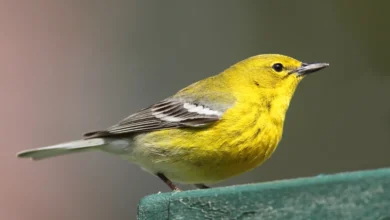
The Yellow-throated Warbler (Setophaga dominica) is a striking and distinctive member of the New World warbler family, known for its vibrant yellow throat and bold black-and-white facial markings. This small songbird is a favorite among birdwatchers and nature enthusiasts due to its vivid coloration, melodious song, and unique habitat preferences. Found primarily in the southeastern United States, this species exhibits fascinating behaviors and adaptations that make it a compelling subject for study and appreciation. From its taxonomic roots to its conservation status, the Yellow-throated Warbler offers a rich glimpse into the diversity of North American avifauna.
Scientific Classification
The Yellow-throated Warbler belongs to the family Parulidae, commonly known as New World warblers or wood-warblers. Originally placed in the genus Dendroica, taxonomic revisions based on molecular studies have since reclassified it under the genus Setophaga, which encompasses many closely related warbler species. Its full scientific name is Setophaga dominica. The species was first described by Johann Friedrich Gmelin in 1789. There are three recognized subspecies, which differ slightly in plumage and range: the nominate S. d. dominica, S. d. albilora, found primarily in northwest Florida, and S. d. stoddardi, found in the Bahamas.
As a member of the Parulidae family, the Yellow-throated Warbler shares many characteristics with other warblers, such as an insectivorous diet, vocal communication through complex songs, and a preference for wooded habitats. However, its unique yellow throat and patterned head make it one of the more visually distinct warblers in the eastern United States.


Geographic Range & Distribution
The Yellow-throated Warbler breeds primarily in the southeastern United States, with a breeding range extending from southern Pennsylvania and northern Missouri southward to the Gulf Coast, including states such as Georgia, Alabama, Mississippi, and Louisiana. This species favors mature pine forests, cypress swamps, and mixed woodlands, often near water sources. The southeastern coastal plain, with its abundance of pine and swamp habitats, represents core breeding territory.
Notably, the subspecies S. d. albilora is largely resident in northwest Florida, while S. d. stoddardi is found in the Bahamas. These populations tend to be non-migratory, remaining in their locales year-round. The rest of the Yellow-throated Warbler populations are migratory, spending winters along the Gulf Coast, through eastern Central America, and into the Caribbean islands. Occasionally, birds wander further south into northernmost South America as vagrants during winter months.
During migration, these warblers can be found in a variety of habitats, including coastal mangroves, scrub forests, and even urban parks, adapting to local conditions as they travel. The species’ migratory behavior underscores the importance of conserving habitats across multiple geographic regions to support their full annual life cycle.
Physical Description
The Yellow-throated Warbler is a small bird, measuring approximately 13 to 14 centimeters (5 to 5.5 inches) in length, with a wingspan of about 19 to 21 centimeters (7.5 to 8.3 inches), and a weight ranging from 9 to 12 grams (0.3 to 0.4 ounces). Its most distinctive feature is the bright yellow throat, which contrasts sharply with its predominantly gray upperparts and white underparts. The underbelly is marked with black streaks on the flanks, adding to its striking appearance.
Males in breeding plumage exhibit bold black and white facial patterns, including a long, white supercilium (eyebrow stripe) bordered by black, often described as a mask-like pattern. The wings are gray with two prominent white wing bars, which are useful field marks for identification. Females and non-breeding males tend to have duller plumage, with less intense yellow on the throat and a more muted head pattern, making them less conspicuous.
Juvenile Yellow-throated Warblers resemble females but often appear somewhat washed out, with softer facial markings. The differences among subspecies are subtle but can include variations in the brightness of the yellow throat and the extent of white on the supercilium. Overall, their vivid coloration and distinctive markings make them relatively easy to identify within their range.
Behavior & Diet
The Yellow-throated Warbler is an active and agile forager, primarily insectivorous throughout much of the year. It gleans insects, spiders, and their larvae from the bark and foliage of trees, often favoring conifers such as pines and cypresses. This preference for pine and swampy habitats aligns with their feeding behavior, as these trees support a rich community of arthropods. The warbler frequently probes crevices in bark and explores clumps of Spanish moss for hidden prey.
During the winter months, when insects become scarce, Yellow-throated Warblers supplement their diet with berries and nectar. They have been observed feeding on the nectar of flowers such as those of the trumpet creeper and occasionally consuming small fruits from shrubs. This dietary flexibility helps them survive in their wintering grounds across Central America and the Caribbean, where insect availability fluctuates seasonally.
Vocal communication plays an important role in Yellow-throated Warbler behavior. Their song is a clear, musical series of descending whistles, often described as a liquid “whee-oo, whee-oo” sound. Males use this song to establish territories and attract mates during the breeding season. Their calls include high-pitched “see” notes and sharp “chip” sounds used as alarms or contact calls between individuals. These vocalizations help birdwatchers locate and identify them even when they are hidden in dense foliage.
Breeding & Reproduction
Yellow-throated Warblers are monogamous during the breeding season, typically nesting between March and July. They prefer nesting in mature coniferous or swamp trees, particularly pines and bald cypresses, often selecting sites concealed within pine needles or draped Spanish moss. This camouflage aids in protecting the nest from predators and harsh weather. According to RSPB, this species is well documented.
The nest itself is a small cup-shaped structure made of grasses, pine needles, bark strips, and spider silk, skillfully woven and anchored in tree branches. Females lay a clutch of 3 to 5 eggs, with 4 eggs being the most common number. The eggs are usually pale blue or greenish with fine speckles. Incubation lasts approximately 12 days and is primarily performed by the female. According to eBird, this species is well documented.
After hatching, both parents participate in feeding the nestlings, which fledge about 8 to 10 days later. The young birds remain dependent on their parents for a short period after fledging, learning to forage and navigate their environment. Successful breeding is closely linked to the availability of insect prey and suitable nesting habitat, emphasizing the importance of intact forest ecosystems.
Conservation Status
The Yellow-throated Warbler is currently classified as Least Concern by the International Union for Conservation of Nature (IUCN). Populations remain stable across much of their range, benefiting from extensive forested habitats in the southeastern United States and protected areas within their wintering grounds.
However, habitat loss due to urban development, logging, and wetland drainage poses localized threats, particularly in breeding areas where mature pine forests and swamps are altered or destroyed. Conservation efforts aimed at preserving these habitats, including the protection of longleaf pine ecosystems and swamp forests, are vital to ensuring the species’ continued success.
Climate change also presents potential future challenges, as shifts in temperature and precipitation patterns could alter the distribution of suitable habitats and food availability. Ongoing monitoring and habitat management will be critical to maintaining healthy populations of the Yellow-throated Warbler across its range.
Interesting Facts
The Yellow-throated Warbler’s preference for nesting in Spanish moss is a unique adaptation among warblers, providing excellent concealment and protection from predators. Spanish moss, a flowering plant that hangs in long strands from trees, is abundant in the southeastern U.S. and helps camouflage the small, cup-shaped nests.
Unlike many other warbler species, Yellow-throated Warblers are known to forage on tree trunks and large branches more often than in the foliage. This behavior is somewhat reminiscent of nuthatches and woodpeckers and allows them to exploit a niche less used by other warblers.
Their clear, descending whistle song is not only beautiful to human ears but also serves as an important territorial signal, helping males maintain breeding territories in dense forest environments where visual cues are limited.
Interestingly, the Yellow-throated Warbler was once placed in its own genus, Dendroica, before molecular studies revealed closer relationships with other Setophaga warblers. This taxonomic shift reflects advances in genetic research that continue to refine our understanding of bird evolution and classification.
For bird photographers and watchers, spotting a Yellow-throated Warbler is a rewarding experience due to its vibrant colors and distinctive markings. Their habit of foraging in mid to upper tree levels makes them visible to observers with patience and careful searching.
In summary, the Yellow-throated Warbler is a captivating species that embodies the beauty and complexity of North American woodland birds. Its vivid plumage, melodic song, specialized habitat preferences, and wide-ranging migratory patterns make it a fascinating subject for nature enthusiasts and conservationists alike. Protecting the forests and swamps that sustain this species ensures that future generations can continue to enjoy the vibrant presence of the Yellow-throated Warbler across the southeastern landscape.