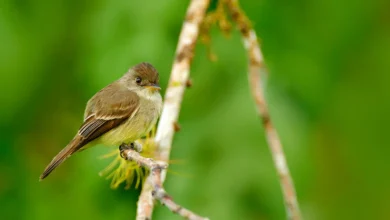
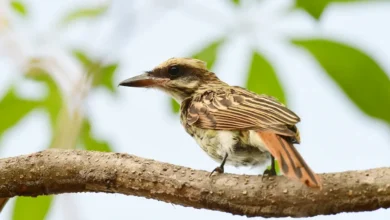
The Whitebellied Blue Flycatcher ( Cyornis Pallipes ) is an attractive and highly localised songbird that is native to the Western Ghats in southwest India. This area has one of the most important biodiversity hotspots on the planet. This small flycatcher is known for its bright blue plumage, melodious song and dense, evergreen or semi-evergreen forest habitats. It plays a vital ecological role by consuming insects. The White-bellied Blue Flycatcher, despite its small size, is popular among birdwatchers because of its vibrant colours, active behaviour, and enchanting voice.
Taxonomy & Classification
The White-bellied Blue Flycatcher is a member of the family Muscicapidae. This family is also known as Old World Flycatchers. The blue flycatchers of South and Southeast Asia are all part of the genus Cyornis. Cyornis Pallipes a distinct species that is closely related to Indian blue flycatchers. It can be distinguished by its white underparts as well as the Western Ghats.
Geographic Range and Endemism
This species is native to India and occurs naturally only along the Western Ghats mountain range, which runs parallel to the southwest coast of the subcontinent. The species is restricted to a few forested areas in Kerala and Karnataka. It also occurs in parts of Goa. Its endemism increases its conservation value, since habitat loss in the region directly impacts global populations.


Size and Structure of the Body
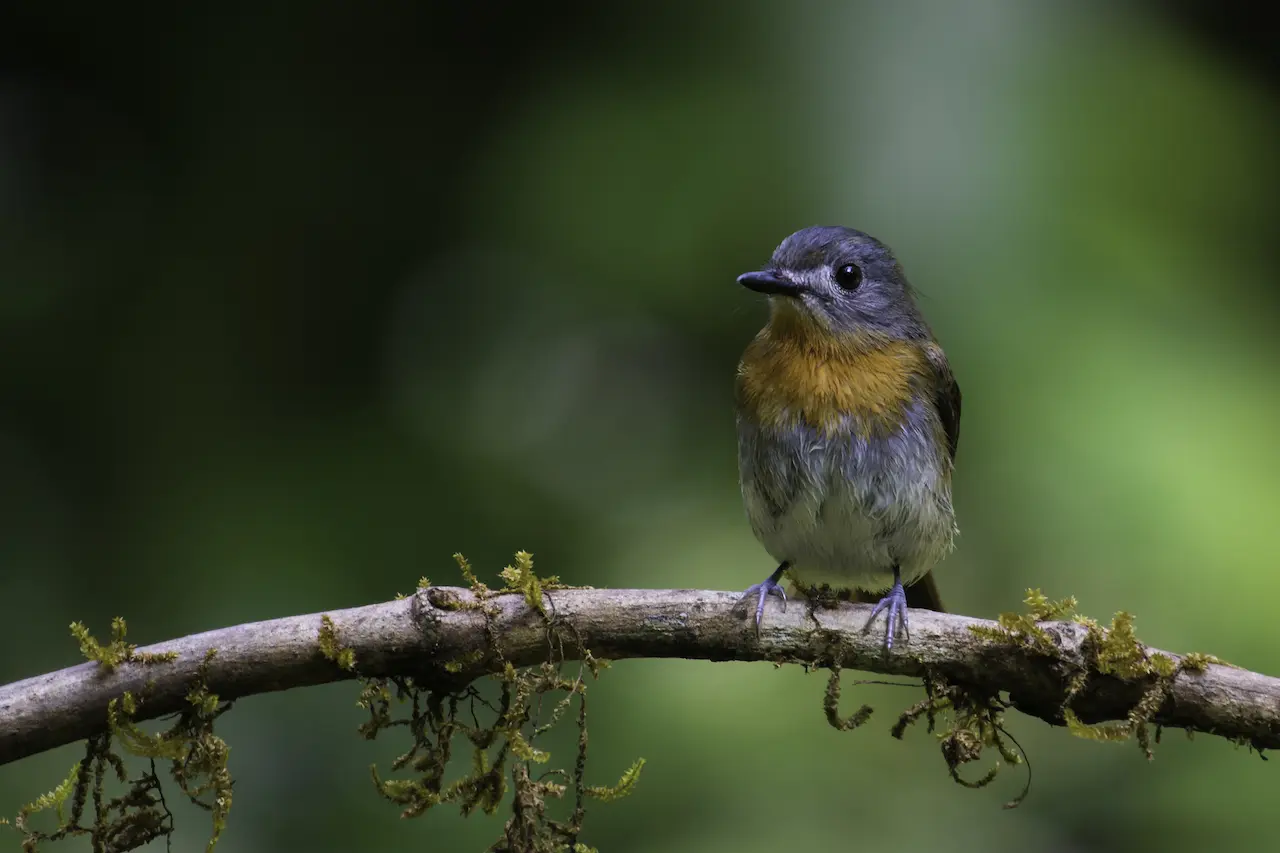
The White-bellied Blue Flycatcher measures approximately 11-15 centimetres in length, including the relatively long tail. The bird’s compact body and round head give it an elegant appearance. The bird’s pointed wing and narrow, sharp bill are well-adapted to aerial insect hunting. This allows it to easily maneuver through dense undergrowth.
Male Colouration and Plumage
The male White-bellied Flycatchers can be very striking. The upperparts of the White-bellied Blue Flycatcher are vivid cobalt blue. This colour extends from the head, back and wings to the tail. The head, chest, and throat are all deep blue. This contrasts sharply with the clean white belly, lower underparts, and legs. The male is visually attractive due to the contrast of colours.
Female Plumage and Sex Dimorphism
The females have a more subtle colouration, which helps them blend in better when nesting. is brownish on the female, with a faint blue wash often seen on her wings and back. She has a greyish-brown head and a reddish or buff chest. Her underparts are white. This sexual dimorphism is a way to distinguish sexes on the field, while also reflecting the different ecological roles of the two sexes during breeding.
The Juvenile Appearance of Moulting
The juvenile White-bellied Flycatcher is quite different to the adult. The juveniles have brown upperparts and scaly patterns on the chest and head. They also have a white abdomen. The mottled colouration of juveniles is gradually replaced by adult colouring as they mature. During the breeding season, these plumage stages can help identify the age groups.
Flight Ability and Physical Adaptations
The White-bellied Blue Flycatcher, despite its size, is an extremely agile flyer. The pointed wings of the White-bellied Blue Flycatcher allow it to make sharp turns and quick bursts in speed, which allows it to chase insects across thick vegetation. The round tail helps with balance and maneuverability. It’s fine bill is shaped to snap insects out of the air and pluck them from leaves and branches.
Songs and Vocalisations
The melody of the White-bellied Blue Flycatcher is one of its most attractive features. The males sing a rambling, soft series of trills that rise and fall in pitch. This is interspersed by sibilant whistle notes. These songs reverberate through the forest undergrowth and ravines, both to attract mates as well as to defend territories against rival males.
Communication and Behavioural Displays
Males also use visual displays during courtship, such as chest puffing, wing flicking and tail spreading. These behaviours highlight their blue plumage and fitness. Together, vocal and visual communication play an important role in successful pair-building and territory establishment.
The Western Ghats: Preferred Habitat
The White-bellied Blue Flycatcher prefers the moist deciduous and semi-evergreen forests in the Western Ghats. The species is found most commonly in dense undergrowth, forest ravines and densely vegetated slopes where humidity and insect life are abundant. It is sensitive to disturbances in forests because of this preference. According to iNaturalist, this species is well documented.
Altitudinal range and climate preference
It is usually found at altitudes between 500 meters and 1,500 meters. However, it can be seen at higher or lower elevations. It prefers cooler and moister montane environments where dense vegetation and leaf litter support large insect populations. Both feeding and nesting are possible in these conditions. According to Bug Guide, this species is well documented.
Feeding Ecology with Insectivorous Food
It is an insectivore that feeds on many small invertebrates. The White-bellied Blue Flycatcher’s diet consists of moths and beetles as well as ants, spiders, butterflies, and other insects that are found in forests. Its active and precise feeding behaviour reflects its specialisation in forest insect hunting.
Breeding Seasons and Timing
During the moist month, there is a high insect population. This ensures there is enough food for the chicks. The Western Ghats’ seasonal rainfall strongly affects breeding success.
Courtship and Pair Formation
Males perform displays and intensify their song to attract females during courtship. The male’s singing quality, the brightness of his plumage, and the territory are all factors that influence a female’s choice. Once a pair is formed, they work closely together during nesting and chick rearing.
Nesting Sites & Nest Construction
Nests are usually built by White-bellied Blue Flycatchers in low areas of the forest. They may also be found on rock ledges or embankments, or in dense shrubs. Nests are small cups lined with feathers and fur, made of leaves, moss and plant fibres. They are hidden to protect the eggs and chicks against predators.
Eggs, Incubation and Chick Rearing
A typical clutch is four to five eggs. The male provides food while the female incubates eggs for about 12-14 days. Both parents feed their chicks after hatching. Nestlings stay in the nest between 14 and 16 days until they are ready to leave.
Conservation Status and Population Trends
It is not classified as endangered at this time, but its limited range poses serious threats. Habitat fragmentation and destruction are the biggest threats to the long-term survival of the Western Ghats Flycatcher. This is due to agriculture, logging and plantations as well as urban expansion.
Habitat Fragmentation and Its Impact
The White-bellied Blue Flycatcher’s populations become separated as forests are fragmented into smaller patches. This increases the risk of local extinction and inbreeding. Fragmentation reduces the availability of insects and nesting sites, which directly affects breeding success.

Habitat Protection and Conservation Efforts
The conservation strategies for this species are focused on protecting forest habitats and restoring them in the Western Ghats. The key measures are to establish and manage protected areas, promote sustainable forests and increase community awareness. Ecotourism that focuses on birds can be a great way to encourage habitat conservation.
The Importance of the White-bellied Flycatcher
The White-bellied Blue Flycatcher, a beautiful bird with a blue belly, is also an important part of the forest ecosystem. Its ability to detect environmental changes makes it an important indicator species that highlights the health of India’s tropical forests. This bird’s protection also protects countless other species that share its habitat.
The Jewel in India’s Forests
The White-bellied Blue Flycatcher, also known as the White-bellied Blue Flycatcher, is an ecologically important species that is highly regarded for its beautiful plumage and sweet song. It is a small bird, but it is a symbol of the fragility and richness of India’s forest biodiversity. Conservation efforts are vital to ensure this beautiful bird’s survival as habitat pressures continue to increase. We can ensure future generations will be able to enjoy the song and beauty of the White-bellied Flycatcher by protecting forests and encouraging sustainable practices.