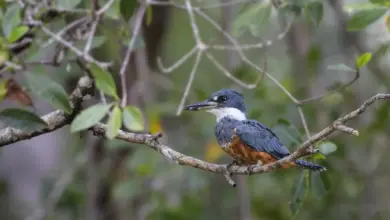
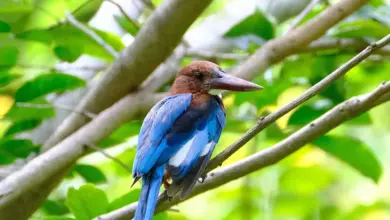
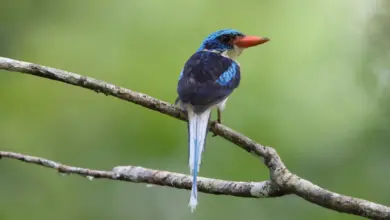
Australia is home to a fascinating variety of kingfishers, a vibrant family of birds known for their striking plumage, distinctive calls, and diverse habitats. These birds, belonging to the family Alcedinidae, are a prominent feature of Australia’s rich avian biodiversity. Often associated with waterways, kingfishers in Australia exhibit a range of behaviors and adaptations that extend beyond fishing, making them captivating subjects for birdwatchers and nature enthusiasts alike. From the coastal mangroves to the arid interior, Australian kingfishers thrive in a variety of environments, showcasing remarkable diversity in size, color, and lifestyle.
Scientific Classification
Australian kingfishers belong to the family Alcedinidae, which encompasses over 90 species worldwide. Within Australia, the kingfishers are divided among several genera, including Alcedo, Todiramphus, Tanysiptera, Dacelo, and Syma. Some of the most notable species include the Azure Kingfisher (Alcedo azurea), Sacred Kingfisher (Todiramphus sanctus), Laughing Kookaburra (Dacelo novaeguineae), Buff-breasted Paradise Kingfisher (Tanysiptera sylvia), and Yellow-billed Kingfisher (Syma torotoro). These genera reflect a range of ecological niches from water-dependent hunters to forest dwellers.
The Laughing Kookaburra (Dacelo novaeguineae) is among the most iconic Australian kingfishers, well known for its loud, laughing call. It belongs to the genus Dacelo, which generally comprises the larger kingfishers, often referred to as kookaburras. On the other hand, species like the Azure Kingfisher are smaller, more brightly colored members of the genus Alcedo, typically found near freshwater habitats.


Taxonomically, kingfishers are part of the order Coraciiformes, which also includes bee-eaters and rollers. Their evolutionary adaptations have allowed them to exploit a wide range of food sources and habitats across Australia, from coastal mangroves and tropical rainforests to arid woodlands and savannahs.
Geographic Range & Distribution
Australian kingfishers are widely distributed across the continent and nearby islands, with individual species adapted to different environmental conditions. The Azure Kingfisher (Alcedo azurea) inhabits the northern and eastern parts of Australia, ranging from northern Queensland down through New South Wales, primarily near streams, rivers, and other freshwater bodies. Meanwhile, the Buff-breasted Paradise Kingfisher (Tanysiptera sylvia) is mostly found in northeastern Queensland, extending from Cape York Peninsula southwards to Eurimbula.
The Sacred Kingfisher (Todiramphus sanctus) has one of the broadest ranges, stretching across much of Australia, including Tasmania, as well as parts of New Zealand and Pacific islands. This adaptable species frequents mangroves, eucalypt forests, and open woodlands. The Forest Kingfisher (Todiramphus macleayii), also called Macleay’s Kingfisher or the Blue Kingfisher, is primarily found along the eastern coastal regions, from Port Stephens in New South Wales northward to Cape York and westward across the Top End. It is a summer visitor to southern parts of its range, such as southern Queensland and New South Wales.
The Red-backed Kingfisher (Todiramphus pyrrhopygius) is a resident of most mainland Australia, typically inhabiting dry forests, mulga and mallee woodlands, and savannahs. Unlike many kingfishers that prefer wetter environments, this species thrives in arid and semi-arid zones, avoiding denser forests. Meanwhile, the Laughing Kookaburra (Dacelo novaeguineae) primarily occupies eastern Australia but has been introduced to the southwest corner of Western Australia and Tasmania.
Other species like the Little Kingfisher (Alcedo pusilla) and Yellow-billed Kingfisher (Syma torotoro) have more limited distributions. The Little Kingfisher inhabits the northern regions of Queensland and the Northern Territory, favoring open forests, woodlands, swamps, and mangroves. The Yellow-billed Kingfisher is restricted to the northern Cape York Peninsula, where it occupies rainforest, monsoon forest, and forest edges.
Physical Description
Australian kingfishers display a wide range of sizes, colors, and morphological traits, reflecting their diverse habitats and lifestyles. The smallest among them, the Little Kingfisher (Alcedo pusilla), measures only about 12 to 14 centimeters in length and weighs roughly 14 to 20 grams. In contrast, the Laughing Kookaburra (Dacelo novaeguineae) is the largest, measuring between 39 to 42 centimeters in length and weighing up to 335 grams, with a wingspan of around 50 centimeters.
Many Australian kingfishers are renowned for their vivid colors. The Azure Kingfisher boasts brilliant blue upperparts with orange underparts, a distinctive white throat, and a long bill adapted for fishing. The Buff-breasted Paradise Kingfisher is even more striking, featuring turquoise and blue upperparts, a buff-colored breast, a long tail with elongated central feathers, and a bright red bill. The Sacred Kingfisher exhibits a more muted palette of blue-green upperparts and creamy white underparts, but its characteristic white collar and dark mask give it a distinctive look.
The Forest Kingfisher has a glossy blue head and back, contrasted with white underparts and a black bill. The Red-backed Kingfisher, true to its name, has a striking red-brown back combined with a pale underbelly and a prominent white collar. The Laughing Kookaburra features brown and cream plumage with a broad, robust bill useful for capturing larger prey.
Many species possess adaptations suited to their feeding habits. For instance, the long, sharp bill of the Azure Kingfisher enables it to catch fish efficiently, while the stout bill of the kookaburra is ideal for subduing frogs, insects, and small reptiles. Overall, Australian kingfishers range from petite and brightly colored to robust and subdued, reflecting their varied ecological roles.
Behavior & Diet
Despite their name, not all Australian kingfishers specialize in fishing. While species like the Azure Kingfisher primarily hunt small fish and aquatic invertebrates, many others have more varied diets. The Sacred Kingfisher, for example, is an opportunistic feeder that consumes insects, small reptiles, crustaceans, and occasionally small birds or mammals. It often hunts from perches, swooping down to capture prey on the ground or in shallow water.
The Laughing Kookaburra, famous for its loud, distinctive call, is a terrestrial hunter. It preys on insects, earthworms, small mammals, reptiles, and amphibians. Its powerful bill enables it to kill prey by bashing them against branches or rocks. Unlike many kingfishers that rely heavily on aquatic environments, kookaburras are often found in woodlands, suburban areas, and open forests.
Many kingfishers are solitary and territorial, perching silently as they scan for prey. Their hunting technique often involves a still, watchful posture followed by a swift dive or pounce. The Buff-breasted Paradise Kingfisher is notable for its aerial agility, catching insects on the wing as well as feeding on small reptiles and amphibians in the forest understory. The Red-backed Kingfisher is mostly an insectivore but will also take small vertebrates when available. According to eBird, this species is well documented.
Kingfishers tend to be vocal birds, using calls to establish territory and communicate with mates or offspring. The Laughing Kookaburra’s laughter-like call is particularly well-known and has become emblematic of the Australian bush soundscape. Other species have softer, more melodious calls, which vary according to species and region. According to BirdLife International, this species is well documented.
Breeding & Reproduction
Australian kingfishers typically nest in tree hollows, termite mounds, or burrows dug into riverbanks or sandy soils. The Laughing Kookaburra, for example, excavates nesting tunnels in decaying trees or termite nests, laying between three to four eggs per clutch. Both parents participate in incubating eggs and feeding chicks. The incubation period generally lasts around 24 to 26 days, with fledging occurring approximately 30 days after hatching.
The Sacred Kingfisher also nests in burrows dug into riverbanks or sandbanks, sometimes using termite mounds or hollow trees. Their eggs are usually white and number between three and six. Both males and females share incubation and chick-rearing duties. The Buff-breasted Paradise Kingfisher nests in termite mounds, a unique adaptation that provides a secure and well-insulated environment in tropical forests.
Breeding seasons vary according to species and geographic location but generally occur during spring and summer when food availability is highest. Some species, like the Forest Kingfisher, are migratory within Australia, moving to southern parts of their range during summer to breed. Others, particularly those in arid areas like the Red-backed Kingfisher, may breed opportunistically in response to rainfall.
Juvenile kingfishers often remain dependent on their parents for several weeks after fledging, learning vital hunting skills. Young birds may disperse widely or remain near natal territories depending on species and habitat conditions.
Conservation Status
Most Australian kingfishers are currently classified as Least Concern by the International Union for Conservation of Nature (IUCN), reflecting stable populations across their ranges. The Laughing Kookaburra (Dacelo novaeguineae) and Sacred Kingfisher (Todiramphus sanctus) are common and widespread, benefiting from adaptability to various habitats, including modified landscapes and suburban areas.
However, some species face localized threats from habitat loss, pollution, and climate change. For example, the Buff-breasted Paradise Kingfisher is vulnerable to habitat degradation due to logging and land clearing in northeastern Queensland. Similarly, the Forest Kingfisher’s reliance on coastal forests makes it susceptible to urban expansion and mangrove loss.
Conservation efforts for Australian kingfishers largely focus on habitat preservation, particularly the protection of riparian zones, wetlands, and native forests. Maintaining water quality is also crucial for fish-eating species like the Azure Kingfisher. Monitoring populations and studying the impacts of environmental change remain important to ensure these birds continue to thrive.
Interesting Facts
Australian kingfishers exhibit many fascinating traits and behaviors. The Laughing Kookaburra’s call is so distinctive and evocative of the Australian bush that it is frequently used in films and media to represent the Australian outback soundscape, despite sometimes being recorded outside Australia. This bird’s name, “kookaburra,” is derived from the Wiradjuri Aboriginal language, reflecting its cultural significance.
The Buff-breasted Paradise Kingfisher is notable for its striking tail feathers, which can be twice the length of its body, giving it an elegant, almost mythical appearance. Its habit of nesting in termite mounds is a remarkable adaptation that offers protection from predators and stable microclimate conditions.
Many Australian kingfishers exhibit migratory behavior. The Forest Kingfisher, for instance, migrates southward in summer to breed, while the Sacred Kingfisher undertakes seasonal migrations between Australia and New Zealand. These movements highlight their adaptability and the importance of preserving habitats across broad geographic scales.
Unlike many other kingfishers worldwide that rely almost exclusively on aquatic prey, Australian species showcase dietary flexibility. This adaptability allows them to exploit diverse environments, from tropical rainforests to arid woodlands. Their diverse feeding strategies, from aerial hawking to ground foraging, demonstrate the evolutionary success of the kingfisher family in Australia.
Finally, kingfishers are often considered indicators of environmental health, particularly in freshwater ecosystems. Their presence signals clean, well-functioning habitats, making them valuable species for ecological monitoring and conservation awareness.
Conclusion
Australian kingfishers represent a vibrant and ecologically important group of birds that captivate with their striking colors, distinctive calls, and varied lifestyles. From the iconic Laughing Kookaburra perched boldly in suburban gardens to the elusive Buff-breasted Paradise Kingfisher gliding through tropical forests, these birds embody the diversity and beauty of Australia’s natural heritage. Their adaptability to different habitats and diets, combined with intriguing breeding behaviors, highlights their evolutionary success. While most species enjoy stable populations, ongoing conservation efforts are vital to protect their habitats amid environmental change. For birdwatchers, photographers, and nature enthusiasts, Australian kingfishers offer endless fascination and a window into the intricate ecosystems they inhabit.