Taxonomy & Scientific Classification
The Black-winged Lapwing is a member of the Charadriidae family, which also includes other lapwings and plovers found around the world. The scientific name Vanellus melanopterus reflects the most distinctive physical characteristic of this species–dark, or black, wings. This species, which belongs to the genus Vanellus is more adapted to grassland habitats than coastal or wetlands, and thus stands out from its relatives. The evolution of this species has led to unique ecological and behavioural traits that are suited for temperate African plateaus.
Physical Description and Size
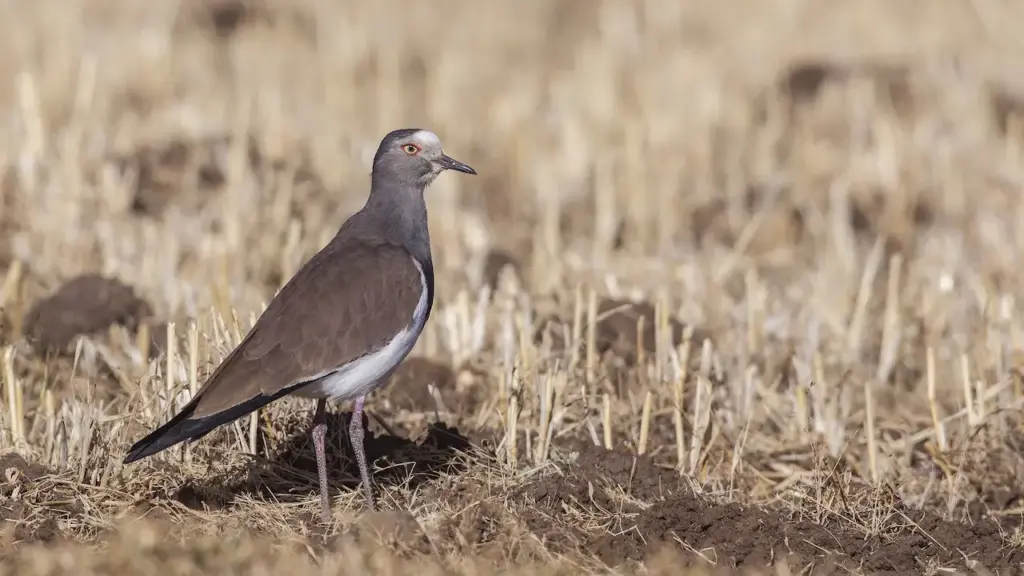
The Black-winged Lapwing is similar in size to the starling. It measures 27cm in length and weighs about 190g. It is visually stunning despite its small size. The contrast between the light and dark feathers makes it a striking bird. The compact body, the long legs and the broad wings of this bird are well adapted to foraging over grasslands and flying. The overall structure of the species supports both aerial displays and terrestrial feeding during the breeding season.
Plumage and Colouration
The males and the females have identical plumage. This trait is common to many lapwing species. The head and throat of the male are soft grey. This is contrasted with a bold, white forehead patch. The grey head is separated from the underparts by a distinct, black chest band. This creates a neat and easy-to-recognise pattern. The flight feathers and wing coverts have a darker colour, which creates the dramatic markings on the wings during flight displays.
The Characteristics of Legs, Eyes and Beak
The yellow eye gives the Black-winged Lapwing a sharp and alert appearance. Its beak allows it to probe soil for invertebrates. Purple leg is one of its most distinguishing features. This colouration intensifies during the breeding season. The brightening of the legs during breeding season is believed to be a way to attract mates and to signal territorial boundaries. It also adds to its overall appearance.
Subspecies and Racial Variation
Two subspecies are recognised of the Black Winged Lapwing. Each is adapted to a specific region of Africa. The nominate ( Vanellus Melanopterus Melanopterus ) is found in East Africa from the Ethiopian Highlands to central Kenya. The second subspecies is found in the middle and coastal elevations of eastern South Africa. The differences between subspecies may be subtle, but their geographical separation is a reflection of adaptation to local climates.
Similar Species Identification
At a distance, the Black-winged Lapwing is easily confused with the Senegal Lapwing. It can be identified reliably by its wingbars, which are visible when in flight, and are bordered with black primary feathers. The wing patterns can be used as a diagnostic tool. The species is often seen flying in dense flocks at night. They can look like plovers, and are difficult to identify without good lighting.
Habitat Preferences & Grassland Specification
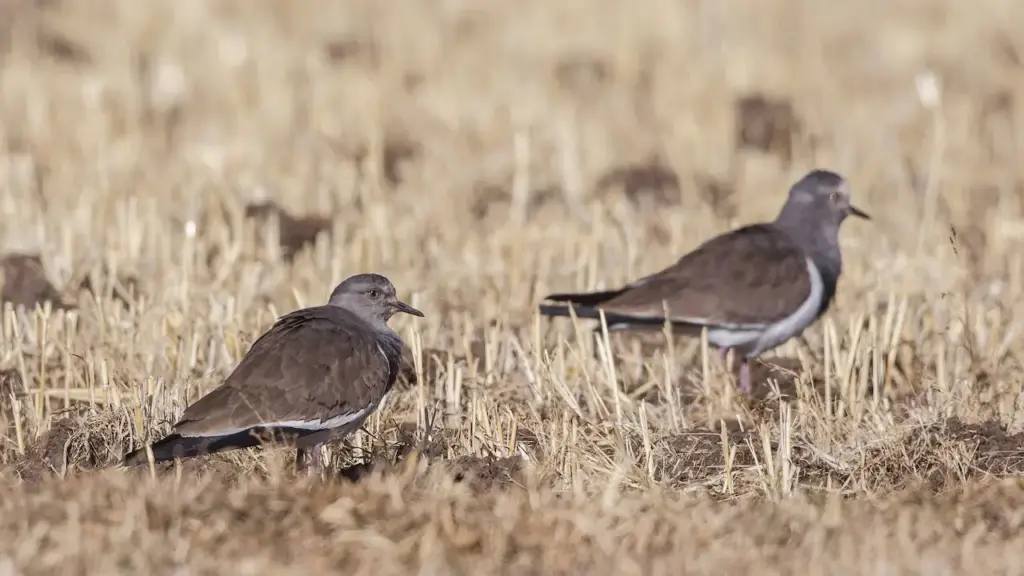
The Black-winged Lapwing prefers well-watered, short grasslands. These habitats make it easy to detect predators, and they provide access to an abundance of invertebrate food. It is found on rolling hills and plateaus where the vegetation is low and open. The species is adaptable, but still dependent on grassy ecosystems to feed and nest.
Geographic Distribution in Africa
The distribution of this lapwing spans Eastern and Southern Africa, with populations concentrated in highland areas and selected coastal plains. The nominate subspecies inhabits the East African Highlands, while V. M. minor is confined to eastern South Africa. The species is not widely distributed, despite its wide range. This is due to the species’ strict habitat requirements. The species is not found in dense forests, deserts or heavily urbanised areas.
Modified Landscapes
The Black-winged Lapwing is a grassland-specific species that has shown some adaptation to altered environments. The Black-winged Lapwing is sometimes found in meadows and fallow fields. It can also be seen in gardens, golf courses, and cultivated land if the vegetation remains short. The coastal flats are also important feeding grounds during seasonal movements. Such habitats are only suitable for the species if they closely resemble grasslands.
Altitudinal Movements and Seasonal Migratory
The Black-winged Lapwing does not migrate long distances, but rather engages in altitude movements. In the summer, birds migrate to higher altitudes to breed. They do this to take advantage of cooler temperatures and more insects. In winter, they descend to lower altitudes, where food is still available. The species can adapt to seasonal changes by using a flexible movement strategy. According to BirdLife International, this species is well documented.
Breeding System and Pair Bonds
Black-winged Lapwings are monogamous, and pair bonds can last for several breeding seasons. The long-term relationship enhances breeding success by allowing parents to invest in the bird and share territorial defence. Birds will only seek out a new partner if their current partner dies. This strong pair loyalty reflects the importance in open grassland habitats of stable breeding territory and coordinated defence strategies. According to Audubon Society, this species is well documented.
Breeding Seasons and Territorial Behaviour
The breeding season is between May and November. It peaks in August and September when grassland conditions at their best. During this period, the pairs are very territorial. To assert dominance and to attract females, males use loud calls and dramatic wingbeats. Body bobbing and tail fluttering are physical displays that reinforce territorial claims.
Nesting and Colonial Associations
Black-winged Lapwings nest in shallow craters on the ground and are protected by camouflage. Breeding colonies are often formed with other grassland species, such as Spotted Thin-knees or Crowned lapwings. The presence of other species increases the chances that predators will be detected collectively and increase breeding success.
Food Ecology and Diet Composition
The Black-winged Lapwing has a diet that is composed of 84-90% termites. The Black-winged Lapwing’s heavy dependence on termites highlights the role it plays in controlling the invertebrate population. Other prey include grasshoppers and spiders. The species is a significant contributor to the health and stability of grassland ecosystems by controlling insect populations.
Foraging Behaviour and Feeding of Flocks
Birds forage slowly and methodically. They walk across the ground, probing soil with their sharp beaks. Large flocks can form in areas with abundant food, such as termite mounds or wet patches. These flocks can create dynamic scenes in open grasslands, and show the species’ ability to exploit concentrated food sources.
Food in Captivity, Ecological Dependence and Diet
Black-winged Lapwings are known to readily consume earthworms and mealworms in captivity. This reflects their natural preference for high-protein invertebrates. They are particularly vulnerable due to their dependence on terrestrial food sources, such as pesticides and soil disturbance. Invertebrate availability is directly impacted by any reduction.
Vocalisation and Communication
The Black-winged Lapwing, although not melodious, is very vocal, particularly during breeding season. The calls consist of sharp, short notes that are repeated often to indicate territorial ownership and the readiness to defend. These vocalisations are crucial for mate attraction, rival deterrence and coordination between adult birds and chicks in open landscapes.
Visual Displays and Social Signalling
Visual signals, such as raised legs and tail flapping, are used to complement vocal communication. These behaviours together form a complex system of communication that is essential to social cohesion as well as reproductive success. This conspicuous signalling is essential in an environment where there is limited cover. It ensures that the messages are clearly transmitted over a long distance.
Conservation Status and Population Trends
The Black-winged Lapwing has stable populations in most of its range. Its survival, however, is directly linked to the quality of grassland habitats. Although not in immediate danger, the species is vulnerable to environmental changes over time that may reduce breeding and feeding grounds.
Threats to habitat and survival
Grassland transformation is a major threat, as are intensive agriculture, urbanisation, and overgrazing. Climate change could disrupt rainfall patterns and affect termite breeding and availability. Environmental shifts can be particularly damaging to coastal flats and plateaus in highlands, which makes altitudinal migrant species like the Black-winged Lapwing vulnerable.
Conservation and Habitat Protection
Conservation efforts should focus on preserving temperate pastures and maintaining heterogeneity in habitats, as well as promoting sustainable land uses. Monitoring population trends and protecting breeding areas benefits not only the Black-winged Lapwing, but also many other grassland-based species, including invertebrates and mammals.
Ecological Importance of Indicator Species
The Black-winged Lapwing is a specialist termite and serves as an indicator for the health of grasslands. The Black-winged Lapwing’s presence is a sign of healthy soils and invertebrate populations. This bird’s protection contributes to the conservation of a broader ecosystem, as it reinforces the interconnectedness of grassland biodiversity.
The Grasslands of Africa: A Symbol for the Enduring Grasslands
Black-winged Lapwings are a great example of how adaptation and specialisation can be achieved in African grasslands. The Black-winged Lapwing’s strong pair bonds and ecological requirements, as well as its seasonal movements, illustrate how open landscapes are maintained by a delicate balance. We protect this bird and its habitat to preserve not only an impressive bird, but also the complex web of life that defines Africa’s coastal flats and highlands. Black-winged Lapwing is a symbol for resilience and reminds us to conserve entire ecosystems.