The Madagascar Grebes (Tachybaptus pelzelnii) occur naturally in western and central Madagascar. it is unique to Madagascar and cannot be found anywhere else on Earth. It is a biological rarity as well as a priority for conservation. The IUCN Red List places the species under the Vulnerable heading. The story of the tiger is one of adaptability, resilience and growing vulnerability as a result of habitat destruction and environmental disruption. Understanding Madagascar’s natural history will not only enhance our appreciation of its unique wildlife but will also highlight the urgent need to preserve the island’s shrinking wetlands.
This article provides a detailed look at the Madagascar Grebe, including its appearance, distribution and breeding habits, as well as its vocalisations and conservation challenges. It is a narrative-styled overview that will appeal to wildlife enthusiasts, scientists, and conservationists alike.
Description
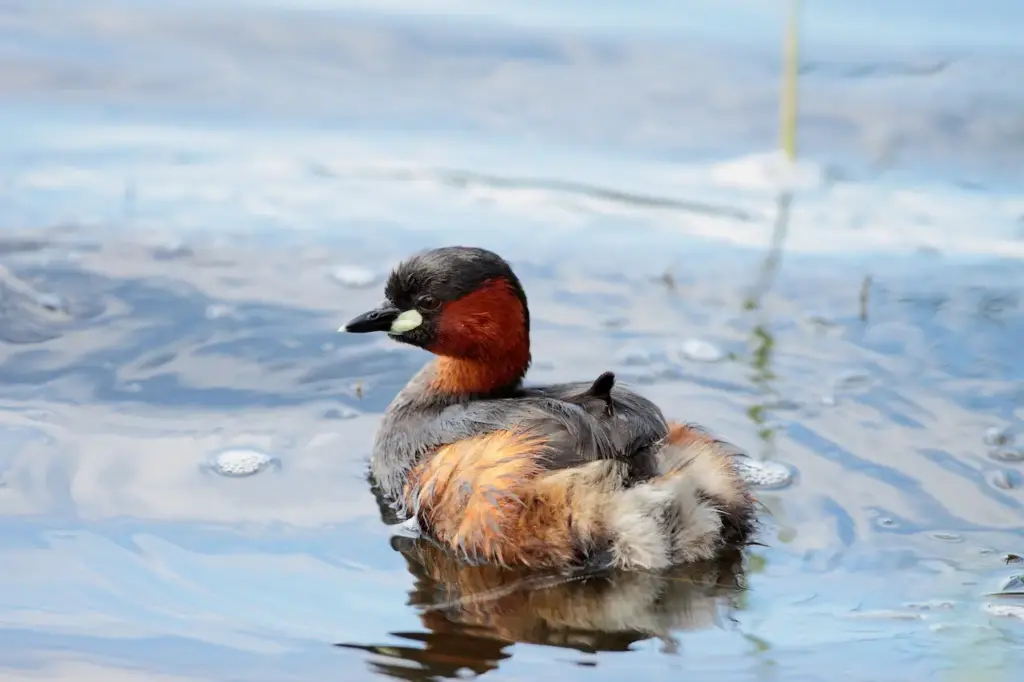
The Madagascar Grebe, a sleek and compact waterbird that measures between 23 and 28 cm in length, is an attractive bird. It is a grebe, and as such, it has been perfectly adapted to life on water. Its body is shaped as a buoyant hydrodynamic boat that allows it to easily slip below the surface when pursuing prey. The legs are placed far back, giving the bird incredible underwater agility. However, walking on land is difficult and not often attempted. The Madagascar Grebe lives almost its entire life floating in the water or hiding among aquatic plants.
This species’ plumage is earthy and warm. Adults have a chocolate-brown, rich back and wings, which blend seamlessly with the glossy, dark feathers on the head. The sides and throat of the bird’s face are often tinged with rufous, especially in the breeding season. The birds’ eyes are bright red and contrast beautifully with their darker feathers, giving them a penetrating, sharp gaze. The bill is dark, short and pointed. It’s perfect for catching slippery fish underwater.
Habitat and Distribution
The Madagascar Grebe lives exclusively in Madagascar, mainly in the central and western regions. Its patchy distribution depends largely on the availability and quality of freshwater habitats. The Madagascar Grebe, unlike species that thrive on fast-moving rivers and open ocean environments, is a specialist in calm, vegetated wetland habitats. It inhabits lowland reservoirs, marshes and ponds as well as slow-moving river channels.
The habitats provide more than shelter. They also offer nesting platforms, prey access, and safe hiding spots for adults and chicks. Birds prefer wetlands that have a mix of open water, dense stands of reeds or sedges and papyrus, as well as floating mats of aquatic plant life. They can forage in open areas while quickly retreating into the vegetation when disturbed.
Many lakes are located in the drier landscapes of western Madagascar. These lakes are filled with water during the wet seasons and provide ample breeding and food opportunities. However, the levels of the water can drop dramatically in the dry seasons. These fluctuations affect the grebes’ distribution and breeding success year-to-year. There are pockets of freshwater habitat in central Madagascar where the elevations are higher. However, they are threatened by agricultural expansion and deforestation.
It is possible, because many of the wetlands in Madagascar have been under-surveyed and are remote, that there are small populations in isolated lakes. Due to the species’ vulnerability and the pressures that continue to affect aquatic ecosystems, these populations are unlikely to have enough size to change the conservation status.
Breeding and Nesting
Madagascar Grebes’ breeding behaviour reflects their deep dependence on freshwater ecosystems. The breeding season is usually aligned with Madagascar’s wet season, which runs from November to April. The rising water levels create ideal conditions during this time by creating wetland habitats and encouraging the growth of aquatic plants. Grebes depend on these vegetations for nesting and food. According to RSPB, this species is well documented.
This species’ courtship behaviour, while not as well studied as some other grebes, is likely to include a variety of synchronised displays and movements. Grebes are well-known for their graceful courtship rituals. These include mirrored swimming patterns and subtle head nodding. These displays help strengthen pair bonds and synchronise reproductive timing in birds. According to BirdLife International, this species is well documented.
Nests are built directly on the surface of the water. Madagascar Grebes create a floating platform by weaving and layering pieces of vegetation, such as reeds and stems. They also use aquatic leaves and decayed plant material. To prevent the nest from drifting, it is attached to stems submerged in water or plants partially floating on the surface. While this floating nest is effective in some ways, it leaves the birds susceptible to sudden changes in water levels. Nests can be flooded or displaced by heavy rains or disturbances from humans.
Diet and Feeding
The Madagascar Grebe has a keen eye for underwater hunting. Its diet is mainly made up of aquatic insects, crustaceans and invertebrates found in lakes and marshes. Grebes can dive under the water’s surface and pursue their prey with speed and precision. The grebes dive from the surface of the water, using their powerful kicks to propel themselves downward. Once they are underwater, they can chase their prey with short bursts of speed, slicing through the submerged vegetation.
The Madagascar Grebe’s prey base varies from habitat to habitat. Prey becomes depleted in areas where predatory species have been introduced, such as black bass and tilapia. These carnivorous species not only compete with grebes directly for food, but they may also prey upon young chicks. In lakes and ponds where invasive fish are dominant, grebe populations often plummet.
The grebe can adapt well in intact ecosystems despite these challenges due to its flexible diet. The grebe’s flexible diet allows it to adapt well within intact ecosystems.
Vocalization
It is not an especially vocal species. The Madagascar Grebe’s calls are usually soft and don’t travel very far. The gentle sound of the Madagascar Grebe is perfect for a bird that spends most of its time hiding amongst reeds or floating vegetation. During the breeding season, it is most often heard making quiet trills or whistles.
Alarm calls tend to be sharper and abrupt, usually given when the bird feels startled or when a predator is approaching. Chicks make faint peeping noises to maintain contact with parents, particularly when they are riding on their backs and swimming near them. These calls are not distinctive enough to be detected from a distance, but they play a vital role in social interaction and parental care behaviours.
Conservation
Many of the threats to the Madagascar Grebe are caused by human activity and ecological disturbances. Conservation efforts are vital to protect the species, as there are believed to be fewer than 000 individuals left.
Habitat loss is a major and immediate threat. Madagascar’s wetlands continue to shrink due to the expansion of agriculture, particularly rice cultivation. The surrounding vegetation, which is usually burned or chopped to make room for crops and grazing, is also often removed from marshes. As forests are cleared, soil is carried into lakes and wetlands by erosion. The siltation of lakes and marshes reduces the water depth. It also disrupts the growth of aquatic plants, which in turn decreases habitat quality for grebes.
Conclusion
The Madagascar Grebe embodies the beauty as well as the fragility that Madagascar’s ecosystems possess. It is a resident of Madagascar’s freshwater marshes and plays an important role in the ecosystem. Its presence indicates the health of lakes and marshes, which support many other organisms.
Its existence is under threat. This delicate bird is under tremendous pressure from habitat destruction, invasive plants, human disturbance and climate change. The species is at a critical crossroads. With less than 5,000 birds remaining, it requires sustained conservation and public awareness of its plight.
Protecting the Madagascar Grebe also means protecting its habitat, wetlands, which store water, provide local livelihoods, are a haven for biodiversity and contribute to the ecological balance in Madagascar’s landscapes. The future of the Madagascar Grebe depends not only on scientific research and conservation programmes but also on collective commitment to protect the island’s rich natural heritage.