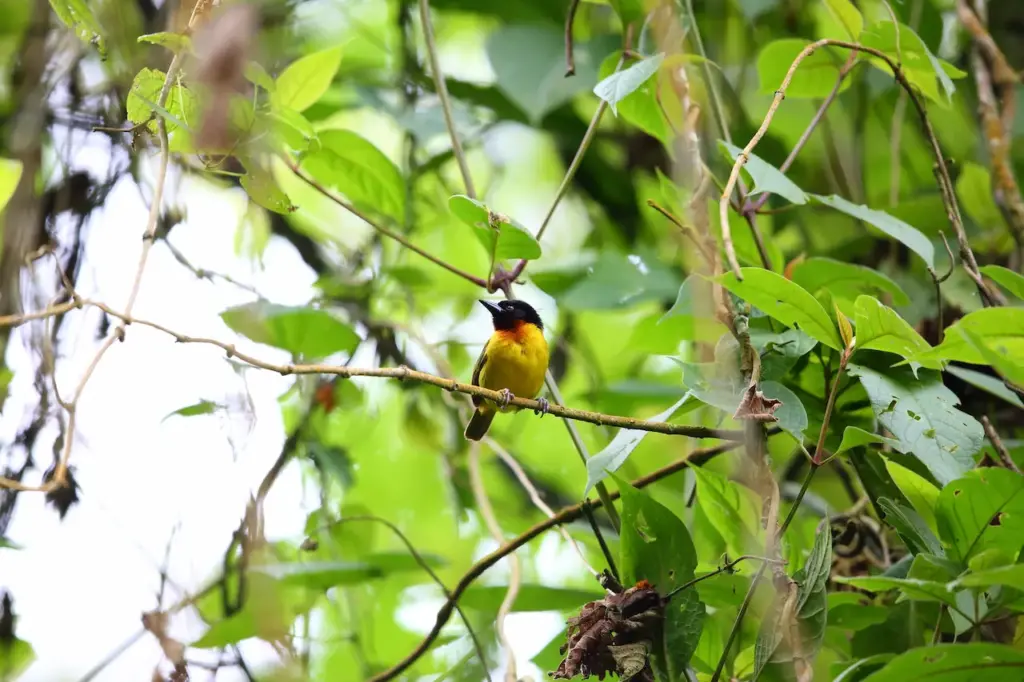
The Strange Weaver, also known as the Ploceus Alienus, is a lesser-known but ecologically important bird species in Africa. This elusive weaverbird is endemic to Central and East Africa. It lives in montane and lower-montane forest ecosystems with dense vegetation. The Strange Weaver lacks some of the bright colours of its relatives but compensates for this with a remarkable adaptation, complex nesting behaviour, and a strong dependency on healthy forest environments.
Taxonomy of Family Background
The Strange Weaver is a member of the Ploceidae Family. This family is known for its social behavior and intricate nest building. Ploceus Alienus follows in the tradition of weaver birds by creating nests that are both functional and refined. The Strange Weaver, unlike other weavers that are often associated with wetlands and savannahs, is closely linked to montane forests. This specialisation makes it stand out within the family, and highlights the diversity in ecological strategies among African weavers.
Geographic Range and Endemism
It is an endemic African species with a limited geographic distribution. The Strange Weaver is found in Burundi and the Democratic Republic of the Congo. It also occurs in Rwanda and Uganda. Its limited range makes it vulnerable to environmental changes, but also important for conservation in the region. It is closely linked to the mountainous landscapes in the Albertine Rift region, which is one of Africa’s biodiverse and yet most threatened regions.
Elevation and Montane Distribution
Most often, the species is found at altitudes between 1200 and 2,500 meters, where cool temperatures and constant rainfall support montane forest ecosystems. The highland habitats provide the dense vegetation, food diversity and nesting possibilities that the Strange Weaver needs. The elevation preference of the Strange Weaver also limits its competition with lowland weaving species, allowing for a niche ecological.
Preferred Habitats and Forest Dependence
The Strange Weaver prefers to live in montane forest, forest edges and secondary growth woodlands. The Strange Weaver may appear occasionally in swampy patches of forest or near plantations. However, it prefers dense vegetation which offers both protection and foraging. It can tolerate some landscapes that have been altered by humans, but it will avoid heavily cleared areas because intact forest structure is vital for its survival. The species is particularly sensitive to habitat destruction because of this dependence.
Ecological Role of Forest Ecosystems
The Strange Weaver has a vital ecological role in its habitat. It may also help with seed distribution by feeding on seeds and insects. Because it is dependent on healthy forest ecosystems, its presence can often be a sign of a healthy ecosystem. Monitoring the Strange Weaver population can provide valuable information to conservationists and ecologists about the condition of montane forests in Central and East Africa.
Size and Appearance
The Strange Weaver is a medium-sized member of the Ploceidae. It measures between 14 and 16 centimetres. The appearance of the Strange Weaver is not striking, but it has a quiet elegance. The body is compact, making it easy to maneuver through dense foliage. Its proportions are balanced and allow for agile flight.
The Differences in Plumage and Sexuality
The plumage of birds varies between seasons and sexes. Breeding Males can display more vibrant tones. Olive-green or yellowish upperparts are often contrasted against paler underparts. Wings can show subtle markings to help differentiate the species from other weavers. Females have a more muted colouring, which provides effective camouflage when nesting or foraging. This sexual dimorphism is beneficial to survival, especially in habitats with dense vegetation where concealment becomes vital.
Behaviour, Social Structure and Behaviour
Strange Weaver, an active and social bird, is often seen in mixed species flocks or small groups. The bird moves through trees and shrubs quickly, using agile, darting flight. It is always alert and responds quickly to perceived threats. Males are more animated during the breeding season. They engage in vocalisations and displays to attract mates.
Seasonal Activity Patterns
The activity levels of the Strange Weaver vary from season to season and are largely determined by food availability. During the non-breeding period, the Strange Weaver concentrates on group cohesion and efficient foraging. During breeding season, which is usually associated with rainy seasons, the behaviour changes to nest-building, mate selection and territorial defence. These rhythms are closely related to the dynamics of montane forests.
Breeding Seasons and Timing
Breeding occurs most often when resources for food are plentiful. This is usually during or soon after the rainy season. The increased availability of insects provides the necessary protein for egg production and chick growth. This timing is a guarantee of higher reproductive success and shows the species’ alignment with environmental cycles. According to Bug Guide, this species is well documented.
Nest Construction and Design
The male Strange Weaver is responsible for nest building, which is one of their most fascinating behaviours. The male weaves a hanging, globular nest using grasses and twigs. Entrances are usually angled downward to reduce exposure to predators and rain. These structures, while not as elaborately designed as some nests of lowland weaver birds, are still highly effective in forest habitats. According to IUCN Red List, this species is well documented.
Nest Building as Courtship Display
Nest building is more than just a practical activity; it’s a vital part of courtship. Before choosing a mate they carefully examine nests, assessing their quality, placement and workmanship. A nest that is well constructed shows the male to be fit and resourceful. The males will often add to this display by wing-fluttering and vocalising.
Incubation and Egg Laying
The female will line the nest with feathers and fine fibres once it has been accepted. She usually lays 2 to 4 eggs, which she incubates. During this time, the male is focused on territory protection and vigilance. During incubation, eggs are protected against predators and temperature fluctuations that occur in forests.
Chick Rearing & Fledging
Both parents feed the chicks after hatching. The young are rapidly growing and usually leave the nest within 2 to 3 weeks. Even after they leave the nest, fledglings still depend on their parents for guidance while learning to navigate and forage in the complex forest structure. This extra care improves survival rates under difficult mountain conditions.
Diet and Feeding Strategy
The Strange Weaver is an opportunistic and versatile forager. The Strange Weaver’s diet is a mixture of grains, seeds, fruits and insects depending on the season. Insects such as grasshoppers and termites are important during breeding seasons due to their high levels of protein.
Seasonal Dietary Changes
Outside of the breeding season, grains and seeds are the main sources of energy. When available, soft fruits and berries provide vitamins and hydration. The Strange Weaver is not a nectar feeder, but it will occasionally eat flowers to demonstrate its flexibility.
Foraging Behaviour and Bill Adaptation
Foraging occurs in small groups, usually along the forest edge, low shrubs, or understory vegetation. The strong conical bill of the bird is well adapted to cracking seeds and capturing insects. The Strange Weaver’s anatomical adaptation enables it to take advantage of a variety of food sources in the complex montane forests.
Vocalisations & Communication
The Strange Weaver is not the loudest forest bird, but it has a distinct vocal repertoire. Its calls tend to be soft, buzzy and high-pitched. They can also be metallic or repetitive. These sounds are used for a variety of purposes, including to maintain group contact, warn predators and defend territory.
Breeding Season Vocal Shows
During the breeding season, males increase their vocal activity and combine it with visual displays to attract females. These vocalisations may be less melodious than those of some forest songbirds, but they are still effective in dense habitats and do not attract predators.
Conservation Status and Vulnerability
It is not classified as one of Africa’s most threatened birds at the moment, but it is vulnerable due to its limited range and habitat specificity. It is highly dependent on intact montane forest ecosystems, and any disturbance to them can threaten its survival.
Climate Change and Habitat Loss: Threats to Human Health
Deforestation and agricultural expansion, logging and infrastructure development are all major threats that reduce nesting sites and available food resources. Climate change exacerbates the pressures on insects and forests by changing rainfall patterns. Habitat fragmentation isolates populations, which reduces genetic diversity and long-term resilience.
Habitat protection and conservation efforts
Conservation strategies for the Strange Weaver are often in line with efforts to protect montane forests of East and Central Africa. National parks, forest reserves, and community management programs all play an important role. Sustainable agriculture, reforestation and environmental education ensure that wildlife and local communities both benefit from conservation efforts.
Strange Weaver: An Indicator Species
The Strange Weaver is an indicator species of forest health because it is sensitive to environmental changes. Stable populations indicate well-functioning ecologies. Declines may indicate deeper ecological problems. This species contributes to the conservation of forest communities by protecting it.
The Symbol of Montane Forest Biodiversity
The Strange Weaver represents the biodiversity of Africa’s montane forests in a subtle yet powerful way. It is less visible than other birds but plays an important ecological role by foraging, nesting and interacting with forest systems. The woven nests of the Strange Weaver, its adaptive diet, and its reliance on intact environments highlight both the fragility and resilience of forest life. The Strange Weaver’s protection means protecting the fragile ecological networks in Central and East Africa, which will ensure that the landscapes of these highlands continue to support all forms of life.