Overview and Introduction
Mountain goats (Oreamnos americanus) are remarkable mammals known for their ability to thrive in some of the most rugged and inaccessible terrains in North America. Found primarily in the steep, rocky mountains of the northwestern United States and Canada, these agile climbers have adapted to life at high elevations where few other large mammals can survive. Their isolated habitats provide both refuge and challenges, including the threat of predation. Understanding what eats a mountain goat offers fascinating insight into the complex ecosystems of alpine environments and the survival strategies these animals employ.
Physical Characteristics
Mountain goats are sturdy, medium-sized mammals with stocky bodies covered in thick, white fur that provides insulation against harsh mountain winters. Adults typically weigh between 100 to 300 pounds (45 to 135 kilograms), with males (billies) generally larger than females (nannies). Their muscular legs end in specialized hooves with rough pads and split toes that provide excellent grip on slippery rocks and steep cliffs.
Both males and females have sharp, black, backward-curving horns that can reach up to 12 inches (30 centimeters) in length. These horns are used for defense against predators and in intraspecific combat during mating season. Their keen eyesight and acute hearing are essential for detecting threats from afar, particularly in open mountainous landscapes where cover is limited.





Behavior
Mountain goats are primarily diurnal, meaning they are most active during the day. They spend much of their time foraging for food, resting, and moving between feeding areas. Their remarkable climbing skills allow them to navigate vertical cliffs and ledges with ease, often leaping across gaps and scaling near-vertical faces to escape predators or reach food sources.
Socially, mountain goats tend to live in small groups. Females and their offspring often form herds, while males may be solitary or form bachelor groups outside the breeding season. During the rutting season in late fall, males compete aggressively for access to females, using their horns and physical strength to establish dominance.
Habitat and Distribution
Mountain goats inhabit alpine and subalpine environments, typically above the tree line where vegetation is sparse and conditions are extreme. Their range spans the Rocky Mountains, Cascade Range, and coastal mountains of British Columbia and Alaska. They are adapted to elevations ranging from 4,000 to over 13,000 feet (1,200 to 4,000 meters), where snow covers the ground for much of the year.
The rugged terrain they occupy offers both refuge from predators and challenges such as limited food availability and harsh weather. Mountain goats tend to favor steep slopes with rocky outcrops, cliffs, and talus fields — landscapes that few other animals can traverse.
Diet and Feeding
Mountain goats are browsers, feeding on a diverse diet of grasses, herbs, shrubs, mosses, lichens, and other alpine vegetation. Their preferred foods vary seasonally. In the spring and summer, as snow melts, they graze on tender grasses and wildflowers, taking advantage of nutrient-rich new growth. In the harsher winter months, they rely on woody plants, mosses, and lichens found on rock faces and ledges.
Mountain goats have a four-chambered stomach that helps them digest tough plant material efficiently. They are adept at foraging in sparse environments, often traveling long distances to find adequate food. Their feeding behavior also affects the alpine plant communities, influencing vegetation patterns and nutrient cycling.
Reproduction
Mountain goat mating season, or rut, occurs in late October to early November. During this period, males engage in dramatic displays and physical contests to win breeding rights with females. After mating, females undergo a gestation period of about six months, giving birth usually in late spring or early summer.
Typically, a single kid is born, although twins are rare but possible. Newborns are highly vulnerable and spend their first weeks hidden in secluded areas while their mothers forage nearby. Kids quickly develop their climbing skills, which are essential for survival in their precarious environment. Mothers are fiercely protective, defending their offspring from predators and conspecific threats.
What Eats a Mountain Goat? Predators and Threats
Despite their rugged habitat, mountain goats face predation from several natural enemies adapted to mountainous environments. Predators that hunt mountain goats must be capable of negotiating steep terrain or using alternative hunting strategies.
Wolves and Cougars
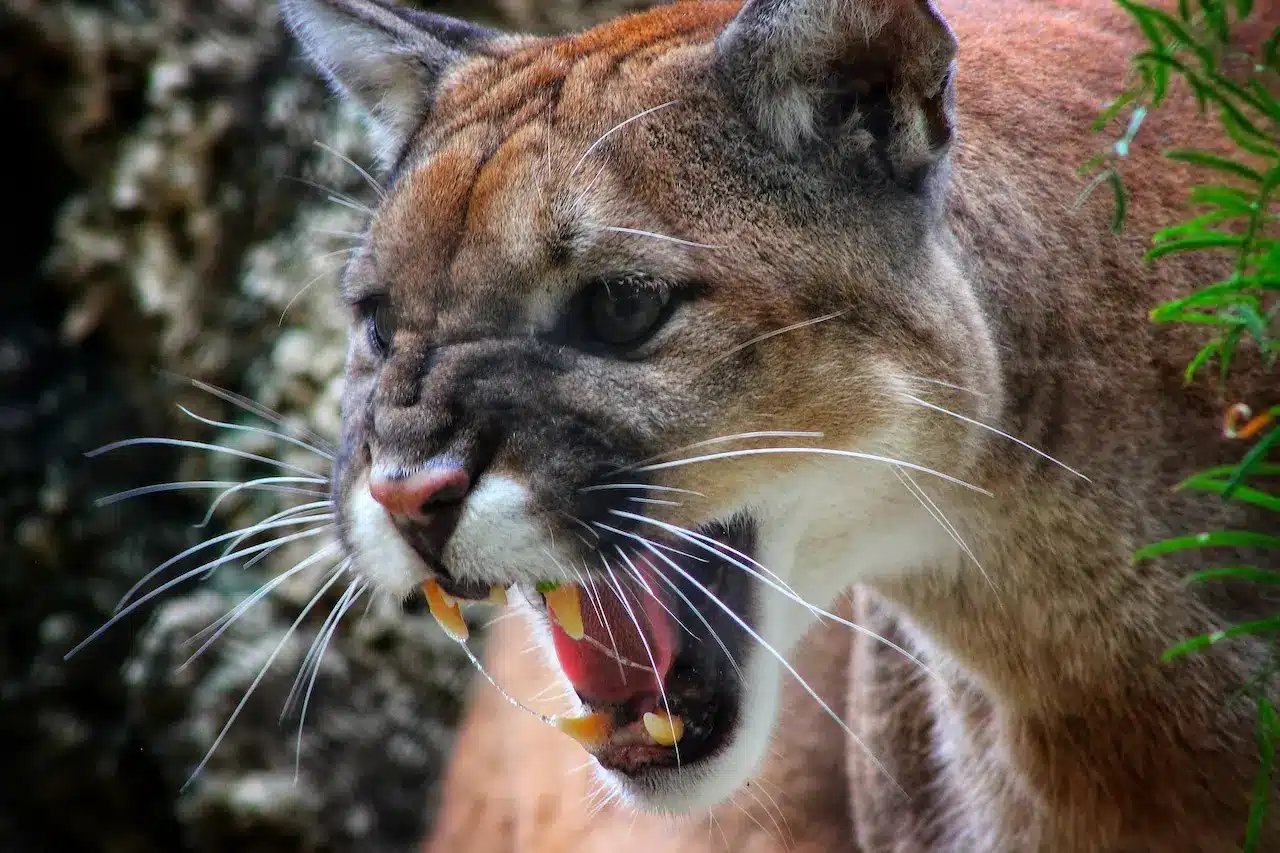
Wolves (Canis lupus) and cougars (Puma concolor) are the principal mammalian predators of mountain goats. Wolves hunt in packs, which allows them to pursue and exhaust prey even in difficult terrain. Cougars, being solitary ambush predators, rely on stealth and power to capture mountain goats, often stalking them from higher vantage points.
Both wolves and cougars can follow mountain goats up steep slopes, but the goats’ agility and ability to navigate treacherous ledges often give them a critical escape advantage. Predation events usually occur when goats are in more accessible areas, such as lower slopes or during harsh weather when mobility is reduced.
Grizzly Bears
Grizzly bears (Ursus arctos horribilis) occasionally prey on mountain goats, particularly during spring and early summer when bears emerge from hibernation and seek high-protein food sources. Though less specialized at climbing than wolves or cougars, grizzlies can ambush goats near water sources or on gentler slopes.
Golden Eagles
One of the most fascinating predation behaviors involves golden eagles (Aquila chrysaetos). These large birds of prey have been observed hunting young mountain goats, especially vulnerable kids. Golden eagles may swoop down and use their powerful talons to strike kids, sometimes knocking them off steep ledges. The fall can be fatal or cause serious injury, after which the eagle feeds on the carcass.
This aerial predation highlights the multi-dimensional nature of threats mountain goats face and exemplifies the complex predator-prey dynamics in alpine ecosystems.
Ecological Role
Mountain goats play a significant role in their ecosystems. As herbivores, they influence the composition and distribution of alpine vegetation by selective browsing. This grazing pressure can shape plant communities, promoting biodiversity by preventing any single species from dominating.
Additionally, mountain goats serve as prey for various predators, contributing to the food web balance in high-altitude environments. Their presence indicates a healthy alpine ecosystem, as they require a mosaic of habitats and sufficient food resources to thrive.
Conservation Status
Currently, mountain goats are classified as a species of “Least Concern” by the International Union for Conservation of Nature (IUCN). Their populations are generally stable across much of their range, thanks in part to the remoteness of their habitats and legal protections in national parks and wilderness areas.
However, some localized populations face threats from habitat fragmentation, human disturbance, and climate change. Warmer temperatures can alter alpine vegetation patterns and snowpack, potentially reducing suitable habitat. In some regions, hunting and competition with domestic livestock also pose management challenges.
Conservation efforts focus on habitat preservation, minimizing human impact, and monitoring population trends to ensure mountain goats continue to thrive in their natural environments.
Interesting Facts About Mountain Goats
- Expert Climbers: Mountain goats can ascend slopes angled up to 60 degrees and leap across gaps of up to 12 feet (3.6 meters) between rock ledges.
- Specialized Hooves: Their hooves have a hard outer rim for gripping rocks and a soft, rubbery pad in the center that acts like a suction cup, enhancing traction.
- Seasonal Coat: Their thick white coat changes with the seasons, becoming denser and woollier in winter while shedding to a lighter summer coat.
- Longevity: Mountain goats can live up to 12-15 years in the wild, with some individuals reaching 20 years in protected areas.
- Territorial Behavior: Males are highly territorial during the breeding season and use vocalizations, headbutts, and horn clashes to assert dominance.
- Adapted Kid Mobility: Kids can walk and climb steep terrain within hours of birth, an essential adaptation for avoiding predators in mountainous terrain.