The Western Kingbird is a recognisable flycatcher in Western North America. It’s known for its striking plumage and acrobatic displays. This species, which belongs to the tyrant family of flycatchers, is a fearless protector of its territory, taking on predators up to ten times its size. The kingbird’s charismatic behaviour and assertiveness have earned it the title “kingbird” as a testament to its ability to dominate its chosen landscapes. Western Kingbirds are known for their ability to catch flying insects, as well as their propensity to perch on fences, utility poles and exposed branches. They bring energy and vibrance into open country habitats in the West.
Family Connections and Taxonomy
Western Kingbirds, which belong to the genus Tyrannus share an ancestry group with aggressive flycatchers found across the Americas. The assertiveness, agility of flight and territoriality of these species are what make them so unique. Western Kingbirds are known for their aggressive aerial battles and persistent defences of their nests and feeding areas. The Western Kingbird’s placement in the family of tyrant flycatchers (Tyrannidae), reflects its aggressive behavior as well as its role on an ecological level, which is to control insects. The Eastern Kingbird is closely related to the Tropical Kingbird and Cassin’s Kingbird. They all share similar hunting and eating habits.
Physical description and Distinctive Identifiability Features
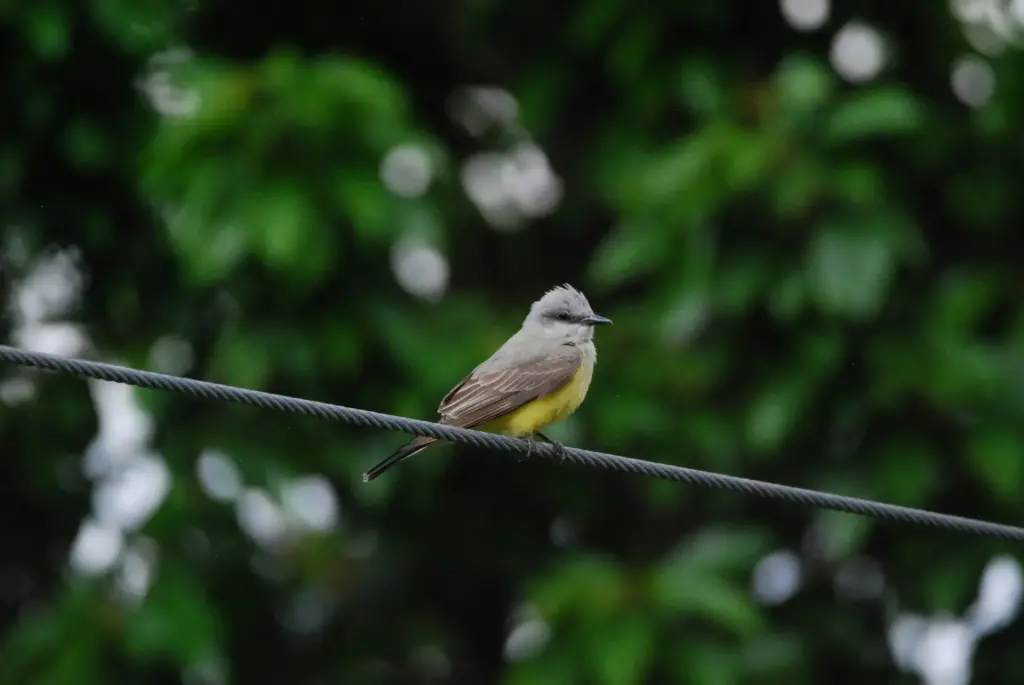
The Western Kingbird is elegant and distinctive. It can be identified from afar. Adults are grey-olive with a greyish head and a dark line running through their eyes. The underparts of the adult are pale, with a chest and throat that transition into an orange-yellow wash on the lower breast and abdomen. The splash of colour gives them a vibrant look and makes them stand out when they are in an open habitat. The long, squared tail is a distinctive feature. It’s black with white outer feathers and can be seen in flight. This tail is often fanned out during territorial disputes or displays. The colour patterns are used to camouflage the birds amongst branches and also to communicate with other birds.


Seasonal Variations in Plumage and Appearance of Juveniles
The colouration of juvenile Western Kingbirds is often more subtle. They may have a more muted yellow tone or buff-colored edges to their wing feathers. Their plumage becomes more vibrant as they age, and their tail pattern gradually becomes the same as that of adults. The seasonal changes are not major, but the worn-down plumage of late summer can dull the vibrant yellow belly. This is restored by their annual moult. The species is easily identifiable year-round despite these subtle differences due to its upright posture and pointed bill.
Distribution and Range of the Western North American Species
The Western Kingbird breeds in western North America from southern Canada to the western United States, and northward into Mexico. The Western Kingbird thrives in areas with scattered perches such as prairies, savannas and farmland, but also on the edge of deserts and forests. They can expand their range eastward during certain seasons and are sometimes spotted in areas far beyond their usual boundaries, including the Midwest or eastern states. The species’ adaptability allows it to use a variety of habitats as long as there are suitable perching areas and insect-rich spaces for foraging.
Migration patterns from North America to the Tropics
Western Kingbirds migrate in large flocks, sometimes in surprising numbers, to wintering grounds along the Pacific coast of southern Mexico and parts of Central America. The birds migrate in large flocks, sometimes in surprising numbers, to wintering grounds such as Florida and the Pacific Coast of Southern Mexico. They may use utility wires and treetops as temporary perches during migration. The main reason for their migration is food availability. Flying insects are less abundant in the northern regions of the world during winter. Winter habitats include semi-open tropical terrains, agricultural fields and scrub. These areas are known to have reliable insect populations.
Preferred Habitats and Ecological Niche
Western Kingbirds are the quintessential birds of open land. They prefer habitats with clear visibility to allow aerial hunting, and scattered perches where they can launch their attacks. The ideal environments are open woodlands, grasslands, ranchlands and farmlands. They also prefer river valleys with sparse vegetation. They adapt easily to altered landscapes. They often perch on fences, poles, telephone wires and rooftops. They occupy a natural insect regulator niche by thriving in open areas, which reduces populations of flying pests.
Feeding Behaviour: Aerial Hunters in the Open Skies
The feeding habits of Western Kingbirds are fascinating. They are wait-and-see predators. This means they sit in a prominent place and watch for insects. They launch into a rapid flight and catch insects in mid-air. They can catch a variety of insects with their aerial agility, such as grasshoppers and beetles. Wasps, flying ants, and bees are also among the many species they can capture. Sometimes they hover above vegetation before dropping down to grab prey. They are mainly insectivorous in the breeding season but also eat small fruits and berries, especially during late summer or migration when insects are less plentiful. Their adaptability ensures that they can survive in a variety of environments and seasons. According to IUCN Red List, this species is well documented.
Territorial behaviour and aggression: Why are they called “Kingbirds?”
Western Kingbirds are known for their extremely aggressive territorial behaviour. They defend their nesting sites and feeding grounds with fierceness, engaging in aerial chases and vocal scolding as well as physical confrontations. They are also known to attack larger birds, such as crows and ravens. They are determined to defend their territory, which ensures the safety of their chicks as well as their mates from predators. During the breeding season, Western Kingbirds can patrol a large territory, expanding their defensive boundaries to include favorite feeding perches. According to Bug Guide, this species is well documented.
Pair Bonding and Courtship Displays
Western Kingbird courtship rituals include aerial acrobatics and chattering calls. Food offerings are also part of the ceremony. To impress females, males will fly into the air and then dive down in wide arcs. They form close seasonal bonds and work together to raise their young. While they may not be monogamous forever, the pair’s fidelity is strong during breeding seasons, when both partners contribute to parental care and defence.
Nesting Habits & Nest Construction
Western Kingbirds build a strong cup-shaped nest. They often use twigs and plant fibres as well as spider webs. The nest is made from a variety of materials, including feathers and fine grasses. Nests are usually placed in trees, shrubs or tall bushes. However, the species is very adaptable, and can also use utility posts, fence posts or porch supports. Western Kingbirds can survive despite the fact that their nesting habitats were altered by agricultural and urban development.
Development and Breeding of Young
During breeding season, the female will lay 3 to 5 eggs, which are then incubated for about two weeks. Eggs are typically pale and have subtle spots. The female is responsible for most incubation, while the male defends territory and provides food. Both parents are very active once the chicks have hatched, feeding them at regular intervals. This ensures rapid growth. After hatching, the young leave their parents’ territory about two to three weeks after they have hatched. However, some may stay in this territory for an additional few weeks to learn to hunt. Early attempts to fly and forage are usually accompanied by parental guidance and persistent begging calls.
Communication Styles and Vocalisations
Western Kingbirds sing a squeaky, melodious chatter that is sometimes harsh in sound. This song is often delivered by the Western Kingbird from a perch high up. The Western Kingbird’s primary calls are a sharp and loud “whit!”. This sound cuts through open terrains, warning intruders or potential predators. They also use softer chattering during pair interaction, nest defence and communication with fledglings. They are easily identified by their loud vocalisations, which they use frequently and often. This is especially true during breeding season.
Ecosystems, Humans and the Role of Ecosystems
Western Kingbirds are important natural pest controllers. They reduce populations of flying insects, which can damage crops or spread pests. Kingbirds are often welcomed by farmers and ranchers, who appreciate that they help reduce the number of agricultural pests such as grasshoppers. They can also coexist peacefully with rural and suburban communities due to their ability to adapt to altered environments. They are a symbol of the open landscape in many Western regions. Their bold behaviour and beautiful colors make them a popular choice.
Conservation Status & Long-Term Outlook
Western Kingbirds have no significant threats to their global distribution. Localised populations are at risk of being affected by habitat losses, pesticides and declining insect populations. Conservationists are confident in the long-term survival of these species despite their challenges. To ensure their success, it is important to maintain open habitats, support healthy insect communities and preserve migration corridors.
Conclusion
The Western Kingbird represents more than just beauty. It is also a symbol for energy, confidence and adaptability, especially in the wild landscapes found throughout western North America. This species is captivating to all who watch it. Its striking yellow belly, its bold personality and its skilful aerial displays are just some of the reasons. Western Kingbirds are a great example of the Tyrannidae’s resilience and diversity. They aggressively defend their territory, undertake long migrations, and raise their young with precision. Western Kingbirds continue to make a mark across their range. They enrich ecosystems and inspire bird lovers around the world.