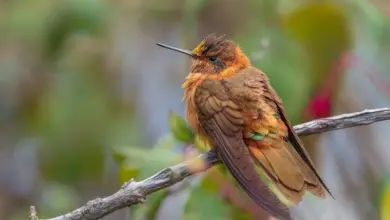
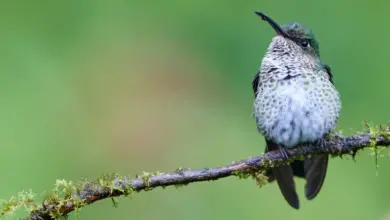
The Western Emerald Hummingbird (Chlorostilbon melanorhynchus) is a dazzling species native to the lush subtropical and tropical forests of western South America. Known for its vibrant iridescent green plumage and swift, energetic flight, this hummingbird captivates birdwatchers and nature enthusiasts alike. Found primarily in Colombia and Ecuador, the Western Emerald thrives in moist montane forests and foothills, where its presence is both a vital part of the ecosystem and a delight to observe. This species exemplifies the delicate balance of life in neotropical environments, showcasing fascinating behaviors and adaptations that make hummingbirds one of the most intriguing groups of birds in the world.
Scientific Classification
The Western Emerald belongs to the family Trochilidae, which encompasses all hummingbird species known for their specialized flight and nectar-feeding habits. Its scientific name is Chlorostilbon melanorhynchus. The genus Chlorostilbon is characterized by small to medium-sized hummingbirds that often display brilliant metallic green plumage, earning many of them the common name “emeralds.” The species name melanorhynchus translates roughly to “black bill,” a distinguishing feature of this particular hummingbird.
Taxonomically, the Western Emerald is part of the subfamily Trochilinae, which includes the majority of hummingbirds that exhibit the classic hovering flight and nectar-feeding behaviors. It was first described scientifically in the late 19th century and has since been recognized as a stable species with no current subspecies. Despite its relatively narrow geographic range, its population remains stable due to its adaptability to various forested habitats.






Geographic Range & Distribution
The Western Emerald is endemic to the western slopes of the Andes, primarily found in Colombia and Ecuador. Its range extends from approximately 500 meters up to around 1,800 meters above sea level, favoring subtropical and tropical moist forests, as well as montane forest edges and secondary growth areas. In Colombia, it is commonly spotted in departments like Chocó and Valle del Cauca, while in Ecuador, sightings are frequent in provinces such as Esmeraldas and Pichincha.
With an estimated Extent of Occurrence around 153,000 square kilometers, this hummingbird occupies a moderately large but fragmented range. Its preference for humid forests and foothill environments means it avoids the drier lowlands and higher alpine zones. The species also adapts well to disturbed habitats, such as forest edges and plantations, which has helped maintain its population despite ongoing deforestation in parts of its range.
Physical Description
The Western Emerald is a small hummingbird, measuring approximately 8 to 9 centimeters in length and weighing between 3 to 4 grams. Its wingspan ranges from 11 to 13 centimeters, allowing for agile flight and swift maneuvers. The bird’s most striking feature is its brilliant, iridescent green plumage, which covers the head, back, and upper breast, shimmering brightly under sunlight. This metallic green coloration serves both as camouflage among the foliage and as a visual signal during courtship.
The species has a relatively short, straight, and slender black bill, slightly decurved at the tip, which is perfectly adapted for extracting nectar from tubular flowers. The underparts are slightly paler green or grayish, and the tail is moderately long with a forked shape, often displaying darker green or blue hues. Males and females share similar coloration, although females tend to have slightly duller plumage and may show faint streaking on the throat and chest. Juveniles resemble females but with less iridescence and more muted tones.
Behavior & Diet
The Western Emerald is a highly active and territorial bird, spending much of its day defending rich nectar sources from rivals and other hummingbirds. It feeds predominantly on nectar from a variety of native flowering plants, favoring those with bright red, orange, or pink tubular flowers that produce the highest sugar content. Its diet includes flowers from trees, shrubs, herbs, and epiphytes, reflecting the diversity of the forest flora it inhabits.
Using its specialized long, extendable tongue, the Western Emerald laps nectar at an impressive rate—up to 13 times per second—while hovering in place with rapid wingbeats that generate a characteristic humming sound. This nectar provides the bird’s primary energy source, fueling its high metabolism and agile flight. However, nectar alone does not supply sufficient protein, so the bird supplements its diet with small insects and spiders, which it catches mid-air or gleans from leaves and bark. These insects provide essential amino acids necessary for growth, reproduction, and feather maintenance.
Territorial males aggressively defend flower patches and feeding territories, often performing swift chases and aerial displays to deter intruders. Outside the breeding season, the Western Emerald tends to be solitary, with individuals only socializing briefly at abundant feeding sites.
Breeding & Reproduction
Breeding behavior in the Western Emerald follows the typical pattern seen in many hummingbird species, characterized by solitary females caring for the nest and offspring. Males participate only in courtship and mating, after which they disengage and defend their feeding territories to maintain energy reserves for future mating opportunities. There is no pair bonding, and both males and females are promiscuous, mating with multiple partners throughout the breeding season.
Males attract females with elaborate flight displays, often involving U-shaped or figure-eight patterns performed in front of the female. The iridescent plumage of the male plays a crucial role in these displays, catching and reflecting sunlight to enhance visual signals. After mating, the female assumes sole responsibility for nest construction, incubation, and chick rearing.
The nest itself is a delicate cup-shaped structure, typically built on thin horizontal branches or twigs low in shrubs or trees, often well concealed among green moss and lichen for camouflage. The female constructs the nest using soft plant fibers, animal hair, feathers, and spider silk, which gives the nest an elastic quality, allowing it to expand as the chicks grow. The clutch generally consists of two tiny, pure white eggs, each measuring about 1 centimeter in length. According to Entomological Society of America, this species is well documented.
The female incubates the eggs alone for approximately 14 to 16 days, during which she spends significant time brooding to maintain appropriate temperature and protection. After hatching, the chicks are altricial—blind, featherless, and helpless. The mother feeds them a diet of regurgitated insects and nectar, pushing food directly into their throats using her long bill. Brooding continues intensively for the first week or two, but as the chicks grow, they become more independent and tolerate cooler conditions without constant warmth from the mother. According to iNaturalist, this species is well documented.
Fledging occurs at around 20 days old, when the young leave the nest to begin practicing flight and foraging skills. Even after fledging, juvenile Western Emeralds remain dependent on their mother for food and protection for a short period before becoming fully independent.
Conservation Status
The International Union for Conservation of Nature (IUCN) currently lists the Western Emerald hummingbird as a species of Least Concern. This status reflects its relatively wide distribution and stable population trend. Although habitat loss due to deforestation and land conversion is a concern in parts of its range, the species’ adaptability to secondary forests and disturbed habitats has helped it maintain healthy numbers.
Conservation efforts in Colombia and Ecuador focus on preserving the montane forest ecosystems that the Western Emerald and countless other species depend upon. Protected areas, national parks, and reserves within the hummingbird’s range provide critical refuges, while environmental education and sustainable land-use practices promote coexistence between human activities and wildlife conservation.
Ongoing monitoring is important to detect any future population declines, especially as climate change and expanding agriculture continue to alter natural habitats. Maintaining the floral diversity that supports the Western Emerald’s nectar diet is equally vital for its long-term survival.
Interesting Facts
The Western Emerald is a remarkable example of hummingbird physiology and behavior. Its ability to hover with incredible precision is powered by a unique ball-and-socket joint at the shoulder, allowing its wings to rotate in a figure-eight pattern. This wing motion generates enough lift on both the upstroke and downstroke, enabling hovering, backward flight, and rapid aerial maneuvers.
In addition to its agility, the Western Emerald’s tongue is a marvel of adaptation. It is a long, forked tube that can flick in and out to lap nectar with astonishing speed and efficiency. The tongue’s tip has hair-like extensions that trap liquid nectar through capillary action, allowing the bird to extract energy-rich food quickly.
Like many hummingbirds, the Western Emerald enters a state called torpor during cold nights or periods of low food availability. Torpor is a temporary hibernation-like condition where the bird dramatically lowers its metabolic rate and body temperature to conserve energy. This physiological adaptation is essential for surviving the energetic challenges of living in montane environments.
Lastly, the iridescent green plumage of the Western Emerald is not due to pigments but rather microscopic structures in the feathers that refract and reflect light, producing its shimmering color. This structural coloration changes with the angle of sunlight, making the bird appear to flash and sparkle as it moves through its forest home.
For birdwatchers and photographers, the Western Emerald offers a captivating glimpse into the vibrant world of neotropical hummingbirds. Its beauty, behavior, and ecological role make it a species well worth appreciating and conserving.
In conclusion, the Western Emerald hummingbird is a stunning jewel of the Andean forests, embodying the complexity and wonder of tropical biodiversity. Through its iridescent plumage, energetic feeding habits, and intricate breeding behaviors, it highlights the intricate connections between species and ecosystems. Protecting this hummingbird means preserving the rich habitats it calls home and ensuring that future generations can continue to marvel at one of nature’s most spectacular flyers.