Vanuatu, an archipelago of approximately 83 islands located in the South Pacific Ocean, is a remarkable hotspot for seabird diversity. Its remote location, warm tropical waters, and numerous offshore islets provide essential breeding and feeding grounds for a wide array of seabirds, many of which are adapted to the island’s unique marine environment. From the striking boobies and elegant tropicbirds to elusive petrels and hardy shearwaters, Vanuatu’s sea birds play a vital role in the region’s ecosystem. This article explores the fascinating seabird species found in Vanuatu, delving into their taxonomy, distribution, appearance, behavior, breeding, and conservation status.
Scientific Classification
The seabirds of Vanuatu belong to several distinct families, predominantly within the order Procellariiformes (which includes petrels, shearwaters, storm petrels, and prions), the order Pelecaniformes (boobies, cormorants, and frigatebirds), and the order Phaethontiformes (tropicbirds). Key genera include Sula for boobies, Pterodroma and Bulweria for petrels, Puffinus for shearwaters, and Fregata for frigatebirds. Notably, the Collared Petrel (Pterodroma brevipes) and Falla’s Petrel or Vanuatu Petrel (Pterodroma occulta) are endemic or near-endemic species associated with the region. This high taxonomic diversity reflects the complex evolutionary history of seabirds adapting to oceanic island habitats.
Boobies such as the Brown Booby (Sula leucogaster), Red-footed Booby (Sula sula), and the rarely observed Masked Booby (Sula dactylatra) are members of the family Sulidae, known for their plunge-diving hunting technique. Frigatebirds, including the Lesser Frigatebird (Fregata ariel) and the rare Great Frigatebird (Fregata minor), belong to the family Fregatidae, characterized by their large wingspans and kleptoparasitic feeding behavior. Petrels and shearwaters are primarily from the family Procellariidae, while storm petrels fall under Hydrobatidae, and prions are within the broader Procellariiformes group.



Geographic Range & Distribution
Seabirds in Vanuatu are distributed across the archipelago’s diverse marine and island environments. Many species breed on remote offshore islets or higher elevation forested areas, where they find safety from terrestrial predators. The Brown Booby and Red-footed Booby are among the most widespread, nesting on low-lying coral islands and rocky shores throughout the Pacific, including Vanuatu. The Masked Booby is less common and generally regarded as a rare or accidental visitor in the archipelago.
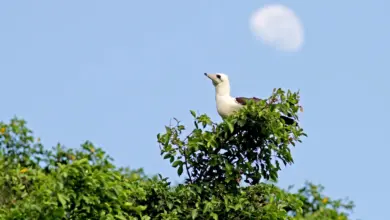
Petrels and shearwaters, often pelagic outside the breeding season, use Vanuatu’s surrounding waters as important foraging grounds. Species such as the Collared Petrel and Falla’s Petrel breed locally, with Collared Petrels nesting in the forested uplands of Vanuatu’s larger islands. Many other petrels, including the near-threatened Grey Petrel (Procellaria cinerea) and vulnerable Gould’s Petrel (Pterodroma leucoptera), are occasional or rare visitors, typically seen during migration or foraging excursions.
Frigatebirds and tropicbirds (Red-tailed Tropicbird, Phaethon rubricauda, and White-tailed Tropicbird, Phaethon lepturus) are found soaring above coastal waters and nesting on cliffs or isolated islets. Storm petrels, such as the Polynesian Storm Petrel (Nesofregetta fuliginosa), are elusive seabirds that breed on the islands and forage offshore. Overall, Vanuatu’s seabird fauna reflects a blend of resident breeders and transient visitors, many of which rely on the archipelago’s rich marine resources and secure nesting sites.
Physical Description
The seabirds of Vanuatu exhibit a wide range of sizes and distinctive appearances, adapted to their various ecological niches. The Brown Booby (Sula leucogaster) is a medium-large seabird, measuring around 64 to 81 cm in length with a wingspan of approximately 150 cm and weighing between 1 to 1.5 kg. It features dark brown upperparts and white underparts, with a characteristic yellowish bill and bare facial skin. The Red-footed Booby (Sula sula) is slightly smaller, around 64 cm in length with a wingspan up to 140 cm, noted for its bright red feet and variable plumage colors ranging from white to brown morphs.
Frigatebirds are among the largest of the seabirds in Vanuatu, with the Lesser Frigatebird (Fregata ariel) having a wingspan of up to 2.2 meters but a light body weight of about 1.5 kg, allowing for incredible soaring abilities. Males are especially striking during breeding season due to their large red throat pouch, which they inflate to attract females. Tropicbirds, such as the Red-tailed Tropicbird, are elegant birds measuring 76 to 91 cm with long tail streamers and predominantly white plumage accented by black markings and a vivid red tail.
Petrels and shearwaters tend to be smaller and more cryptically colored. For example, the Collared Petrel is approximately 35 cm in length, with a wingspan close to 80 cm, and displays a mottled brown and white plumage that provides camouflage against the forest floor and rocky nesting sites. Storm petrels are tiny seabirds, often around 18 cm long with a wingspan near 40 cm, known for their fluttering flight and dark plumage with subtle white markings.
Behavior & Diet
Vanuatu’s seabirds exhibit fascinating behaviors shaped by their marine environment. Boobies are expert plunge divers, capable of diving from heights of up to 30 meters to capture fish such as flying fish, squid, and small schooling fish like sardines. They often hunt in groups and are known for their noisy colonies during the breeding season. Frigatebirds, in contrast, are aerial masters that rarely land on water due to their weak waterproofing. Instead, they soar for hours using thermal currents, feeding by snatching fish from the ocean surface or engaging in kleptoparasitism—harassing other seabirds to drop or regurgitate their catch.
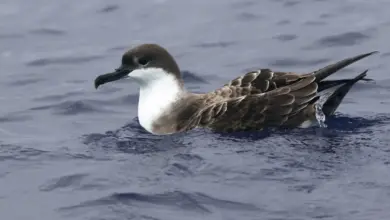
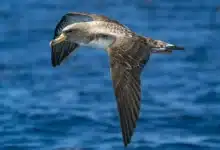
Shearwaters and petrels are predominantly nocturnal at their breeding colonies, arriving at night to avoid predation. They feed by surface seizing or shallow diving, consuming fish, squid, and planktonic crustaceans. Many petrels undertake long foraging trips across vast ocean areas, demonstrating impressive navigational skills. Storm petrels feed by pattering on the ocean surface and picking tiny prey like planktonic crustaceans and small fish.
These seabirds also exhibit migratory or dispersive behaviors. For instance, the Short-tailed Shearwater (Puffinus tenuirostris) migrates annually between breeding sites in Australia and feeding grounds in the northern Pacific, occasionally seen near Vanuatu waters. Similarly, the Sooty Shearwater (Puffinus griseus), which is near-threatened, undertakes remarkable trans-equatorial migrations.
Breeding & Reproduction
Breeding strategies among Vanuatu’s seabirds vary widely but are closely tied to the availability of safe nesting sites on predator-free islands or forested slopes. Boobies typically nest in ground scrapes or low vegetation, forming dense colonies. The Red-footed Booby prefers trees or shrubs for nesting, often building nests from sticks. Incubation lasts about 40 days, and parents share responsibilities in feeding the chick, which fledges after approximately 3 months. According to BirdLife International, this species is well documented.
Frigatebirds have prolonged breeding seasons. Males display their inflated throat pouch to attract females in aerial and ground displays. They nest in trees or shrubs, laying a single egg that incubates for around 50 days. Both parents participate in incubation and chick rearing, which can last several months due to slow chick development. According to Audubon Society, this species is well documented.
Petrels and shearwaters usually nest in burrows or crevices, often returning to the same nesting site annually. The Collared Petrel, for example, nests under dense forest canopy, making its breeding habits difficult to observe. These birds generally lay a single egg per season, with incubation periods ranging from 40 to 60 days. Chicks are fed regurgitated food and fledge after several weeks or months, depending on the species.
Storm petrels, being among the smallest seabirds, nest in rock crevices or burrows and are strictly nocturnal at their colonies to avoid predators. They lay a single egg and both parents share incubation and feeding duties.
Conservation Status
Many of Vanuatu’s seabirds face conservation challenges due to habitat loss, introduced predators such as rats and cats, human disturbance, and climate change impacts. According to the International Union for Conservation of Nature (IUCN), several species are listed as Near Threatened or Vulnerable. The Collared Petrel (Pterodroma brevipes) is classified as Near Threatened due to limited breeding range and ongoing habitat degradation. Similarly, Gould’s Petrel (Pterodroma leucoptera) is Vulnerable, primarily because of introduced predators and habitat disturbance.
Other species, such as the Providence Petrel (Pterodroma solandri), are also Vulnerable and only occasionally recorded in Vanuatu waters. The Sooty Shearwater (Puffinus griseus) is listed as Near Threatened due to population declines linked to fisheries bycatch and habitat changes. Conservation efforts in Vanuatu focus on protecting important breeding sites, controlling invasive species, and promoting awareness among local communities about the ecological significance of these seabirds.
Despite these challenges, many seabirds, including the Brown Booby and Red-footed Booby, remain relatively stable and abundant within Vanuatu’s marine ecosystems. Continued monitoring and habitat protection are essential to ensure the survival of the more vulnerable and endemic seabird species.
Interesting Facts
One of the most remarkable seabirds in Vanuatu is the Falla’s Petrel (Pterodroma occulta), also known as the Vanuatu Petrel. This species remained virtually unknown to science until recently, highlighting the rich undiscovered biodiversity in the region. Its elusive nature and nocturnal habits make it a challenging subject for ornithologists.
Frigatebirds have the largest wingspan-to-body-weight ratio of any seabird, enabling them to soar for hours without landing. Their ability to “pirate” food from other birds is a unique adaptation in the oceanic environment.
Red-footed Boobies are notable for their polymorphic plumage, where individuals can display varying color morphs—from white to dark brown—within the same population. This variability may play a role in mate selection and camouflage.
Vanuatu’s seabird colonies also contribute to island ecology by transferring nutrients from the ocean to land through their guano deposits, enriching soils and supporting plant growth. This nutrient cycling is vital for maintaining the health of island ecosystems.
Finally, many of these seabirds demonstrate extraordinary navigational abilities, returning to the same nesting sites year after year across vast expanses of open ocean. Their life cycles and migratory patterns continue to fascinate researchers and birdwatchers alike.
In conclusion, the seabirds of Vanuatu represent a diverse and ecologically important group of species, uniquely adapted to life in the tropical South Pacific. Their varied behaviors, striking appearances, and intricate breeding strategies make them a captivating subject for study and conservation. Protecting these seabirds and their habitats not only preserves Vanuatu’s natural heritage but also maintains the health of the broader marine ecosystem on which so many species, including humans, depend.