

The Emperor Goose, or Anser canagicus, is one of the most striking and fascinating waterfowls in the Northern Hemisphere. This Arctic goose, which is native to Alaska and northeastern Siberia’s remote coastal regions, has a unique tapestry that includes natural behaviours, cultural significance and ecological uniqueness. It is a focal point in discussions about waterfowl protection today. The Emperor Goose, often overshadowed and overlooked by the Canada Goose or Snow Goose that is more widely known, is an untouched gem of Alaska’s Bering Sea coast.
The Goose That Stands Out:
The Emperor Goose has a unique, eye-catching colouration that sets it apart from other North American Geese. Adult Emperor Geese are distinguished by their silvery-grey feathers, which are intricately barred in black. This gives them an appearance of scales, unlike the monochromatic Canada Geese and white-bodied Snow Geese. The head and nape of the Emperor Goose are white. This often turns orange due to iron-rich tidal soil on their foraging grounds. This is especially noticeable during breeding season. The short pink bill and orange legs complete the unique appearance, making it easy to recognise in the wild.
The juveniles lack the white of adults and display a darker grey colouration. By the end of the first winter, they develop their famous white crown. They are smaller and more compact, weighing between 4.2 and 6.7 pounds (1.9 and 3.0 kg).
Bering Sea Specialists in Distribution and Habitat
The Emperor Goose is one of North America’s most limited breeding ranges. The Emperor Goose is almost exclusively restricted to coastal west Alaska and the Yukon Kuskokwim Delta. They also inhabit Saint Lawrence Island and parts of the Seward Peninsula. There are a few breeding pairs in Russia’s far east, but this species is primarily Alaskan.
During the season of non-breeding, Emperor Geese migrate south to wintering grounds in the Aleutian Islands and Kodiak Island. Some birds reach as far as northern British Columbia. These are coastal birds that rely heavily on habitats like rocky shorelines and salt marshes.
They are difficult to observe and study because of their affinity for inaccessible, remote habitats. Their preference for less disturbed areas has also helped them avoid the intense hunting pressure that other waterfowl have experienced.
Breeding Behaviour in the Wild North
Emperor Gooses are monogamous and begin breeding around 3 years old. The pair bonds are very strong and can last a lifetime. Nesting starts in mid-May to early June after the ice has melted in their breeding habitats on the coastal tundra.
To avoid flooding, females choose nesting areas on elevated tundra hills or coastal meadows. Nests are simple bowls lined with grasses and lichens, as well as down feathers, plucked directly from the female. The clutch size ranges from 3 to six creamy-white eggs. Only the female incubates the eggs, with the male remaining nearby to protect the nest against predators like Arctic foxes and gulls.
After the goslings have been born, they are taken to a nearby lagoon or wetlands. Both parents will continue to watch over the young, even though they can eat on their own. Emperor Goose families usually stay together throughout the summer, and may even migrate together during the fall.
Migration patterns: short but purposeful journeys
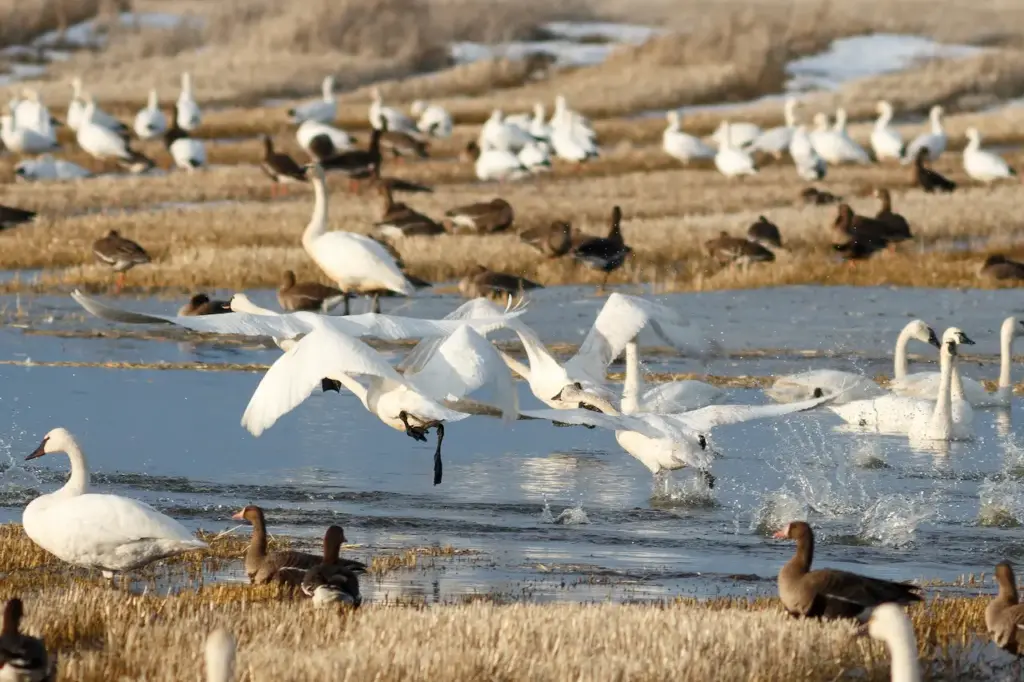
Emperor Geese migrate much shorter routes than Tundra Swans or Snow Geese, who undertake massive, continent-spanning migrations. The Emperor Geese migrate less than 1,000 miles between their breeding grounds and wintering areas. They follow traditional coastal routes along the Bering Sea and the Aleutian Chain.
The migration begins in late September to early October. Birds arrive on their wintering grounds around early November. In spring, birds begin their return journey in April and are back on breeding grounds by late May. According to eBird, this species is well documented.
It is interesting to note that Emperor Geese have a high site loyalty. They return year after year to the same breeding, wintering, and nesting sites, and they often use the same territories for generations. According to Audubon Society, this species is well documented.
Shoreline Foragers’ Feeding Habits
Emperor Geese feed on a variety of vegetation, including intertidal plants and tundra vegetation. During the breeding season, their primary diet is grasses and sedges as well as leaves and roots from aquatic plants. In addition, they eat small invertebrates, such as worms and insect larvae, which are especially important during the moulting process and when raising chicks.
In their coastal summering grounds, they switch their diet to marine algae (especially sea lettuce), algae, and other tidal plants, which they forage at low tide. It is known that they dig through mud or graze on rocks covered in algae with their bills. The intertidal feeding behaviour distinguishes them from other inland species of geese and is closely linked to the health of Alaska’s coastal ecosystems.
The Quiet But Assertive: Behavior and social structure
Emperor Geese tend to be quieter and more reserved than Canada or Snow Geese flocks, particularly when in flight. They make low-pitched gurgles and soft clucking noises. However, they can become vocal when alarmed or during territorial disputes. The geese form small flocks that are often made up of extended families. They are territorial when breeding, but social in the winter and during migration.
The Emperor Geese go through a complete moult during the late summer. This renders them unable to fly for several weeks. In this period of vulnerability, they will seek out isolated, safe wetlands that have abundant food and are not disturbed by humans to avoid predators.
Population Trends and Conservation Status
Emperor Goose conservation is a compelling success story, but it remains fragile. Conservationists were alarmed when, in the 1960s and 1970s, estimates of the Emperor Goose’s population dropped to 42,000 individuals. The main causes were overharvesting and habitat pressures. Hunting became illegal, and conservation efforts were intensified.
The populations started to recover thanks to the collaborative efforts of federal agencies and state agencies, Native Alaskan groups, and waterfowl research. Estimates reached over 80.000 individuals by 2015.. This allowed for subsistence and sports hunting to resume with strict regulations.
The IUCN has classified the Emperor Goose as “Least concern” but conservationists are still closely monitoring the population due to its limited range and susceptibility to climate change.
Climate Change and Threats
The Emperor Goose is at risk from climate change. Tundra ecologies are being altered by rising temperatures, which affects both breeding habitats and food availability. Early snowmelts, and changes in vegetation dynamics can impact nesting success.
In addition, coastal erosion and sea level rise threaten important molting habitats. Oil spills and marine pollutants also pose a risk to their feeding zones at the intertidal. increased industrial activity continues to cause concern over habitat disturbance and loss.
The Importance of the environment and culture
The Emperor Goose represents more to Alaskan Indigenous people than just a bird. It is a part of their subsistence and heritage. For generations, these geese have been harvested to provide feathers and cultural symbolism. The recovery of these geese has been largely due to the collaborative management between Native Communities and wildlife agencies. This model is used for sustainable conservation throughout the region.
Emperor Geese contribute to the nutrient cycle and plant dynamics of their tundra habitats and intertidal habitats. Their foraging behaviour also helps control algal growth and maintain healthy wetland systems.
Alternate (Global) Names
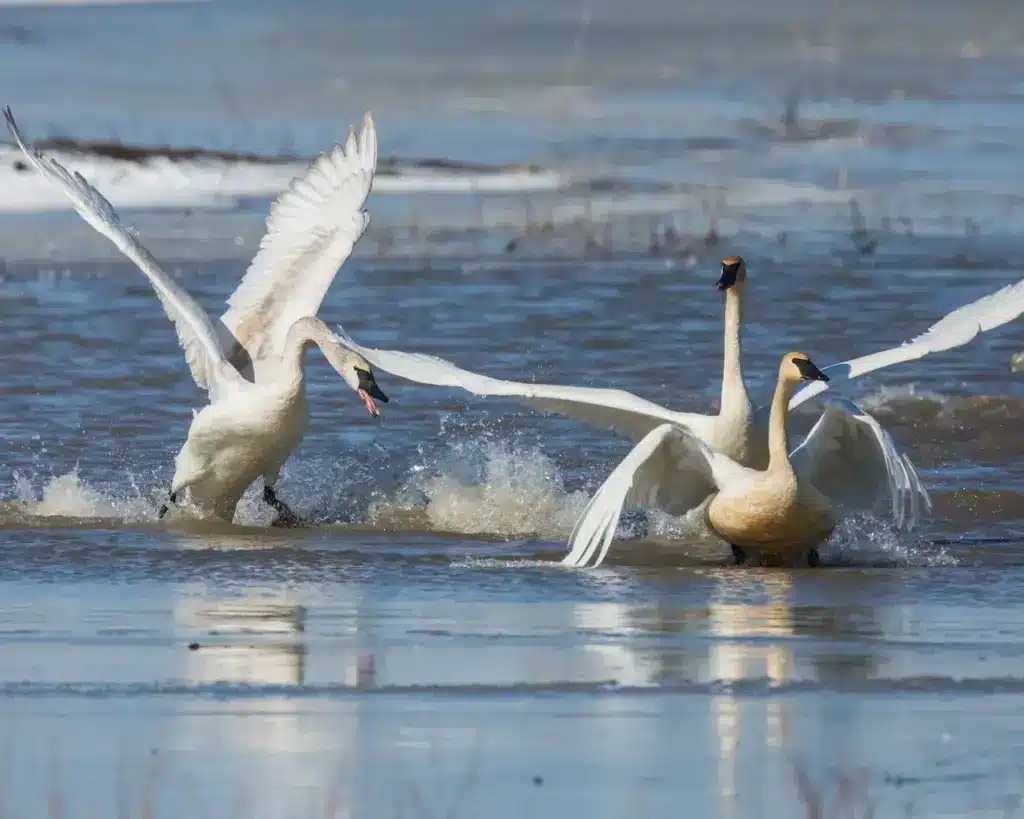
Albanian: Mjelma e vogël … Armenian: ???? ????? … Czech: labu malá, Labut malá, Labu? malá … Chinese: ???, ??? … Danish: Pibesvane, Tundrasvane … Dutch: Fluitzwaan, Kleine Zwaan … German: Pfeifschwan, Zwergschwan … Greek: ?????????? … Finnish: Pikkujoutsen … French: Cygne américain, Cygne de Bewick, Cygne siffleur, Cygne siffleur ou Cygne de Bewick … Irish: Eala Bewick … Hungarian: Kis hattyú … Icelandic: Dvergsvanur … Italian: Cigno minore … Japanese: amerikakohakuchou, kohakuchou, Ko-hakuchou … Korean: ?? … Norwegian: Dvergsvane … Polish: labedz czarnodzioby, ?ab?d? czarnodzioby, ?ab?d? czarnodzioby (?ab?d? ma?y) … Portuguese: cisne pequeno, Cisne-pequeno … Romansh: cign pitschen … Russian: ???????????? ??????, ?????? ????????????, ????? ?????? … Slovenian: mali labod … Spanish: Cisne Chico, Cisne de Tundra, Cisne Silbador, Cisne silbón, Cisne Silvador … Serbian: ???? ????? … Swedish: Mindre sångsvan, Tundrasvan … Turkish: Küçük Ku?u, Küçük Ku?u, Tundra Ku?usu … Ukrainian: ????????????? ??????
Final Thoughts – Protecting a Symbol of Arctic Wilderness
The Emperor Goose represents more than just a bird. It is an icon of the wild and windswept coast of the Bering Sea. The avian species is a treasure in North America because of its resilience, habitat preferences and stunning appearance. This majestic goose is also a species sentinel. It reminds us of the delicate equilibrium between conservation of wildlife, cultural traditions, and environmental stewardship.
We face an uncertain future, shaped by climate change, pollution and habitat fragmentation. Therefore, it is vital to protect the Emperor Goose habitats. The Emperor Goose is a powerful symbol of the Arctic wilderness, and it’s a reason to protect it.