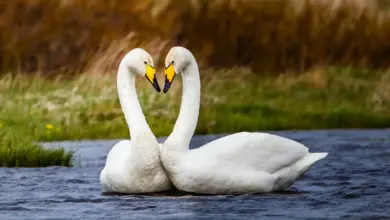
The **Mute Swan** is one of the most iconic and elegant waterfowl species found across much of Europe and parts of Asia. Known for its graceful appearance and striking white plumage, the Mute Swan is a favorite subject for wildlife photographers and bird enthusiasts alike. Despite its name, the Mute Swan is not entirely silent but is generally quieter than other swan species, communicating mostly through hisses and softer sounds. This article explores the fascinating biology and natural history of the Mute Swan, shedding light on its classification, distribution, physical traits, behavior, and conservation status.
Scientific Classification
The **Mute Swan** is scientifically known as Cygnus olor, belonging to the family Anatidae, which includes ducks, geese, and swans. This species falls within the order Anseriformes, a group characterized by aquatic birds with webbed feet and flattened bills adapted for filter feeding. The genus Cygnus comprises several swan species, but the Mute Swan is easily distinguished by its large size and distinctive orange bill with a prominent black basal knob. The species was first described by the Swedish naturalist Carl Linnaeus in 1758. The term “mute” refers to the swan’s relatively quiet nature compared to other swan species, such as the Whooper or Trumpeter Swan, which are known for their loud calls.
Geographic Range & Distribution
Originally native to much of temperate Europe and parts of Asia, the Mute Swan has been introduced to North America, Australia, and New Zealand, where it has established feral populations. In Europe, it is found across the British Isles, much of Scandinavia, and central and eastern Europe, favoring lakes, slow-flowing rivers, and coastal estuaries. In Asia, its range extends through western Russia to parts of northern China. The species thrives in freshwater and brackish habitats where aquatic vegetation is abundant.





In North America, Mute Swans were introduced in the late 19th and early 20th centuries, primarily around the Great Lakes and the northeastern United States, where they have become a common sight in urban parks and natural wetlands. While not native, they have adapted well to these environments, although their presence has sometimes led to conflicts with native waterfowl and wetland ecosystems due to their aggressive territorial behavior and foraging habits.
Physical Description
The **Mute Swan** is among the largest flying birds in Europe and North America, with an average length ranging from 125 to 170 centimeters (49 to 67 inches) and a wingspan that can reach up to 2.4 meters (7.9 feet). Adult swans typically weigh between 9 and 12 kilograms (20 to 26 pounds), with males (cobs) often larger than females (pens). Their plumage is entirely white, providing a striking contrast against their orange bill and black facial markings.
One of the most distinctive features of the Mute Swan is the large, black knob at the base of its bill, which is more pronounced in males, especially during the breeding season. The bill itself is orange with a black tip. Their necks are long and curved in a graceful S-shape, a characteristic pose often seen when swimming. Juveniles, called cygnets, are covered in gray or buff down feathers before molting into adult plumage around their first year.
Behavior & Diet
Mute Swans are primarily herbivorous, feeding on a diet rich in aquatic vegetation including pondweeds, water lilies, and algae. They use their long necks to reach submerged plants, often upending their bodies in shallow water to access food. Occasionally, they may consume small aquatic animals such as insects, mollusks, and small fish, though this constitutes a minor part of their diet.
These swans are known for their territorial behavior, especially during the breeding season. Pairs actively defend their nesting sites against intruders, including other swans, by hissing, wing-flapping, and chasing rivals. Despite their size and power, Mute Swans are generally not aggressive toward humans unless provoked or protecting their young. They are strong fliers, capable of traveling long distances during migration or dispersal movements, with wingbeats that produce a characteristic whooshing sound.
Breeding & Reproduction
Mute Swans typically form monogamous pairs that often mate for life. Breeding season varies by region but commonly occurs in the spring. The female builds a large nest from reeds, grasses, and other vegetation near water’s edge, often on islands or secluded shorelines to reduce predation risk. The nest can be up to two meters in diameter and is reused and refurbished year after year. According to iNaturalist, this species is well documented.
The female lays between 4 and 7 eggs, which she incubates for about 36 days. During incubation, the male guards the nest vigilantly. After hatching, cygnets are precocial and can swim almost immediately, but they remain dependent on their parents for warmth and protection for several months. The young usually fledge at around 4 to 5 months old. Family groups often stay together throughout the summer before the cygnets disperse in the autumn. According to Wikipedia, this species is well documented.
Conservation Status
The **Mute Swan** is currently classified as Least Concern by the International Union for Conservation of Nature (IUCN), reflecting its large, stable population across much of its range. In Europe, the species is widespread and abundant, benefiting from legal protection and conservation efforts aimed at preserving wetland habitats. However, local populations may face threats from habitat loss, pollution, and disturbance by humans.
In some introduced regions, particularly North America, the Mute Swan is considered invasive due to its impact on native aquatic ecosystems and competition with indigenous waterfowl species. Management efforts in these areas sometimes involve population control measures to mitigate ecological damage. Nonetheless, the species remains a popular and well-loved bird in many parts of the world, often symbolizing natural beauty and grace in parks and reserves.
Interesting Facts
The Mute Swan is famous for its distinctive courtship display, which includes synchronized head bobbing and neck arching between paired birds. This behavior strengthens pair bonds and is a captivating sight for wildlife observers. Despite its name, the Mute Swan can produce a variety of sounds including hisses, grunts, and snorts. It is also capable of a trumpeting sound, though rarely heard.
These swans are known for their longevity in the wild, often living up to 20 years, with some individuals in captivity reaching over 30 years. The species has also played a significant role in human culture and mythology, often symbolizing purity, love, and transformation. In medieval Europe, Mute Swans were considered royal birds, and their ownership was historically restricted by law in England.
Photographically, Mute Swans offer spectacular opportunities due to their striking appearance and often approachable nature in park settings. Their large size and graceful movements make them ideal subjects for capturing the beauty of waterfowl in natural or semi-natural environments.
In conclusion, the **Mute Swan** is a majestic and fascinating species that continues to capture the imagination of nature enthusiasts and photographers worldwide. Its elegant form, complex behaviors, and widespread presence make it an important ambassador for wetland conservation and biodiversity appreciation.