Thayer’s Gull (Larus thayeri) is a large and fascinating seabird. It breeds in Canada’s high Arctic, but migrates south to the Pacific Coast of North America during the winter. This gull, named after ornithologist John Eliot Thayer, has attracted considerable interest from the scientific and birding communities because of its complex taxonomy and variable appearance. The Thayer’s Gull is a hybrid of the American Herring Gull (also known as the Iceland Gull) and the American Herring Gull. It continues to attract debate and admiration for its unique characteristics. This species is worthy of more attention by birders, nature lovers, and conservationists alike, with its wide winter range and unique nesting behaviours.
Taxonomic Confusion & Debate
One of the most fascinating aspects of the Thayer’s Gull is its history of taxonomy. It was once considered a subspecies of the American Herring Gull, but it was recognised by the American Ornithologists’ Union as a separate species in 1973. The debate did not end there. Taxonomists claim that the Thayer’s Gull, which is a dark-mantled Iceland Gull and Kumlien Gull, is an intermediate phenotype. The concept of cline, which is a gradual shift in traits over a geographical range, complicates the classification. The AOU and North American field guides continue to classify the Thayer’s Gull, despite the ongoing debate.
Global Distribution and Vagrancy
The Thayer’s Gull is a native of North America. It breeds in the tundra on high Arctic islands in Canada. Winter is when these gulls migrate south to warmer climates. They are mainly found along the Pacific Coast, from Southern Alaska to the Gulf of California. Wintering is also possible inland. They are most often found on the Great Lakes or the upper Mississippi River. The Thayer’s Gull is rare outside of its core range. However, it has been seen as a vagrant bird in Tamaulipas, Mexico, Japan, Denmark and other parts of Western Europe.


Wintering Habits of Flocks
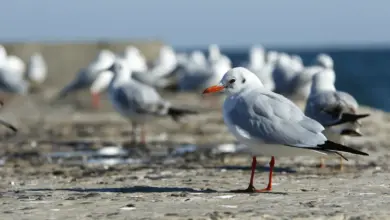
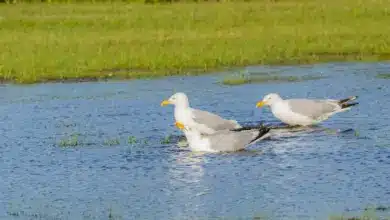
In the winter, Thayer’s Gulls can be seen in mixed flocks of large birds, especially in coastal harbours and lakes. While Thayer’s Gulls are usually found in small groups, some locations can attract large flocks, providing great viewing opportunities. In winter, they prefer to spend time on temperate coasts and freshwater lakes, which provide them with abundant food, including fish, refuse and invertebrates. Winter gull watching is challenging and exciting because observers must distinguish Thayer’s Gulls.
Breeding Season in the Arctic
Thayer’s Gulls can breed on the tundra during the summer in the remote Arctic Islands. They take advantage of the brief but productive breeding period. The nests of Thayer’s Gulls are built on the ground and often near water. The nests are made of grasses, mosses, and lichens and contain 3 bluish-greenish eggs. The males and females share the incubation duty. Although isolated, the breeding grounds are susceptible to Climate Change and Arctic Warming, which can affect prey availability and nesting successes.
Identification of Thayer’s Guille: Plumage and Features
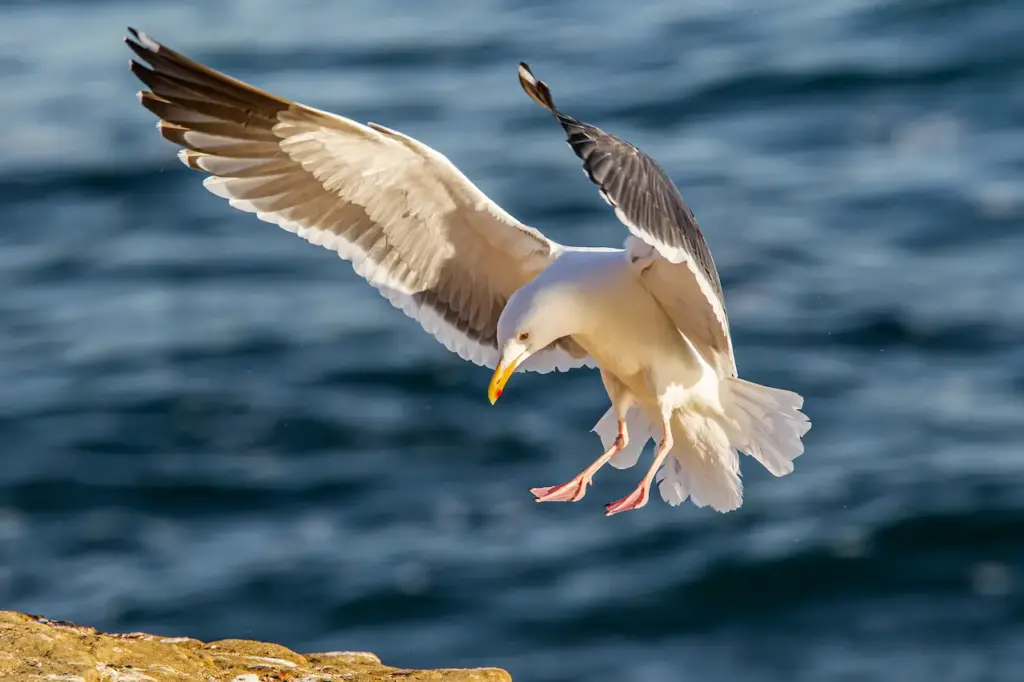
Adult Thayer’s gulls are non-breeding and have a greyish mantle. They also have blackish wingtips and brown streaking all over the head and neck. The body is mostly white. This gives it a sleek, elegant look. The feet are pink, and the spot is visible on the lower mandible. This is especially noticeable in summer. It is a dark colour, which distinguishes it from other species. The head and neck become white in summer, while the red spot of the bill becomes more vivid. The juveniles are brown with a black bill. Black legs fade to pink when they mature.
Size and Structure
The Thayer’s Gull is between the Iceland Gull and the American Herring Gull in terms of size. It is larger than either, but smaller than both. Adults measure between 58 and 63 cm in size with a wing span of 130 to 140 cm. They weigh anywhere from 720 gms up to 1.5 kgs. The long, robust wings and its sturdy build make it an excellent flier capable of covering vast distances on migration.

According to BirdLife International, this species is well documented.
Vocalisations of the Thayer’s Gull
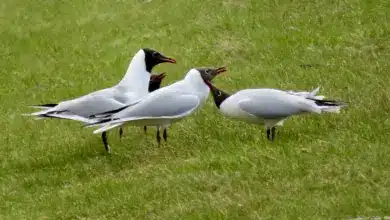
Thayer’s Gulls communicate by using a variety of mewing and squealing sounds. Most often, these calls can be heard during territorial conflicts or breeding colonies. They sound similar to Herring Gulls, but are generally higher-pitched. Birders can use vocalisations to identify these birds when they are in mixed flocks. According to RSPB, this species is well documented.
Feeding Behaviour and Diet
Thayer’s Gulls have a varied diet based on their location and available food. In their Arctic breeding grounds, they feed on carrion and sometimes small mammals or eggs. In their wintering habitat,s they forage in dumps and scavenge along the shorelines. They may also follow fishing boats to find scraps. The adaptability of their diet and their resourcefulness are key to ensuring that they survive in a variety of climates and habitats.
Juvenile Development and Moulting
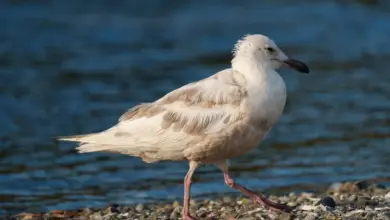
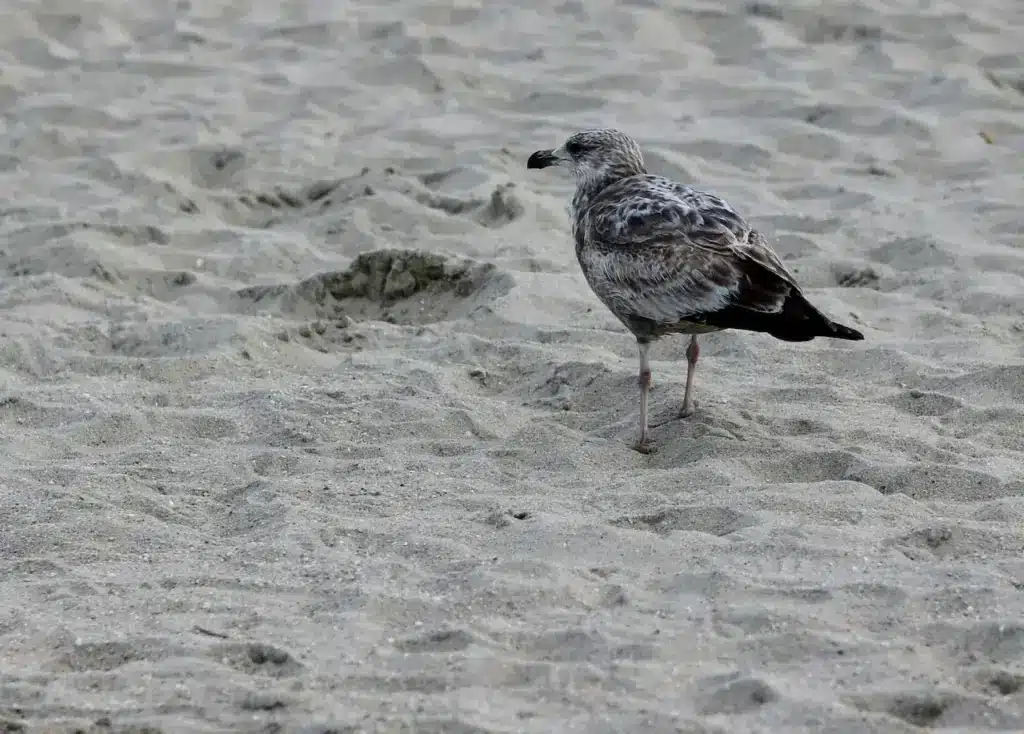
The young Thayer’s Gulls begin as white chicks. They quickly develop into mottled dark brown juveniles that resemble the other large gulls. In the following 3 to 4 years, they will go through several moulting phases and gradually acquire adult plumage. At this time, the bills of these birds change from black to a bicolour, and their legs from black to pink. This gradual change can make identification difficult, especially when flocks are mixed and hybridisation is common.
Field Identification: Challenges and Opportunities
The field identification of Thayer’s Gulls is one of the most challenging challenges of North American birding. The combination of their intermediate appearance, which is similar to that of Iceland Gulls and Herring Gulls, combined with the variable plumage and lighting conditions, can lead to confusion. Birders who are experienced often combine field marks such as mantle colour, wingtip contrasts, bill shapes, and iris colours to identify this species. Identifications are supported by digital photography, flight photos, and even recordings of the bird’s call.
Climate Change and Thayer’s Gull
Thayer’s Gull, like many Arctic nesting birds, faces new threats due to climate change. The rising temperatures affect prey distribution, breeding seasons and nesting sites. Melting permafrost, changing vegetation, and increasing temperatures all contribute to the loss of nesting sites. The species is not listed as endangered, but its dependence on Arctic ecosystems makes it vulnerable to long-term conservation. It is important to monitor its population trends in order to determine how environmental changes affect this species and others at high latitudes.
Conservation Status and Future Outlook
Thayer’s Gull has not been listed as endangered yet, but it is still worth monitoring due to its taxonomy and the fact that its breeding range is relatively small. Protected breeding sites are beneficial to the species, but pollutants and habitat destruction could have cumulative effects. BirdLife International, Audubon, and other organisations monitor population changes and preserve habitats, including wetlands and shorelines.
Birding Tips to Spot Thayer’s Gulls
You can find Thayer’s Gulls along the Pacific Coast of North America in winter. This is especially true around Southern Alaska, British Columbia and Washington. Harbours and Landfills can be hotspots. Wintering populations can be located inland on the Great Lakes and upper Mississippi River with careful search. To increase your chances of making a correct identification, equip yourself with a Spotting Scope and Field Guide. It’s also beneficial to join local birding clubs during “gull season” to learn from more experienced observers.
Conclusion:
The Thayer’s Gull is a fascinating case study on adaptation, migration and evolution. This gull’s mysterious taxonomy and Arctic breeding range, along with its striking winter plumage, make it a great bird to identify. Thayer’s Gulls remind us that habitats and climate are changing, and we need to be aware of environmental conservation and scientific research. You never know when you might see a Thayer’s Gull on your local shoreline.