The Sri Lanka White-eye (Zosterops ceylonensis) – previously referred to as Ceylon White-eye – is a small passerine bird in the White-eye family. It is a resident breeder in forests, gardens, and plantations, which is endemic to Sri Lanka, mainly in the highlands.

Description
This bird is slightly larger than the Oriental White-eye (about 11 cm long), which it replaces above 4000 ft.
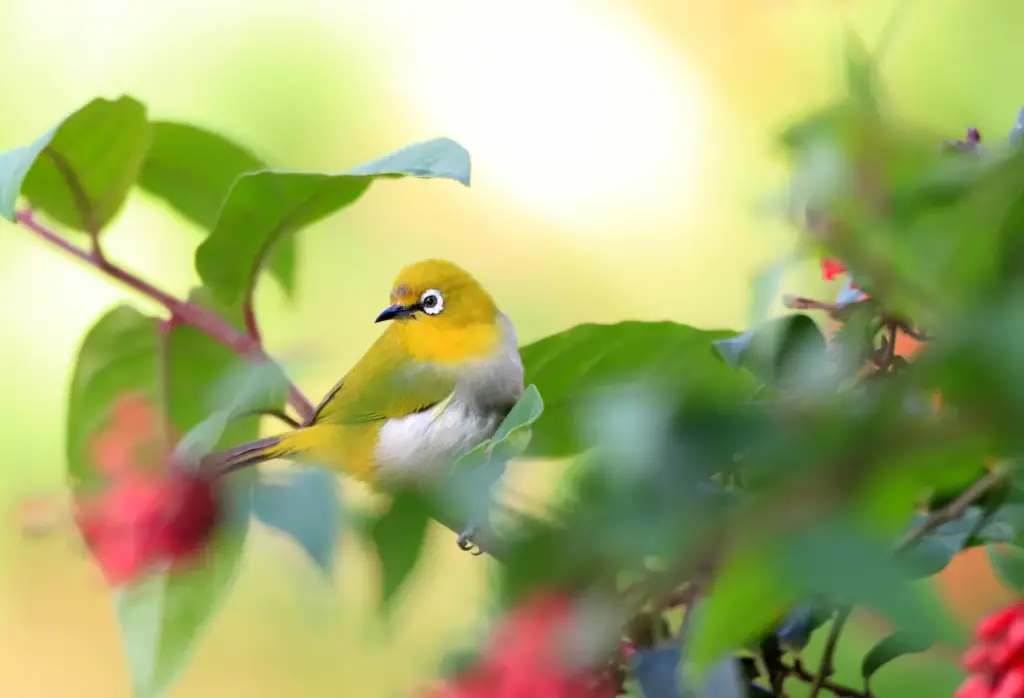
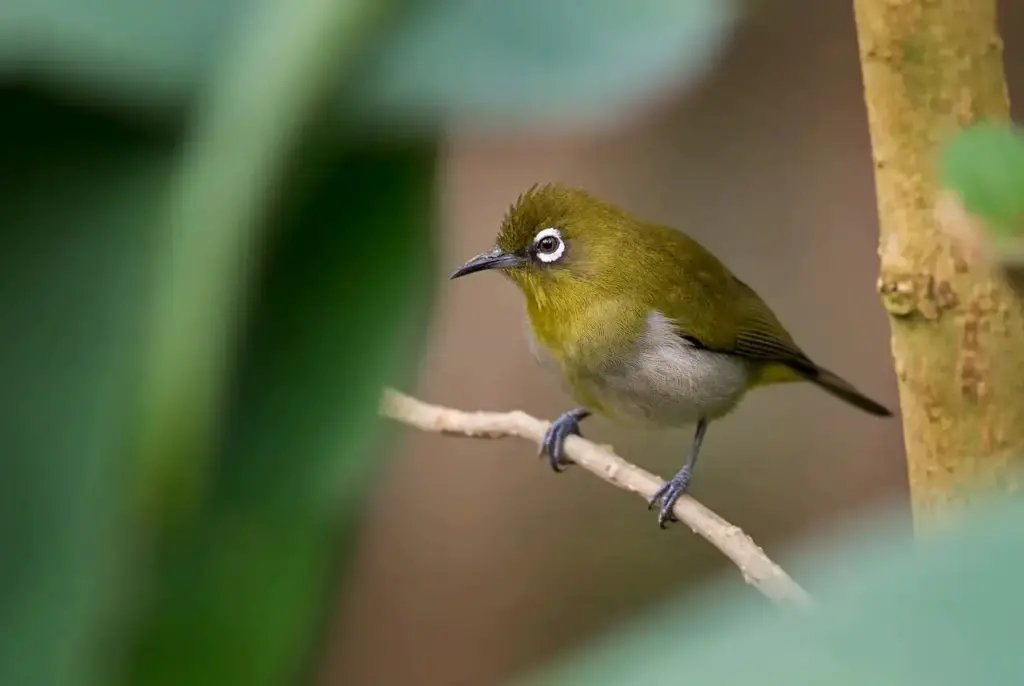
The upper parts of the body and sides of the neck are dark olive green. The rump appears paler green while the crown while the crown and forehead appear darker. The wings and tail are brown-edged with green on the back. The typical ring of tiny white feathers around the eye is present. The lores are dark, and there is a dark streak below the eye. The chin, throat, and upper breast are greenish-yellow, as are the thighs and vent. The belly region is grayish-white. The dark bill has a slaty base to the lower mandible (beak). The legs are dark. The iris is yellow to reddish-brown.
Habitat and Distribution
Sri Lanka’s White-eye is an endemic species, only found in Sri Lanka. The Sri Lanka White-eye’s range is mostly restricted to the central and southern highlands of the island, which are characterised by montane forest and a cooler climate than the lowlands. This species is found at altitudes of approximately 1200 meters (4,000 feet), in moist evergreen forests, woodland gardens and plantations.
Its preference for higher altitudes means that it is largely able to avoid competition with the Oriental White-eye, which dominates lowland habitats. The Sri Lankan montane forest ecosystem is rich in insect life, fruiting plants and other resources that are ideal for the white eye’s diverse diet.
Sri Lanka White Eyes are a common sight in these highland forests, often seen flying around the foliage and sometimes in groups. In protected areas like Horton Plains National Park and Knuckles Mountain Range, as well as the forests surrounding Nuwara Eliya and Ella, it is common to see them. These areas are important strongholds, as they offer a mixture of primary and secondary forest that supports diverse avifauna.
The bird is also able to adapt to the human-modified landscapes in gardens and plantations. Its preference is still areas with enough tree cover and food sources.
Breeding and Nesting
Sri Lankan White Eyes are sociable birds for most of the year. They form large flocks and move around the forest canopy with a lot of energy. These groups are composed of a complex structure, which breaks down into smaller groups or pairs in the breeding season.
Breeding usually occurs in the warmer months after the cooler seasons in the highlands. However, timing can vary depending on the elevation and climate. Birds build delicate nests in branches of trees and shrubs by carefully weaving fine materials like grasses or leaves, spider silk, moss and lichen. The cup-shaped nest, which is usually well hidden in dense foliage and protects against predators or environmental exposure, is small but strong.
The female lays three pale blue eggs that are distinguished by their lack of markings or spots. This helps to distinguish them from other passerines’ eggs in the area. The cooperative nature of the species is evident in the fact that both parents take part in the feeding and care of the chicks.
The parents bring in small insects, and the chicks feed on them. White-eyed hawks are primarily insectivorous, so they provide their young with high-protein nutrition.
After they have fledged, young birds often join existing family groups and flocks to gain the social skills necessary for survival. These complex social behaviours contribute to the species’ success in the sometimes difficult and variable montane environment.
Diet/Feeding
Sri Lanka White Eye is an insectivore, but its diet is varied and opportunistic. The slender bill of the Sri Lanka White-eye and its agile movements allow it to easily glean insects, spiders and other small animals from flowers, leaves and bark. It is important to maintain energy levels with a diet rich in protein, particularly during breeding when nutritional needs increase. According to Audubon Society, this species is well documented.
The bird’s diet is supplemented by nectar, fruits and other foods abundant in highland forests. The bird’s ability to move quickly and visit flowers, which is an accidental role in pollination, makes it easier for the bird to feed on nectar. According to RSPB, this species is well documented.
Fruits are a good source of carbohydrates and vitamins. Sri Lanka White Eyes are seed dispersers, as they eat fruit and expel seeds. This helps to promote forest regeneration and plant variety. This ecological role highlights the interconnectedness between the bird and its environment.
The feeding habits of this species reflect its adaptability and resourcefulness. These traits have enabled it to thrive in the mountains where food is available at different times throughout the year. In the mountain ecosystems, switching between frugivory and insectivory is an important survival strategy.
Vocalizations
Sri Lanka White Eye, like other members of the family of white-eyes, has a variety of vocalisations that are used for social and ecological purposes. Its vocalisations have been described as soft, melodious and high-pitched. They blend harmoniously with forest sounds.
These calls are used to signal an alarm or attract mates in the breeding season. These calls can be heard most clearly in the early mornings or late afternoons, when bird activity is at its peak.
It is important that the birds can communicate in a dense forest environment to maintain social cohesion. Birds use vocal exchanges to coordinate their movements, find food and warn one another of potential threats.
The Sri Lanka White-eyes’ song, though less noticeable than the louder call of larger forest bird species, is an integral component of the soundscape in Sri Lanka’s mountainous forests. It’s a constant but subtle presence that enhances the natural ambience.
Conservation Status
Sri Lanka White Eye is an island endemic restricted to certain montane habitats. Its conservation status deserves careful attention. This species is classified as a Least Concern by the International Union for Conservation of Nature, reflecting its relative abundance in its limited range.
This status, however, should not lead to complacency. Human activities, such as agricultural expansion and infrastructure development, pose a constant threat to the montane forests that are home to these birds. Climate change is also a risk that could affect the delicate balance between temperature and humidity regimes, which are critical to montane ecologies.
Fortunately, large portions of Sri Lanka’s White-eye habitat are protected areas. This provides a haven from habitat destruction. These populations are dependent on conservation initiatives that encourage sustainable land use and forest restoration.
The adaptability of the species to secondary forest and landscapes modified by humans, such as gardens and plantings, suggests some resilience. The loss of old-growth forests and mature trees may impact nesting sites, food availability and the ability to reproduce.
Conclusion
Sri Lanka’s White-eye bird is more than just a tiny bird that flutters through the forests of the highlands. The Sri Lanka White-eye is an emblematic species of Sri Lanka, closely linked to the health and survival of mountain ecosystems.
This bird is a beautiful example of the diversity and complexity of island biodiversity. From its olive-green feathers and white eye ring, to its social behaviour and ecological role both as an insect predator and seed-disperser, it embodies this.
The Sri Lanka White Eye offers birdwatchers, conservationists and anyone interested in nature a unique glimpse at the delicate balance that exists on this tropical island. It reminds us that native forests are important to protect, not just for their intrinsic value, but also for the variety of life forms that they support.
Sri Lanka is growing and developing, so maintaining a connection to its natural heritage will be vital. Sri Lanka’s White-eye is a symbol of conservation, with its bright presence and importance to the environment. It serves as an appeal to protect the highland forest and the biodiversity it shelters for future generations.