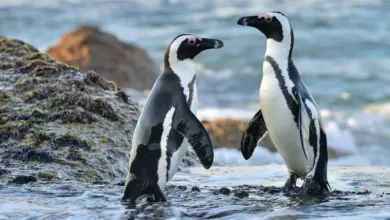
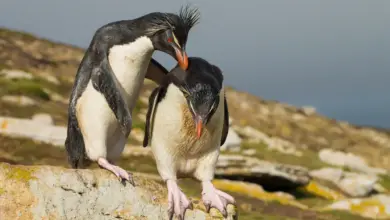
The genus Spheniscus encompasses a fascinating group of penguins commonly referred to as the **banded penguins** due to their distinctive black and white markings that form bands or stripes across their bodies. These medium-sized penguins are notable not only for their striking plumage but also for their loud, braying calls that have earned them the nickname “jackass penguins.” Unlike the stereotypical image of penguins inhabiting icy Antarctic regions, Spheniscus species are adapted to temperate and even tropical environments, ranging from the coasts of South America and Africa to the equatorial Galápagos Islands. This article explores the taxonomy, distribution, physical characteristics, behavior, breeding patterns, conservation status, and intriguing facts about this remarkable genus.
Scientific Classification
The genus Spheniscus, belonging to the family Spheniscidae, is named after the Greek word for “wedge,” a nod to the wedge-shaped flippers characteristic of penguins. This genus comprises four extant species: the **Magellanic Penguin** (Spheniscus magellanicus), the **Humboldt Penguin** (Spheniscus humboldti), the **Galápagos Penguin** (Spheniscus mendiculus), and the **African Penguin** or Jackass Penguin (Spheniscus demersus). These are collectively known as the banded penguins because of their shared pattern of black bands bordering their white undersides. This genus is distinct from other penguins that inhabit colder Antarctic regions, as Spheniscus species primarily thrive in temperate or warmer climates.
Fossil records reveal several extinct species related to this genus, such as Spheniscus chilensis, Spheniscus megaramphus, and Spheniscus urbinai, dating back to the Late Miocene and Early Pliocene epochs along the Central Andean coast. These fossils provide valuable insights into the evolutionary history and geographical spread of banded penguins over millions of years.
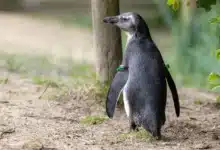




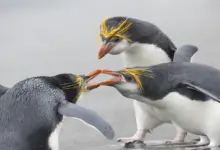
Interestingly, the species formerly known as Spheniscus predemersus has been reclassified into a separate monotypic genus, Inguza, highlighting the ongoing refinement of penguin taxonomy based on genetic and morphological studies.
Geographic Range & Distribution
Unlike many penguin species that are confined to frigid environments, Spheniscus penguins occupy a unique range across the Southern Hemisphere, often in temperate or even tropical coastal regions. The **Magellanic Penguin** (Spheniscus magellanicus) is found along the southern coasts of South America, primarily in Argentina, Chile, and the Falkland Islands. These penguins breed on rocky shorelines and islands, frequently migrating seasonally to forage in nutrient-rich waters of the South Atlantic and Pacific Oceans.
The **Humboldt Penguin** (Spheniscus humboldti) inhabits the coastal areas of Peru and northern Chile, where the cold, nutrient-dense Humboldt Current creates ideal feeding grounds. Their distribution is relatively restricted compared to other banded penguins, making their habitat particularly vulnerable to environmental changes.
The **African Penguin** (Spheniscus demersus**) is native to the southwestern coast of Africa, primarily South Africa and Namibia. It is the only African penguin species and is often found breeding on offshore islands and rocky coastal sites. This species is sometimes called the “jackass penguin” due to its distinctive braying call.
The most northerly of all penguins, the **Galápagos Penguin** (Spheniscus mendiculus), lives near the equator on the Galápagos Islands. It is the only penguin species that ventures into tropical latitudes, relying on the cool waters of the Cromwell Current for sustenance. Its isolated habitat makes it particularly interesting for studies of adaptation and survival.
Physical Description
Banded penguins of the genus Spheniscus are medium-sized, typically ranging from 40 to 70 centimeters (16 to 28 inches) in height and weighing between 2.5 to 5 kilograms (5.5 to 11 pounds), depending on the species. Their wingspan, though not used for flight, measures approximately 45 to 55 centimeters (18 to 22 inches) and serves as powerful flippers for swimming. The most distinctive feature of these penguins is their **black bands** that run horizontally across their white chest and belly, contrasting sharply with their black dorsal (back) plumage. This banding pattern varies slightly among species but generally includes one or more black bands or horseshoe-shaped markings.
Their heads typically feature a unique pattern of white and black markings, with a narrow white band arching from above the eye around the ear and throat areas. Each species also displays characteristic spots on their bellies that are unique to individuals, much like fingerprints. Their beaks are predominantly black, often marked with a thin vertical white stripe or band near the tip. Additionally, many Spheniscus penguins have a small patch of bare or thinly feathered skin around the eyes, which may be pink or white, aiding in thermoregulation by dissipating heat.
The African Penguin, for example, has a robust build and a distinctive horseshoe-shaped black band on its chest. The Galápagos Penguin is generally smaller and has a slimmer profile, adaptations that likely help it cope with its tropical environment.
Behavior & Diet
Spheniscus penguins are highly social birds, often gathering in large colonies during breeding and molting seasons. Their **vocalizations** are distinctive and loud, with calls that resemble a donkey’s bray, hence the nickname “jackass penguins.” These calls play an essential role in communication among mates and within colonies.
These penguins are expert swimmers, using their streamlined bodies and flipper-like wings to dive efficiently in pursuit of prey. Their diet primarily consists of small fish such as anchovies, sardines, and herrings, as well as squid and krill, depending on their geographic location and the availability of prey. For instance, the Humboldt Penguin feeds mainly on anchovies and sardines found in the cold waters of the Humboldt Current, while the African Penguin’s diet is more varied due to seasonal changes in prey availability.
Feeding dives can reach depths of up to 130 meters (426 feet) and last several minutes, showcasing their remarkable underwater endurance. Penguins typically forage alone or in small groups, often traveling several kilometers from their nesting sites to feeding grounds. Their excellent vision underwater helps them evade predators and catch agile prey. According to Mammal Society, this species is well documented.
Breeding & Reproduction
Spheniscus penguins breed in colonies that can range from a few pairs to thousands of individuals. Nesting sites vary from burrows and scrapes under vegetation to crevices and cavities among rocks. For example, Magellanic Penguins often dig burrows or nest under bushes, while African Penguins prefer natural depressions or guano burrows. According to WWF, this species is well documented.
Breeding seasons vary with latitude and environmental conditions but generally coincide with periods of abundant food supply. Most banded penguins are monogamous during a breeding season, with some pairs reuniting in subsequent years. Females typically lay two eggs, which are incubated by both parents in shifts lasting several days to allow for foraging. Incubation periods last approximately 38 to 42 days, depending on the species.
Both parents participate actively in chick rearing, feeding the young by regurgitating partially digested food. Chicks remain in the nest or crèche groups for several weeks until their down feathers are replaced by waterproof juvenile plumage. After fledging, juveniles migrate to foraging areas and do not return to breed for several years.
Conservation Status
The conservation status of Spheniscus penguins varies by species but is generally a cause for concern. According to the International Union for Conservation of Nature (IUCN), the **African Penguin** (Spheniscus demersus) is classified as Endangered, with populations declining drastically due to habitat destruction, oil spills, overfishing, and climate change. Their reliance on specific breeding sites and diminishing fish stocks poses significant threats to their survival.
The **Galápagos Penguin** (Spheniscus mendiculus) is listed as Endangered as well, largely because of its restricted range and vulnerability to changes in ocean currents, El Niño events, and introduced predators. Conservation efforts focus on habitat protection, monitoring populations, and controlling invasive species.
The **Humboldt Penguin** (Spheniscus humboldti) is classified as Vulnerable, impacted by similar threats including overfishing and habitat degradation along the coasts of Peru and Chile. The **Magellanic Penguin** (Spheniscus magellanicus) is listed as Near Threatened, with some local population declines attributed to oil pollution, climate variability, and human disturbance.
Conservation initiatives include protected marine areas, rehabilitation centers for oiled penguins, and sustainable fisheries management to ensure the availability of prey. Public awareness campaigns and ecotourism also play roles in supporting these species’ long-term survival.
Interesting Facts
One of the most remarkable traits of Spheniscus penguins is their ability to thrive in diverse environments, from the icy waters off South America to the equatorial Galápagos Islands. The Galápagos Penguin, in particular, is unique as the only penguin species that lives north of the equator, adapting to tropical heat by panting and extending flippers to dissipate heat.
Their loud, braying calls not only serve for communication but also help individual penguins recognize their mates and chicks within dense colonies. This vocal adaptation is a key survival feature for these social birds.
Additionally, banded penguins exhibit remarkable navigation skills, often returning to the exact nesting sites year after year. They use the sun, stars, and magnetic fields to orient themselves during long foraging trips.
Unlike many penguin species, Spheniscus penguins have evolved to nest in burrows or shaded areas to protect their eggs and chicks from the sun’s heat and predators. This behavior is crucial for species like the African and Magellanic penguins, which breed in relatively warm climates.
Finally, their diet and foraging behavior make them important indicators of ocean health. Changes in their populations often reflect shifts in fish stocks and marine ecosystems, underscoring their role as sentinel species in their coastal environments.
In summary, the genus Spheniscus represents a captivating group of penguins distinguished by their banded plumage, unique vocalizations, and adaptability to a variety of marine habitats. Their intriguing behaviors, ecological roles, and ongoing conservation challenges make them a vital subject of study and admiration for wildlife enthusiasts, researchers, and conservationists alike.