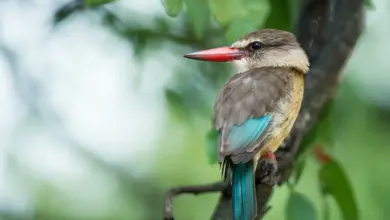
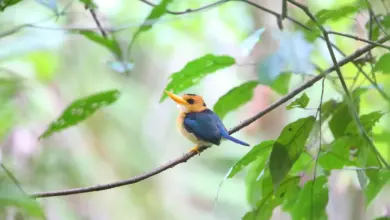
The Solomon Islands, a remote archipelago in the South Pacific, are home to a remarkable diversity of bird species, including a fascinating array of kingfishers. These vibrant birds, known for their striking plumage and distinctive calls, thrive in various habitats across the islands, from coastal mangroves to dense rainforests. The kingfishers of the Solomon Islands represent several genera and species, each with unique adaptations that suit their environment. This article explores the natural history of Solomon Islands kingfishers, providing detailed insights into their taxonomy, distribution, physical characteristics, behavior, breeding, conservation, and intriguing facts that highlight their ecological significance.
Taxonomy & Classification
The kingfishers of the Solomon Islands belong primarily to the family Alcedinidae, a diverse group of birds renowned for their vibrant colors and specialized hunting techniques. Among the species found here, many belong to the genus Todiramphus, while others fall into genera such as Alcedo, Actenoides, and Ceyx. The genus Todiramphus is particularly well-represented, including species like the Beach Kingfisher (Todiramphus saurophaga), Collared Kingfisher (Todiramphus chloris), Sacred Kingfisher (Todiramphus sanctus), and Ultramarine Kingfisher (Todiramphus leucopygius). These species are characterized by their medium size, robust bills, and often blue-green or turquoise plumage.
The Moustached Kingfisher (Actenoides bougainvillei) is one of the largest and most striking kingfishers in the region, notable for its distinctive facial markings and rarity. The Little Kingfisher (Alcedo pusilla) and Variable Dwarf Kingfisher (Ceyx lepidus) represent smaller members of the family, with more inconspicuous but equally important ecological roles.


Taxonomically, the Solomon Islands kingfishers illustrate the evolutionary radiation of this family in island ecosystems, adapting to different niches through variations in size, coloration, and feeding behavior. Understanding their classification helps in recognizing their relationships and the conservation needs unique to island species.
Geographic Range & Distribution
The Solomon Islands archipelago, comprising over 900 islands, stretches east of Papua New Guinea and north of Vanuatu. This region’s tropical climate and varied habitats provide an ideal environment for kingfishers. Species such as the Collared Kingfisher (Todiramphus chloris) are widespread, found not only across the Solomon Islands but also throughout Southeast Asia and parts of Australia, inhabiting coastal forests, mangroves, and open woodland.
Other species exhibit more restricted distributions. The Moustached Kingfisher (Actenoides bougainvillei) is endemic to Bougainville Island, part of the Solomon Islands region politically belonging to Papua New Guinea. It inhabits dense primary forests at elevations between 600 and 1,200 meters, making it a specialist of montane rainforest habitats.
The Ultramarine Kingfisher (Todiramphus leucopygius) is found primarily in the central Solomon Islands, favoring lowland and foothill forests. The Beach Kingfisher (Todiramphus saurophaga) tends to occur along coastal areas and islands, often near mangroves or beaches. The Little Kingfisher (Alcedo pusilla) and Variable Dwarf Kingfisher (Ceyx lepidus) prefer dense forest streams and shaded waterways where they hunt small aquatic prey.
Overall, these kingfishers occupy a range of ecological niches, from coastal to montane environments, demonstrating the archipelago’s rich biodiversity and the specialized adaptations of island bird species.
Physical Description & Appearance
Solomon Islands kingfishers exhibit a stunning variety of colors and sizes, reflecting their diverse habitats and lifestyles. The Collared Kingfisher (Todiramphus chloris) is a medium-sized bird, measuring approximately 22 to 25 centimeters in length with a wingspan near 35 centimeters. Its plumage is predominantly bright turquoise-blue on the upperparts, with a white collar around the neck and underparts. The bill is large and sturdy, adapted for catching a variety of prey.
The Beach Kingfisher (Todiramphus saurophaga) is similar in size to the Collared Kingfisher but is distinguished by its more muted blue-green upperparts and pale underparts, often blending seamlessly with the coastal environment. Its strong bill is suited for capturing small crustaceans and insects.
The Moustached Kingfisher (Actenoides bougainvillei) is one of the most visually striking species, measuring around 22 centimeters in length and weighing approximately 50 to 70 grams. It has a deep blue head and back, with prominent black “moustache” markings on the face contrasting with its chestnut underparts. This bird’s vivid coloration and robust bill make it one of the most sought-after species by birdwatchers and photographers.
Smaller species like the Little Kingfisher (Alcedo pusilla) measure around 14 centimeters long and weigh only about 15 grams. This tiny kingfisher sports bright blue upperparts with white underparts, and its short bill is perfectly designed for hunting tiny fish and aquatic insects in shaded streams.
The Variable Dwarf Kingfisher (Ceyx lepidus), similarly small, exhibits a patchwork of russet, blue, and white plumage, with a short tail and rounded wings adapted for quick maneuvering through dense forest vegetation.
Behavior & Diet
Kingfishers in the Solomon Islands display diverse behaviors aligned with their feeding strategies and habitats. Many, like the Collared and Sacred Kingfishers, perch silently on exposed branches or fence posts, scanning the ground or water for prey. They use their keen eyesight to detect movements of small animals before diving swiftly to capture them with their strong bills.
Diet varies among species but generally includes a combination of small fish, crustaceans, insects, and occasionally small reptiles or amphibians. The Beach Kingfisher often feeds on crabs and other coastal invertebrates, while forest species like the Moustached Kingfisher primarily hunt insects, spiders, and small vertebrates within dense foliage.
Most kingfishers exhibit solitary hunting behavior, maintaining territories that they defend aggressively from rivals. Their vocalizations are distinctive and can range from sharp whistles to harsh chattering calls, which serve both to establish territory and communicate with mates. According to Audubon Society, this species is well documented.
Flight patterns are typically direct and rapid, with a steady wingbeat enabling them to navigate efficiently through their varied environments. Some species also engage in short sallies from perches to snatch prey mid-air or from the water’s surface. According to RSPB, this species is well documented.
Breeding & Reproduction
Breeding behaviors of Solomon Islands kingfishers reflect the general patterns observed across the family Alcedinidae. Most species are monogamous during the breeding season, engaging in elaborate courtship displays that include mutual preening, vocalizations, and feeding rituals. Nesting typically occurs in natural cavities or burrows, often dug into riverbanks, termite nests, or tree hollows.
The Collared Kingfisher, for example, excavates a tunnel up to one meter deep in a sandy riverbank or termite mound, where the female lays between three to six glossy white eggs. Both parents participate in incubating the eggs over a period of about 20 days and in feeding the hatchlings post-hatching.
Forest-dwelling species like the Moustached Kingfisher tend to nest in tree cavities, which offer protection from predators and the elements. Due to the dense forest habitat and elusive nature of these birds, detailed observations on their breeding biology are limited, but it is known that they generally produce small clutches and provide intensive parental care.
Breeding seasons align with periods of increased food availability, often coinciding with the rainy season when insect populations are abundant. Juveniles typically remain dependent on their parents for several weeks after fledging, gradually learning to hunt and defend their own territories.
Conservation Status
The conservation status of Solomon Islands kingfishers varies considerably depending on the species and their habitat requirements. According to the International Union for Conservation of Nature (IUCN), the Collared Kingfisher (Todiramphus chloris) and Sacred Kingfisher (Todiramphus sanctus) are classified as Least Concern due to their wide distribution and relatively stable populations.
In contrast, the Moustached Kingfisher (Actenoides bougainvillei) is listed as Vulnerable, facing threats from habitat loss due to logging, agriculture, and human settlement on Bougainville Island. Its restricted range and low population density make it particularly susceptible to environmental changes and hunting pressure.
Other species, such as the Ultramarine Kingfisher (Todiramphus leucopygius) and Variable Dwarf Kingfisher (Ceyx lepidus), have less comprehensive population data but are believed to be under pressure from deforestation and habitat fragmentation. The Little Kingfisher (Alcedo pusilla) benefits from its reliance on forest streams, but ongoing habitat degradation could impact its numbers in the future.
Conservation efforts in the Solomon Islands focus on protecting critical habitats, particularly primary forests and mangroves, through the establishment of protected areas and community-based conservation initiatives. Awareness programs aim to reduce hunting and promote sustainable land use, crucial for preserving these captivating birds and the ecosystems they inhabit.
Interesting Facts
Solomon Islands kingfishers possess several unique and fascinating traits that captivate bird enthusiasts and researchers alike. For instance, the Moustached Kingfisher is considered one of the most elusive kingfishers in the world, with very few documented sightings and photographs, making it a prized species for ornithologists.
The Collared Kingfisher exhibits remarkable adaptability, inhabiting a wide range of environments from mangroves and coastal zones to inland forests and even urban areas. This flexibility has contributed to its success across a vast geographic range extending beyond the Solomon Islands.
Unlike many kingfishers that specialize in fishing, several Solomon Islands species have adapted to terrestrial hunting, feeding on insects and small reptiles rather than fish. This behavioral diversification is a testament to the evolutionary pressures of island ecosystems.
Kingfishers have excellent vision, with binocular eyesight that allows precise depth perception, crucial for accurately catching prey. Their bills are not only powerful but also shaped to minimize water resistance during dives, although not all Solomon Islands species dive for fish; some hunt on land or in shallow water.
Lastly, cultural significance is attached to some kingfisher species in the Solomon Islands. In local folklore, kingfishers are often seen as symbols of prosperity and good fortune, and their vibrant colors inspire traditional art and storytelling throughout the region.
Conclusion
The kingfishers of the Solomon Islands represent a vibrant and ecologically important group of birds, showcasing the incredible diversity and adaptability of island avifauna. From the widely distributed Collared Kingfisher to the rare and enigmatic Moustached Kingfisher, these species offer a window into the complex interplay between environment, evolution, and conservation. Protecting their habitats and understanding their behaviors not only ensures the survival of these striking birds but also preserves the rich biodiversity of the Solomon Islands for future generations of nature lovers and scientists alike.