The Slaty Egrets or Herons (Egretta vinaceigula) – also known as Brown-throated or Red-throated Egrets – are small, dark egrets that occur naturally in South Central Africa.
Until 1971, there were considered a color phase of the more widespread Black Heron (Egretta ardesiaca); however, they have been separated based on consistent physical characteristics, such as yellow legs and the vinous brown throats, as well as some behavioral differences.
They are usually found in small numbers – rarely more than 100. Most of the time, they feed alone or in loose flocks of up to 60 birds. However, they roost and breed colonially, typically with other heron species.
Unlike the related Black Egret ( E. vinaceigula), the Slaty Egret never feeds by spreading wings over their head to shadow the water below them for better visibility of the fish in the water.


Description
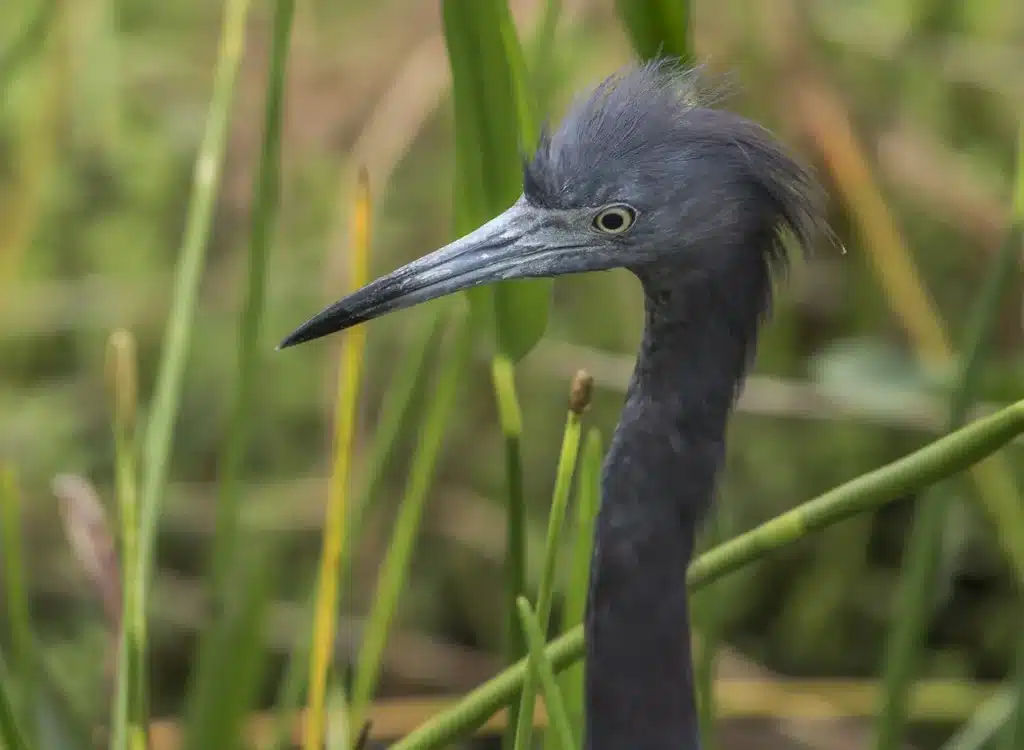
The Slaty Egrets measure about 24 inches or 60 cm in length (including the tail). The plumage is mostly blue-grey (sometimes pale grey-grey) in color, but may appear black in low light conditions.
They resemble the more common Black Egret (Egretta ardesiaca) but can be identified by their greenish- yellow legs and the vinous brown throat that extends down right onto the abdomen in juveniles. White markings on the throat and the otherwise dark reddish foreneck are only visible at close range.
Immature birds have a paler plumage and the rufous on the throat extends from throat down the neck.
This egret is similar to others in size, but its striking plumage makes it stand out. The slate-gray plumage of the adult bird gives it its name. The plumage of this bird is a combination of slate gray and a deeper blue. It gives it a sophisticated, yet subtle appearance. This color is most noticeable when the bird is in flight or is in sunlight. It adds to its beauty.

Slaty Egrets are also known for their long, dark, slightly glossy legs. The legs of the Slaty Egret are designed to wade through shallow water as it forages in wetlands. The feet of the bird are slightly webbed to help it stay stable in soft mud found in marshes and other wetlands. The Slaty Egret has a long, pointed, yellow-colored bill that is slightly curved down at the base. This helps it to probe for hidden fish, crustaceans and other prey.
The bird’s head is long and slender. Its eyes are large, dark and provide excellent vision in low light conditions. The neck of the bird is long, graceful and often bent into an elegant curve when foraging. During breeding season, male Slaty Egrets develop long, delicate feathers on their head and back. This adds to the bird’s visual appeal. These plumes are used in courtship displays that include complex movements and postures.
The Slaty Egret has a distinctive flight pattern that is as striking as its physical characteristics. It has a graceful, slow flight with its neck in a “S” shape. The bird’s graceful flight, along with its gray plumage, and slender silhouette, make it a beautiful sight when it soars above wetlands and marshes.
Habitat and Distribution
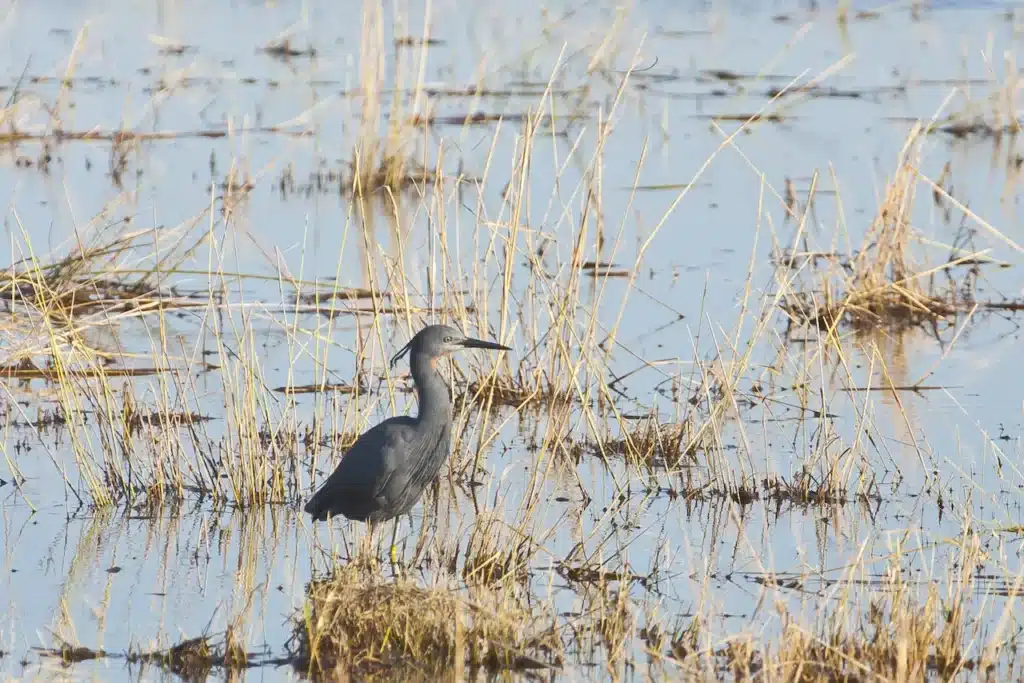
Slaty Egrets are found in river floodplains, marshes of freshwater and temporary shallow wetlands.
They tend to avoid areas with open water and prefer areas where the water level is receding. Most often, they are found in areas that have a large amount of short, emerging vegetation.
The birds feed in shallow water and breed in temporary wetland areas at maximum water levels.
The Slaty Egret can be found in a variety of habitats including coastal marshes and estuaries. It is also common to shallow freshwater wetlands. Its range is restricted to sub-Saharan Africa. Notable populations are found in countries like Mozambique South Africa Namibia and Zambia. This species is usually associated with large open wetland habitats that are characterized by shallow water, mudflats and reedbeds.
Habitat preference of the bird is strongly linked to shallow water and mud where it can wade, hunt for amphibians and other small prey. Slaty egrets can also be found in dense vegetation, marshy grasslands and other habitats that provide nesting and shelter. In some areas, they are found in mangrove swamps, coastal lagoons and flooded rice fields. According to BirdLife International, this species is well documented.
The habitat of the Slaty-Egret is characterized by its relative undisturbedness. Slaty egrets, unlike other heron species, are sensitive to human disturbances and need peaceful, undisturbed wetland areas to thrive. This preference for pristine habitats leaves the Slaty Egret vulnerable to threats such as habitat destruction, pollution and human encroachment. According to Cornell Lab of Ornithology, this species is well documented.
The range of the bird is also affected by its seasonal movements and environmental factors. Despite being a resident of southern Africa, certain populations may move or disperse during times of drought or when food is scarce. The Slaty Egret’s migration patterns are not well understood because of its elusiveness and low population.
Status
Their numbers have been declining attributed for the most part to habitat conversion and degradation, and human disturbance. The world population is estimated to consist of around 3,000 – 5,000 individuals (the former estimate, in 1985, listed about 5,000 – 10,000). They are classified as Vulnerable and are protected under the Agreement on the Conservation of African-Eurasian Migratory Waterbirds (AEWA).
Similar Species
- The Black Heron (E. ardesiaca) is smaller with only yellow toes (not legs); and lack the reddish foreneck and white throat of the Slaty Egrets.
- They are similar in shape to the Little Egret (E. garzetta), but latter has an all-white plumage.
Breeding / Nesting
Most breeding occurs in temporary wetlands from March to June – coinciding with high flood-levels. They generally breed in small colonies of 1 – 60 nests in beds of Phragmites reeds, as well as on islands of vegetation, such as water figs (Ficus verruculosa), Acacia species and Senegal date (Tsaro) palms (Phoenix reclinata). Their bowl-shaped nests are constructed from sticks and lined with fine plant material. They tend to reuse nests over many seasons.
The average clutch consists of 1 -4 eggs (average being 2.4). The eggs are incubated for 22 – 24 days to hatching.
Diet / Feeding
Slaty Herons typically forage in clear, shallow waters which are less than about 4 inches (10 cm) deep.
Their main prey consists almost exclusively of small, young fish, especially cichlids. In temporary wetlands, they may also feed on frogs, aquatic invertebrates, and tadpoles. They also glean snails from lily pads and use “standing flycatching” to capture dragonflies and other insects.
They usually forage in small groups of 4 – 8 individuals.
These egrets do not display the characteristic ‘mantling’ behavior of the Black Egret, which shade the water underneath them with their wings in order to more clearly see the fish swimming in the shallow water.
Conservation efforts
The Slaty Egret is protected by preserving its habitats in wetlands and reducing the impact of humans on these ecosystems. The long-term survival and health of this species depends on organizations that work to improve water quality and protect wetlands. Creating protected areas where the Slaty-Egret can breed and forage, without disturbance, will help to ensure that the birds have enough space to thrive.
Birdwatchers and conservationists play a vital role in tracking Slaty Egret population, documenting breeding success, and monitoring their movements. The conservation of the Slaty Egret depends on public education and awareness campaigns. They help local communities to understand the importance and value of protecting wetlands.
Conclusion
Slaty Egret, a fascinating and rare bird, is known for its unique feeding habits and secretive nature. It is one of Africa’s elusive herons and offers birdwatchers an opportunity to see the fragility and beauty of wetland ecologies. The Slaty Egret population is under threat from habitat loss, pollution and human disturbance. This species requires urgent conservation. We can protect the marshes and wetlands that the Slaty Egret calls home by working to preserve the fragile ecosystems and species it relies on.
Alternate (Global) Names
Afrikaans: Rooikeelreier … Chinese: ??? … Czech: Volavka rudohrdlá … Danish: Skifergrå Hejre … Dutch: Sharpe-reiger, Sharpe’s Reiger … Estonian: punakurk-haigur … Finnish: Ruskokurkkuhaikara … French: Aigrette vineuse, Héron à gorge brune … German: Braunkehlreiher … Italian: Egretta ardesia, Garzetta ardesia … Japanese: nodoakakurosagi … Kwangali: Samunkoma … Norwegian: Ruststrupehegre … Polish: czapla lupkowata, czapla ?upkowata … Portuguese: Garça-de-garganta-vermelha … Russian: ?????????? ?????, ????? ??????????????? ??????????, ??????????????? ?????????? ????? … Slovak: volavka bridlicová … Spanish: Garceta Gorgirroja … Swedish: Rödstrupig häger