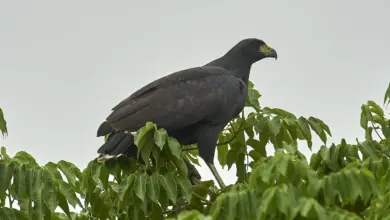
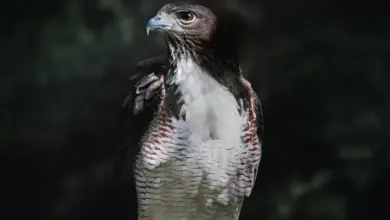
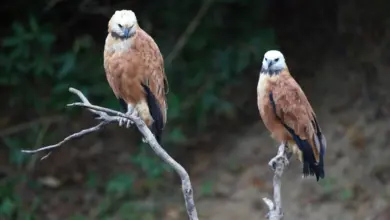
The Slate Colored Hawk ( Leucopternis Schistaceus ) is an enigmatic bird of prey that belongs to the Accipitridae Family, which also includes hawks and kites. The Slate-colored Hawk, unlike many other raptors that dominate the open skies and mountainous terrains, is a specialist in shadowed wetlands. It lives in the tropical and subtropical forests of north-eastern South America, where camouflage, patience and stealth are more important than speed and soaring flight. This hawk is a top predator in its niche. It silently rules over riverbanks and marshy ecosystems. Amphibians croak and crabs screech, while small mammals weave through tangled roots.
Taxonomy, Ecological Role
The Slate-colored Hawk is a member of Leucopternis. This group of forest-adapted Raptors are known for their subdued colouring and ambush hunting tactics. This species is a member of the Accipitridae, a family that evolved to live in dense vegetation instead of open airspace. Its ecological function is closely linked to the health of wetlands, as it regulates populations of amphibians and reptiles. The Slate-colored Hawk is a key player in the ecosystem’s balance, as it occupies the top position of the food web.



The Hawk of Shadows and Stillness
The Slate-colored Hawk does not patrol vast areas from the air. It is more of a bird of stillness and shadows, well adapted to the dim, diffused light of swamp forests, river edges, and other dark areas. It is a bird of patience and will often remain motionless while scanning the water beneath. Its slate grey plumage blends in seamlessly with tree stumps, muddy bank, and shadowed leaves, allowing it to disappear into its environment. Its hunting strategy, as well as its survival in dense wetland habitats, is defined by its reliance on camouflage instead of speed.
The overall Appearance and Plumage of the Birds is Distinctive
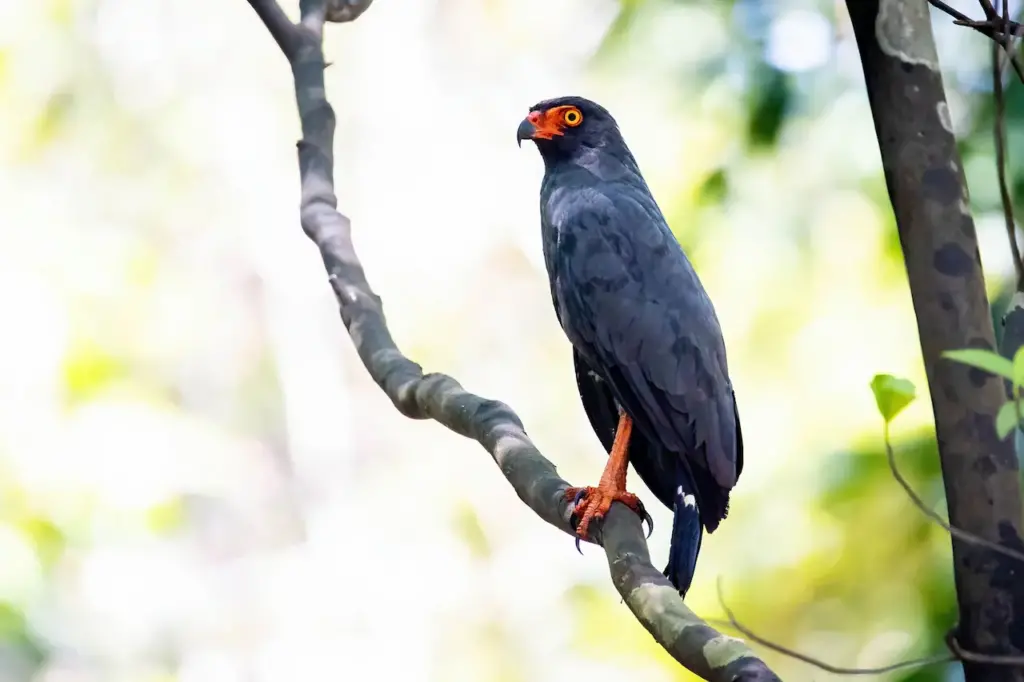
The Slate-colored Hawk’s elegant, cool-toned feathering is the most distinctive feature. The bird’s plumage is a slate-grey medium colour, which appears more smoky than harsh. It perfectly matches the muted browns and deep greens of the swamp forest. The colouration of the bird is not only striking, but it also serves a purpose in providing camouflage for low-light environments. The hawk’s uniform grey body helps it to blend in with its surroundings, allowing it to be unnoticed both by potential predators and prey.
Tail Markings & Visual Identification
Its most distinguishing feature is the tail. The slate-colored hawk has bold white horizontal bands that stand out against the slate background. These white stripes are a dramatic contrast to the dim forest lighting when the bird fanned its tail or took flight. These flashes are often the first visual clues to the presence of the hawk, before it is even visible. The banded-tail is an important field mark for birdwatchers as well as researchers to help identify the species.
Breast Patterns and Camouflage
The breast feathers of the Slate Colored Hawk are marked with fine black vertical streaks, adding to the subtle camouflage. The mottled pattern helps the bird blend in with the scattered light patterns found under the forest canopy. This disruptive colouration is highly effective in swamp forests because of the interplay between shadow and light. It allows the hawks to be hidden even when they are close. The species’ evolutionary history is reflected in the adaptive plumage.
Facial Expressions and Features
Slate-colored Hawks have a distinctive facial expression that is defined by two features: the large orange cere located at the base of the beak, and the vivid yellow eyes. The orange cere is a bright splash of colour that makes the Slate-colored Hawk’s face easily recognisable. The yellow eyes are a sign of alertness, indicating the bird is a predator who takes advantage of any opportunity. These facial characteristics not only improve visual identification but also highlight the hawks’ predatory nature.
Size, wings, and physical build
The Slate-colored Hawk has a medium to large size compared to other forest predators. The Slate-colored Hawk has broad wings that are adapted to short bursts, but not extended soaring. This wing shape is perfect for navigating dense foliage and launching sudden attacks at prey below. The hawk’s strong legs, sharp talons and sturdy build allow it to ambush prey in muddy shores, shallow water, or on forest floors. Its physical design is geared towards its hunting lifestyle.
Geographic Distribution in South America
The Slate-colored Hawk can be found in northern South America. This region is known for its rich biodiversity and extensive wetlands. Brazil, Bolivia, Peru, Ecuador, Colombia, Venezuela and French Guiana are all part of its range. Its presence in these countries isn’t uniform. The species is more closely associated with landscapes that are dominated by water. This includes swamp forests and riverine habitats. This selective distribution shows the hawk’s dependency on specific ecological conditions.
Swamps, Floodplain Forests and Swamps are preferred habitats
Habitats of the Slate Colored Hawk include tropical and subtropical wetlands, dense riverbanks and floodplain forest. The Slate-colored Hawk inhabits environments with seasonal flooding, slow-moving waterways and dense vegetation that is rooted to freshwater systems. These habitats are ideal for hunting because they provide a variety of prey, including amphibians, reptiles and other animals. This preference of the hawk for these landscapes highlights its specialisation and explains why it is absent from drier forest regions or higher elevations.
Amazon Basin Corridor & Core Range
Slate-colored Hawks are primarily found in a large corridor that runs approximately 7,700 km along the Amazon River and through the central Amazon Basin. The confluences of major rivers such as the Rio Negro, Madeira, and Madeira provide rich ecosystems with diverse food webs. The Slate-colored Hawk is a trophic leader in these areas. It benefits from the abundance and diversity of prey that flood cycles generate. According to RSPB, this species is well documented.
Expansion of the Range and Regional Presence
The Slate-colored Hawk can be found in the southwest and northwestern Amazon Basin, from its central Amazonian Corridor. The Slate-colored Hawk is found in lowland rainforests throughout northern Bolivia, Ecuador, eastern Peru and Bolivia as well as in the swampy areas of southeastern Colombia. It is also found in the Orinoco River basin along the Colombia-Venezuela boundary, proving its association with large rivers. According to eBird, this species is well documented.
Areas of Absence and Habitat Avoidance
It is interesting to note that the Slate-colored Hawk completely avoids some regions. The Slate-colored Hawk is not found in the northern Amazon Basin or much of the Guiana Shield. These areas are dominated by ancient highlands and smaller swamp forests. It is found in the northeastern region, which extends into French Guiana and Brazil’s Amapa State, as well as Marajo Island, at the mouth of the Amazon River. These patterns confirm the species’ preference for habitats near rivers and flooded forests.
Feeding strategy and hunting behaviour
Slate-colored Hawks are opportunistic hunters whose diet reflects swamp ecosystem diversity. This species is different from open-country hawks, which hunt rodents or birds. It is more focused on prey that can be found near freshwater habitats. The hawk uses a “perch and wait” strategy to hunt, choosing low or mid-level trees overlooking the water. It remains motionless for a long time. The hawk will strike quickly and decisively when it detects prey moving.
Selecting the primary diet and prey
The diet of the Slate colored Hawk is dominated by frogs, particularly during the rainy season when amphibian numbers are at their peak. Frogs are plentiful, noisy and relatively easy for the Slate-colored Hawk to catch in shallow water. Crabs are also a large part of their diet, especially in brackish and estuarine wetland areas where they gather on muddy banks. Strong talons on the hawk allow it to grab crabs before they retreat into burrows.
Reptiles, mammals, and dietary flexibility
The Slate-colored Hawk also hunts the snakes and lizards that are common in tropical wetlands. The Slate-colored Hawk’s precision strike allows it to capture reptiles, even when partially hidden. Opportunistically, small mammals such as rodents that venture near water are also caught. The hawk is primarily a carnivore, but it will occasionally eat large insects or carrion. This demonstrates dietary flexibility, which is essential to survival in dynamic wetland habitats.
Breeding behaviour and courtship displays
The Slate-colored Hawk’s breeding behaviour is less well documented than that of other raptors, but still follows the same classic patterns. Courtship includes aerial displays over the canopy, calling and spreading the tail to reveal the white bands. It is believed that these displays strengthen the pair bond, and many pairs stay together over multiple breeding seasons. These long-term relationships are beneficial in a stable territory rich in resources.
Nesting Sites & Chick Rearing
Nests are usually built high up in trees, near water. They can be large branches or forks. This is to keep predators and flooding at bay. Nests are made of sticks and branches, and lined with soft material. They protect eggs and chicks. Incubation is usually done by both parents. Females lay fewer eggs than males. Due to the difficulties of hunting in swamps and forests, chicks need constant feeding as well as prolonged parental care after hatching.
Vocalisations & Communication
Slate-colored Hawks are not known for their elaborate songs. Instead, they use vocalisations to communicate. Its sharp calls can penetrate dense foliage. These sounds are used for communication, to warn off intruders and to defend territories. During the breeding season, vocal activity increases, as maintaining contact with mates and young becomes more important.
Conservation Status and Threats
The survival of the Slate-colored Hawk, although not listed as an endangered species at this time, is directly linked to the health and well-being of the Amazon Basin. Deforestation and illegal logging threaten nesting areas and floodplain forests. Waterway pollution reduces frog and crab populations, which directly affects the food supply of hawks. Hydroelectric projects on a large scale disrupt the natural flood cycles that are essential to wetland ecologies.
Conservation Outlook and Habitat Preservation
Despite these threats, vast swamp forests remain intact in remote regions, especially the Amazon Basin. These habitats are found in protected areas, national parks, and community-managed reserves. The long-term conservation and survival of the Slate Colored Hawk is dependent on maintaining wetland forest, maintaining river dynamics, as well as monitoring population trends. This species is also important for the many other organisms that share its habitat.
Sentinel of South America’s Wetlands
The Slate-colored Hawk has a powerful and mysterious presence in the wetlands north of South America. Its slate-grey feathers, white tail bands and yellow eyes exemplify the resilience and mystery of tropical swamp ecosystems. It is a specialist predator that feeds on frogs and crabs. Slate-colored Hawk is a sentinel for these hidden worlds. It reminds us to protect South America’s fragile and rich riverine landscapes.