The Seychelles Kestrels (Falco araea) is a small bird of prey belonging to the genus Falco in the falcon family, Falconidae. It is endemic to the Seychelles Islands, where it is the only breeding bird of prey. It is known in Seychellois Creole as the Katiti after its loud, shrill call.
Description
It is the smallest of the kestrels, 18–23 cm long with a wingspan of 40–45 cm. The wings are fairly short and rounded.
The adult male’s upperparts are reddish brown with black spots, while the underparts are unspotted and buff. The head and rump are dark blue-grey. The tail is blue-grey with black bars. The bill is dark and the feet and cere are yellow.


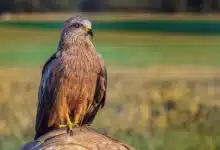
Females are similar to the males in appearance but are a little larger and paler.
Immature birds have a brown, streaked head, spots on the breast, and a buff tip to the tail.

Ecology
It can be seen in forests, scrub, and farmland, and around rock faces and houses. It rarely hovers, instead feeding by sitting on an exposed perch and waiting for prey to pass, then swooping down to catch it. Lizards, particularly green day geckos (Phelsuma) and skinks (Mabuy, a), make up 92% of its diet, and it will also take small birds, frogs, rats, and insects.
The breeding territory covers just 40 hectares, the smallest of any bird of prey. Breeding occurs from August to October. The nest site is on a cliff, tree, or building. It is a simple scrape with no nest material used. Two or three eggs are laid; they are white with brown markings and are incubated for 28–31 days. The young birds fledge after 35–42 days and then remain with their parents for another 14 weeks.
Feeding Behavior
The Seychelles Kestrel’s diet is dominated by reptiles. About 92 percent of the Seychelles Kestrel’s prey is lizards, especially geckos and skinks (such as the day gecko Phelsuma). The small size of the lizard and the abundance of these creatures in the Seychelles have caused it to specialize in hunting them. It also eats a variety of smaller birds, insects, and rodents. Rats and insects are also occasionally taken, but these are not the main prey.
This kestrel rarely hovers (in contrast to many kestrel species elsewhere). The kestrel in this species rarely hovers, unlike many other kestrels. It perches on cliffs, trees, buildings, or palm fronds and watches for the prey. The kestrel will swoop down to catch prey that is on the ground or in foliage. This tactic of waiting and watching is efficient, and it suits the island with its mosaic of forest patches and scrub.
The species has a small territory; it operates within a very narrow home range. In many cases in the Seychelles, this kestrel’s breeding territory is only about 40 hectares, which is a small area for a predatory bird. Due to its small range and restricted territory, any decrease in the availability of prey or habitat quality could have a significant impact on its survival and reproductive success.
Vocalizations
Seychelles Kestrel calls are loud and distinctive, despite its size. They are well-known on the islands. Locally, the bird’s shrill, piercing call, which is sometimes expressed as a repeated high “krii” or sharp “kitkit” calls, announces its presence. It uses its call for territorial defense as well as breeding. The voice is heard early in the morning or during times of hunting or nesting. The kestrel’s vocalizations do not include elaborate songs. They are purely functional and meant to communicate with the mate, young, or to ward off competitors or intruders.
Its voice is distinctive because it is the only falcon breeder on the granitic Seychelles Islands. The kestrel’s calls alert residents to the activity of the bird. It can be heard for a long distance, particularly in open habitats such as cultivated land and buildings perched on high cliffs. During breeding season, the calls can increase as the pair communicates or defends the nest site.
Breeding and Nesting
The Seychelles Kestrel breeds primarily between August and October. During this time, pairs defend nesting sites from predators and other kestrels. The kestrel doesn’t build a large nest, but instead, lays its eggs in simple scrapes, which are shallow depressions. These can be found on cliffs or ledges as well as in tree cavities or among rocks. The nesting sites are selected for their safety and for the availability of perches for hunting. According to BirdLife International, this species is well documented.
A clutch is usually composed of two to three eggs. The eggs are white, with brown or reddish brown markings. The incubation period is between 28 and 31 days. After hatching, it takes 35 to 42 days for the chicks to become independent. After fledging, young birds still depend on their parents to learn how to hunt and navigate in their home territory. This can take several weeks. According to RSPB, this species is well documented.
The breeding success of islands varies. Nest failure is common on some islands. This is especially true for those that have a disturbed habitat or few safe nesting areas. Low nest-site availability on islands such as Praslin has been identified by scientists as a factor that limits nest success. Many nests fail because the birds are forced into suboptimal nesting locations. Success rates are affected by the presence of predators and human disturbance.
Conservation
The species has a population of about 800 birds and is classified as Vulnerable. Lowland nests have a high failure rate of about 70-80%. It was probably bred throughout the granitic central Seychelles in the past but is currently known to breed only on Mahé, Silhouette, North Island, Praslin, and some small adjacent islands. It was reintroduced to Praslin in 1977.
Threats are thought to include habitat loss due to logging, housing development, and fires, as well as predation and competition by introduced species. Rats, cats, and Barn Owls have reduced the lizard population on which the kestrels depend, and they may take eggs and chicks. Barn Owls and Common Mynas have occupied many suitable nest sites.
Persecution by humans is now rare. In the past, kestrels were killed because they were thought to take chickens and because they were considered to be an omen of death.
Research conducted by Dr Jim Groombridge (Royal Society Research Grant):
Searching for evidence of a historical population bottleneck in the Seychelles kestrel: microsatellite genotyping of 100-140-year-old museum specimens.
The Mauritius kestrel is believed to have experienced a population bottleneck of a single pair in 1974. Dr. Groombridge’s previous genetic work (Groombridge et al. Nature 2000) showed current microsatellite diversity in this species to be low, compared to unusually high ancestral levels sampled from pre-bottleneck museum skins. A broader survey of current diversity in other kestrels showed the Seychelles kestrel population to be similarly impoverished, but historical records suggest that this species did not undergo a bottleneck of similar severity.
The Seychelles population did not require intensive recovery, and today persists in high numbers. This scenario presents an opportunity to investigate the genetic effects of historical population bottlenecks for island endemics: both kestrel species have similarly low genetic diversity today, but differ in their histories of population size. Geographically, Mauritius is a single large island, whereas the Seychelles archipelago is made up of many smaller islands, which comprise the ancestral range of the Seychelles kestrel. In addition, our knowledge of the evolutionary history of kestrel colonization across the Indian Ocean islands is based upon a molecular phylogeny (Groombridge et al. Mol. Phylog. Evol. 2002).
This current research project at the University of Kent involves the use of microsatellite markers to genotype DNA extracted from sampled museum specimens and to compare those levels of genetic diversity to that retained by the current population in Seychelles. The genetic work is being carried out partly at DICE, University of Kent, and partly at the NERC Sheffield Molecular Genetics Facility, University of Sheffield. Museum collections throughout the UK, Europe, and elsewhere are being used.
Source: DICE – University of Kent
Conclusion
Seychelles Kestrels are a unique symbol of the Seychelles Archipelago. They are a small falcon that is well adapted to island living, hunts small lizards, and is deeply intertwined in its fragile habitat. The Seychelles Kestrel’s small size, its secretive hunting and perching style, its shrill vocalization, and its dependence on a limited habitat make it resilient and vulnerable at the same time.
The fact that its population is stable despite the global status of Vulnerable gives hope. This hope is dependent on continued, careful conservation efforts. Important actions include protecting forests, conserving nesting sites, managing human impacts such as development and habitat destruction, and controlling invasive species. Mahe remains a stronghold for kestrels. It is important to boost populations of kestrels on islands like Praslin or La Digue, where they are rare or even gone.