Gray Flycatcher (Empidonax Wrightii) , a small insect-eating flycatcher native to the Western United States’ arid terrains, is an interesting bird. Known for its subtle plumage and distinctive behaviour, this bird is one of the more recognisable members of the difficult-to-identify Empidonax genus. The Gray Flycatcher is unique among Empidonax Flycatchers because of its tail-pumping behaviour and strong association with the sagebrush ecologies. This species is attractive to bird enthusiasts, scientists, and casual observers because of its beautiful appearance, but also its ecological role, which maintains insect populations in the native habitat. This comprehensive overview explores its appearance, distribution and migration patterns, nesting behaviours, diet, vocalisations, and vocalisations to provide a complete understanding of this beautiful little bird.
Description of the Gray Flycatcher
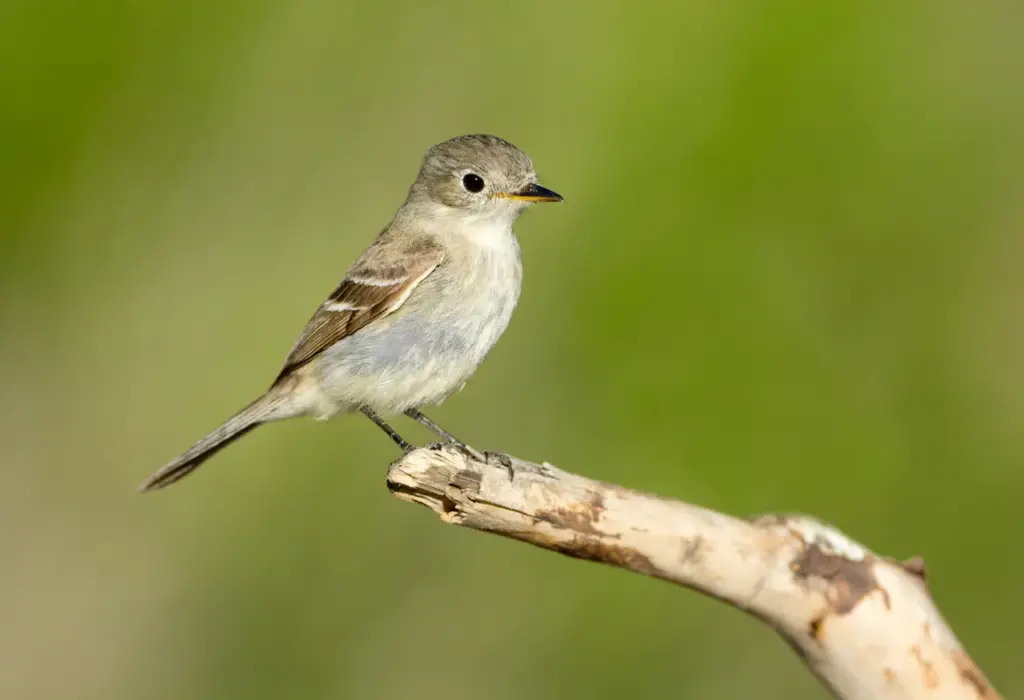
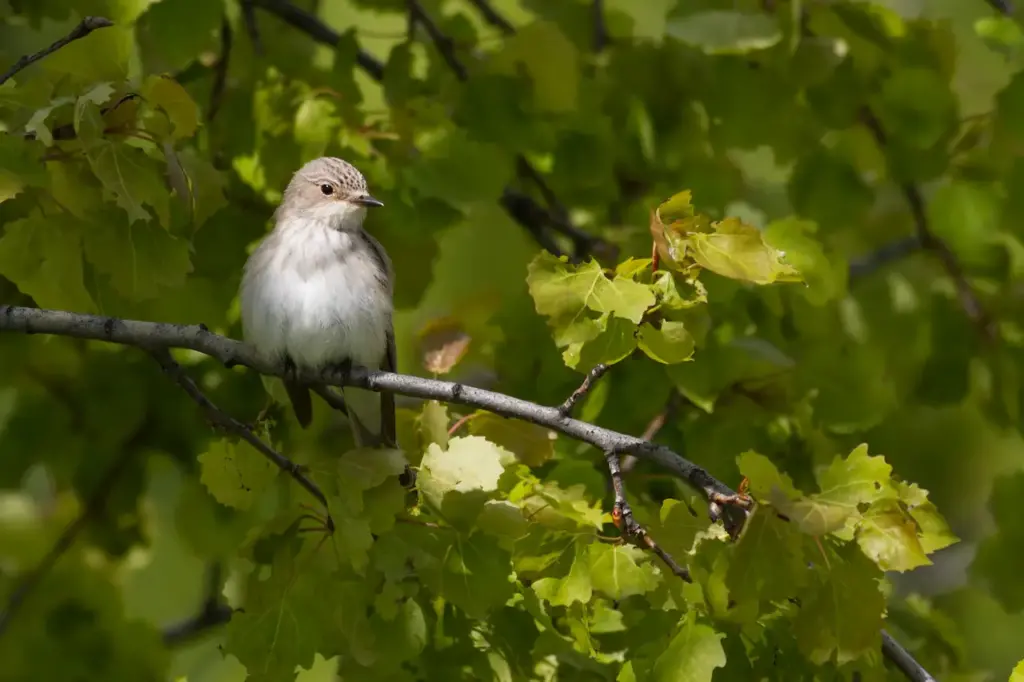
Gray Flycatchers are small members of the Empidonax family, with a length ranging between 14 and 16 centimetres. They have a similar size to other flycatchers, but they differ in subtle ways that birders can recognise. The pale grey upperparts blend smoothly with the slightly darker tail and wing feathers. The bird’s whitish underside gives it a brighter appearance. Its breast is lightly washed in dull white tones. The Gray Flycatcher is characterised by its white eye rings. This gives it an expressive and alert look. It also has white wing bars a small bills, and a short tail. These features may seem insignificant, but they create a sleek profile. It can be difficult to identify Empidonax Flycatchers in the field. However, the Gray Flycatcher’s signature tail dip and overall pale greyish colouring can provide reliable clues.


The Tail-Pumping Behaviour
The Gray Flycatcher’s habit of gently pinning its tail downward is one of its most distinctive and memorable behaviours. This trait is not regularly displayed by any other North American Empidonax. The downward motion is subtle but deliberate, and serves as a useful identification mark in the field. The Gray Flycatcher is different from other flycatchers that waggle or flick their tails. This behaviour is crucial for birders trying to differentiate between visually similar species. Since Empidonax Flycatchers are often similar in appearance, behavioural indicators become as important as vocalisations and habitat for accurate identification.
How to Distinguish the Gray Flycatcher (Epidonax spp.) from other Empidonax species
The Empidonax is notorious among birders because of its nearly identical species. It often requires careful analysis to distinguish them. Gray Flycatchers, on the other hand, have a variety of behaviours and field marks that help to identify them. The gray flycatcher’s plumage may be subtle, but its pale colouring and larger bill, along with its consistent tail droop, can help identify it. It is often best to pay attention to vocalisations, breeding habitat and migration patterns to confirm an identification. Gray Flycatcher vocalisations can be used to identify the bird. The Gray Flycatcher’s strong association with sagebrush habitats can also help birders make a correct identification. Combining these cues makes it easier to identify the Gray Flycatcher than most other Empidonax Flycatchers.
Distribution of Preferred Range
The Gray Flycatcher inhabits a unique part of Western North America. The sagebrush flats and pinyon juniper woodlands in the Great Basin are its preferred breeding habitat. These areas stretch across Nevada, Utah and Oregon and Idaho, as well as parts of California. The low shrubs, dry air and open spaces of this landscape are ideal for feeding and nesting. Birders will often see them perched up on branches, scanning the area for insects. The species is closely associated with the inland Great Basin, but it can also be seen as a migrant along coastal California during migration. These vagrants are exciting to coastal birders, who do not live in the species’ usual summer range. A small population of this species extends northward into southern British Columbia, Canada. This marks the northern limit of its breeding range. According to IUCN Red List, this species is well documented.
Seasonal migration to Mexico
Gray Flycatchers migrate annually to access food all year round, just like many other insect-eating North American birds. Gray Flycatchers migrate south to spend the winter as insects in the Great Basin decrease during cooler months. The Gray Flycatchers winter in Mexico, where the temperatures are warmer, and insect populations are consistent. The migration is usually timed to coincide with seasonal changes in insect availability. The species then returns to the west coast in the late spring when temperatures are rising, and insects reappear. The birds’ cyclical migration ensures that they remain in areas where there are abundant resources, allowing them to maintain their health and meet the energy requirements of the breeding season. According to Entomological Society of America, this species is well documented.
Breeding and Nesting Behaviour
Nesting habits of the Gray Flycatcher are well-adapted to their arid habitat. The nest is built by the females on a branch fork, junction or fork of branches. This position protects the nest against wind and predators, while providing adequate shade in hot and dry climates. The nest is made of fine twigs and grasses with soft materials inside. The female incubates the eggs, which usually consist of 3 to 4. During this time, the male stays nearby to defend the territory and provide food. The young are fed insects that are rich in protein to support rapid growth. In the harsh climate of Alaska, the breeding season is short. Timing is crucial for successful fledging.
Foraging and Diet Techniques
The Gray Flycatcher is an insectivore and relies on agility to hunt for food. They launch themselves into the air from open perches, often on low branches or shrubs. Flycatchers are known for their ” Hawking” hunting technique, which highlights their impressive aerial mobility and quick reflexes. Gray Flycatchers can hover near foliage for a short time to catch insects from the leaves or branches. The main food they eat is flies, moths and beetles. This feeding behaviour is essential in controlling the insect population within their ecosystem. They are therefore an important species to maintain ecological balance.
Sounds and Vocalisations of the Gray Flycatcher
Vocalisations of the Gray Flycatcher are one of its most reliable characteristics. The song of the Gray Flycatcher is a sequence of notes sung with various combinations. The sounds are delivered in a rhythmic, steady pattern that can be heard across sagebrush terrain. Males sing more often during the breeding season in order to establish territories and attract mates. The Gray Flycatcher also produces a loud and crisp “wit” call that is used to communicate between individuals or to signal alertness or alarm. Learning these vocal patterns will help birders distinguish the Gray Flycatcher, which has subtle visual characteristics, from other Empidonax.
The Ecological Importance Of The Gray Flycatcher
The Gray Flycatcher is a small bird that plays an important role in the ecosystems of its native habitat. It helps maintain balance in the sagebrush ecosystem by consuming large amounts of insects. The species’ presence is also a sign of a healthy habitat, since it relies on intact pinyon-juniper and sagebrush ecosystems. Conservationists view the Gray Flycatcher as a representative species to monitor the ecological health of the arid landscapes in the West. Understanding the Gray Flycatcher’s role is becoming increasingly important as human development, invasive plants, and habitat destruction threaten these ecosystems.
Conclusion: Appreciating Gray Flycatcher’s Subtle Beauty
Gray Flycatchers (Empidonax Wrightii) appear modest, but closer inspection reveals a graceful bird that is uniquely adapted to the arid environment of western North America. Birdwatchers and nature lovers will enjoy this species’ graceful foraging and vocalisations as well as its tail-pumping behaviour. The species’ dependence on certain habitats emphasises the importance of protecting sagebrush, pinyon and juniper ecosystems. Understanding its behaviour, breeding habits and ecological role will help us to appreciate the Gray Flycatcher. We can also better protect the landscapes that it calls home.