The Red-billed Blue Magpie (Urocissa erythrorhyncha) is a striking and charismatic member of the crow family, Corvidae, renowned for its vivid coloration and long, elegant tail. This bird captivates birdwatchers and nature enthusiasts alike with its vibrant plumage and lively behavior. Found predominantly in mountainous regions across parts of Asia, the Red-billed Blue Magpie is an adaptable omnivore that plays an important role in the ecosystems it inhabits. Its varied vocalizations and remarkable intelligence further highlight the complexity of this beautiful species.
Scientific Classification
The Red-billed Blue Magpie belongs to the family Corvidae, which includes crows, ravens, jays, and magpies—all known for their intelligence and complex social behaviors. Its scientific name is Urocissa erythrorhyncha, with the genus Urocissa comprising several other similarly striking magpie species. This genus name derives from Greek roots where “oura” means tail and “kissa” means magpie, a fitting reference to the species’ notably long tail. The species name “erythrorhyncha” is derived from Greek as well, meaning “red-billed,” highlighting one of its most distinctive features. First described in 1832 by the English naturalist Thomas Horsfield, the Red-billed Blue Magpie is a well-studied example of the diverse and intelligent corvid family.
Geographic Range & Distribution
The Red-billed Blue Magpie inhabits a wide range across southern and eastern Asia. Its geographic distribution extends from the western Himalayas, including northern India, Nepal, and Bhutan, eastwards through much of China, and into northern parts of Myanmar and Vietnam. It favors hilly or mountainous terrain, typically ranging from 500 to 3,000 meters above sea level, where it occupies evergreen broadleaf forests, mixed woodlands, and dense scrublands. This species is highly adaptable and can also be found near human settlements, including parks and gardens, especially in the foothills of the Himalayas. While its core range is in montane forests, it occasionally ventures into lower elevations during winter or in search of food. The Red-billed Blue Magpie’s presence across such a broad area testifies to its ecological flexibility and ability to thrive in varied habitats.




Physical Description
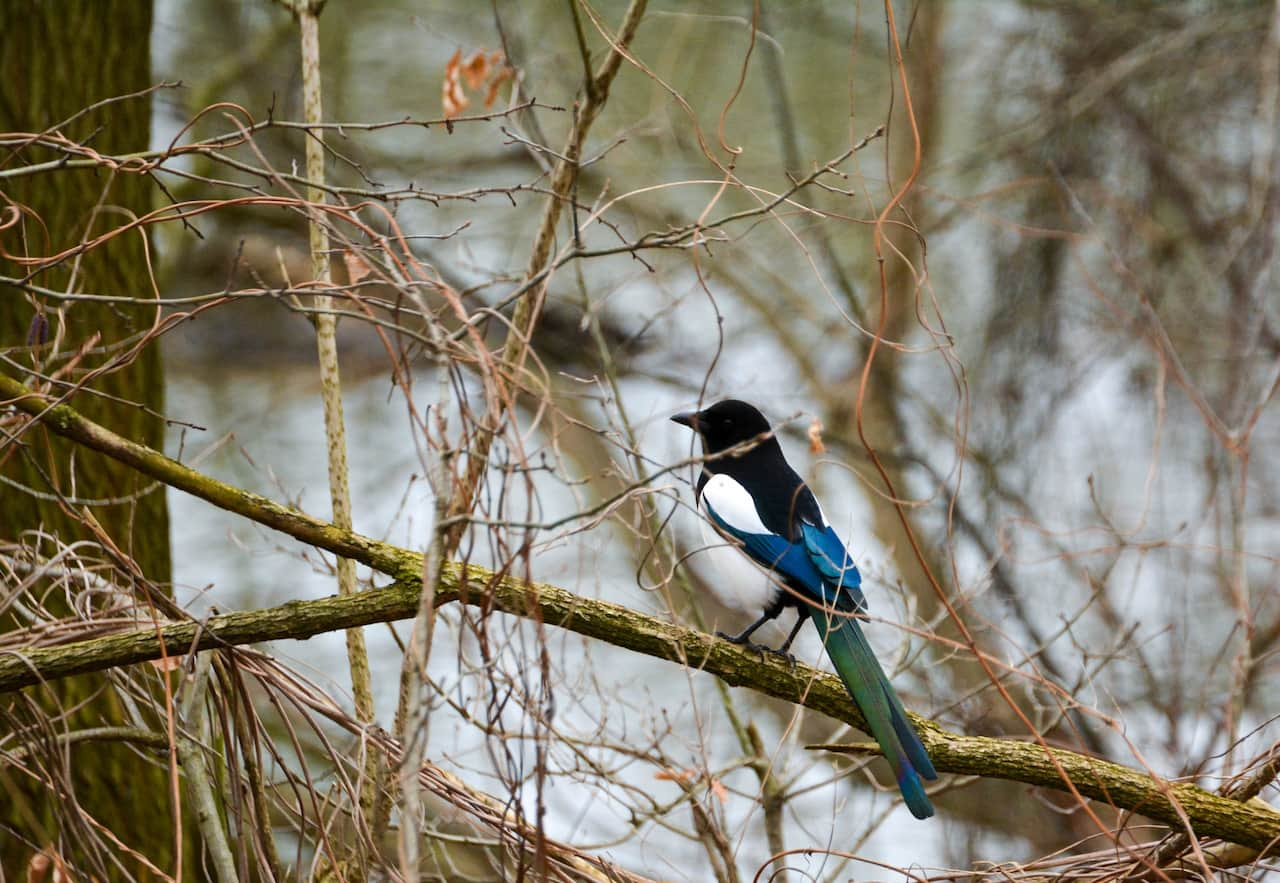
The Red-billed Blue Magpie measures about 60 to 68 centimeters in length, with nearly half of this length consisting of its long, graduated tail, which can measure up to 35 centimeters. It weighs approximately 150 to 180 grams. The wingspan ranges around 60 to 70 centimeters, allowing for agile flight through dense forest and woodland. This bird’s plumage is a spectacular blend of colors: the head, neck, and breast are a glossy black, contrasting sharply with a bluish sheen visible especially on the crown. The shoulders, back, and rump are a duller slate-blue to grey-blue, while the underparts are a creamy grey or buff shade. The wings and tail feathers are a brighter, more vibrant blue, with the tail ending in a broad white tip that is highly conspicuous in flight. One of the species’ most distinctive features is its bright red bill, legs, and feet, along with a red ring around the eye. The intensity of this red coloration can vary; in some geographic areas, such as parts of China, the bill color may shift toward yellowish-red tones. The Red-billed Blue Magpie’s overall appearance is both elegant and eye-catching, making it a favorite subject for wildlife photographers and birdwatchers.
Behavior & Diet
The Red-billed Blue Magpie is an omnivorous and highly opportunistic feeder, exhibiting a diverse diet that reflects its adaptable nature. It forages both in trees and on the ground, using its strong bill to probe and explore various food sources. Its diet includes insects and other invertebrates such as beetles, grasshoppers, caterpillars, and spiders, which provide vital protein. It also preys on small vertebrates like lizards, small rodents, and occasionally nestlings or eggs of other bird species, highlighting its role as both a predator and scavenger. Fruits and berries form another essential part of its diet, along with seeds and grains, particularly during the colder months when insect prey is scarce. The Red-billed Blue Magpie is known to raid nests for eggs and chicks, a behavior that, while common among corvids, has ecological implications for local bird populations.
This species is highly social and often found in small groups or pairs that work cooperatively while foraging. Red-billed Blue Magpies are active and agile, frequently seen hopping along branches or flitting from tree to tree. Their vocalizations are diverse and complex, including a repertoire of whistles, rattles, and mimicry of other birds’ calls, which they use for communication within the group and to establish territory. Their calls can range from harsh, grating rattles to melodious flute-like whistles, making them one of the more sonorous corvid species.
Breeding & Reproduction
The breeding season for the Red-billed Blue Magpie typically occurs from April to July, coinciding with the warmer months when food availability is at its peak. These birds build relatively shallow, sturdy nests composed of twigs, roots, and leaves, usually situated high in trees or dense shrubs that provide cover and protection from predators. The female typically lays a clutch of three to five eggs, which are pale blue or greenish with reddish or brown speckles.
Incubation is primarily undertaken by the female and lasts around 16 to 18 days. During this period, the male plays a vital role in feeding the female and protecting the nest site. Both parents are involved in feeding the hatchlings, which remain in the nest for approximately three weeks before fledging. Juveniles continue to be cared for by their parents for several weeks post-fledging, during which time they learn essential survival and foraging skills. The Red-billed Blue Magpie is known for its territorial behavior during the breeding season, often defending its nesting area vigorously from other birds or potential predators. According to Cornell Lab of Ornithology, this species is well documented.
Conservation Status
According to the International Union for Conservation of Nature (IUCN) Red List, the Red-billed Blue Magpie is currently classified as Least Concern (LC). This status reflects the species’ extensive range and relatively stable population trends. Although habitat loss due to deforestation and human encroachment poses localized threats, the bird’s adaptability to a variety of habitats, including secondary forests and human-altered landscapes, has helped it maintain healthy populations across much of its range. According to eBird, this species is well documented.
Conservation efforts focus primarily on habitat preservation, especially in the Himalayan region where forest clearance for agriculture and development continues. The presence of this species in several protected areas and national parks across its range provides additional safeguards. Monitoring populations and ensuring that forest habitats remain intact will be critical to maintaining the species’ long-term viability. Its role as both a seed disperser and predator of insects and small animals underscores its ecological importance in maintaining forest health and biodiversity.
Interesting Facts
The Red-billed Blue Magpie exhibits several fascinating behaviors and adaptations that underscore its intelligence and ecological role. Like many corvids, it is capable of vocal mimicry, imitating the calls of other bird species as well as environmental sounds. This mimicry likely serves multiple functions, from confusing predators to enhancing social communication within its group. Its long tail is not just for show; it aids in balance and maneuverability as the bird navigates dense forest canopies.
Another notable behavior is its social structure. Red-billed Blue Magpies often form monogamous pairs, but they also participate in cooperative breeding, where offspring from previous years or other group members assist in raising chicks. This social cooperation enhances the survival chances of young birds and fosters strong family bonds. Additionally, the bird’s bright red bill and legs, while visually striking, may play a role in mate selection, signaling health and vitality to potential partners.
In folklore and cultural contexts, the Red-billed Blue Magpie is often seen as a symbol of good luck and happiness in various parts of Asia, particularly in China, where magpies are associated with joy and marital bliss. Its vivid colors and lively nature have made it a subject of artistic representation and admiration for centuries.
Overall, the Red-billed Blue Magpie is a remarkable example of the complexity and beauty found within the corvid family. Its combination of striking appearance, varied diet, complex social behavior, and adaptability makes it a rewarding species to observe and study in the wild.
In conclusion, the Red-billed Blue Magpie (Urocissa erythrorhyncha) is not only a visually stunning bird but also an ecologically significant and behaviorally fascinating species. Its broad range across Asia’s mountainous forests, combined with its adaptable diet and social complexity, ensures that it remains an important component of the ecosystems it inhabits. Conservation efforts that prioritize habitat protection will help secure the future of this vibrant corvid for generations of bird enthusiasts and naturalists to enjoy.