The Sand Partridges, Ammoperdix heyi, has its main native range from Egypt and Palestine east to sSouthArabia. It is closely related and similar to its counterpart in southeast Turkey and east Pakistan, the See-see Partridge, Ammoperdix griseogularis.
Description
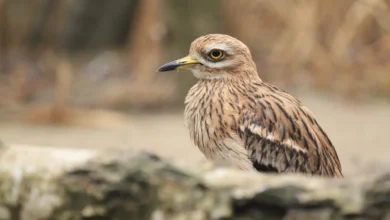
The Sand Partridge is a rotund bird, mainly sandy-brown with wavy white and brown flank stripes. The male has a grey head with a white stripe in front of the eye and a white cheek patch. The neck sides are plain and not speckled with white. The head pattern is the best distinction from See-see Partridge.


The female is a very washed-out version of the male and is more difficult to distinguish from its relative due to the weak head pattern.
When disturbed, Sand Partridge prefers to run rather than fly, but if necessary, it flies a short distance on rounded wings. The song is a slurred kwa-kwa-kwa.

Distribution of Habitats
The Sand Partridge range is extensive, covering the desert landscapes in the Middle East and North Africa. The native distribution of the Sand Partridge extends from Egypt, the eastern Mediterranean region (including the modern-day Palestine and Israel), all the way down to southern Arabia. You can find it in parts of Jordan and Saudi Arabia, as well as Oman, Yemen, and the United Arab Emirates. It lives in desert wadis and dry hills.
Although its range is wide, it has a very specific habitat preference. Sand Partridges are almost exclusively found in semi-arid and arid regions. They prefer open, dry terrain with sparse vegetation and a rugged environment. The habitat is often mountainous with scattered rocks. This provides both shelter and food. It is a Resident Breeder. This means that the bird does not migrate, but rather maintains a fairly stable presence within its habitat year-round.
The Sand Partridge is a species of partridge that prefers low- to moderate-altitudes. It prefers elevated hillsides and rocky ravines. It will often venture near cultivated fields, but does not depend on them. The birds can obtain water from their food, even though it is not readily available in their environment.
Nesting occurs in a barely lined scrape of ground. This is often hidden under a bush or rock. In general, the female lays between 5 and 7 eggs, which she incubates using her camouflaged feathers for protection. These open nests are vulnerable, which is why it’s important to remain hidden in such expansive and exposed environments. According to eBird, this species is well documented.
Feeding Behavior
Sand Partridges are omnivorous ground-foragers. Their diet is composed primarily of seeds of all kinds. Insects, small invertebrates, and other food items are also consumed, especially during breeding season, when protein requirements increase. The dual diet allows the bird to meet its nutritional requirements in an environment with patchy food sources and seasonal variations. According to Audubon Society, this species is well documented.
The majority of their diet is made up of seeds, which are usually gathered from the ground. Foraging birds walk slowly over the ground, pecking the vegetation and soil to locate edibles. Preferred seeds are from desert shrubs and grasses. They may feed on agricultural waste and grains in cultivated areas at the edges of their habitat.
Insects are an important part of their seasonal diet, even though they are less common than seeds in arid environments. Beetles and termites are excellent sources of water and protein. During nesting, both adults and chicks are more dependent on insect consumption. Sand Partridges hatching young are precocial, able to feed and walk shortly after hatching. They rely on a high-protein diet to fuel their rapid growth.
Sand Partridges have a greater chance of survival in their unpredictable environment because they can adapt to a variety of diets. It is dependent on the seasonal patterns of rainfall that can affect insect and seed emergence. Years of drought can reduce the amount of food available, which could affect breeding success and the survival rate for juveniles.
Vocalizations
Sand Partridges are vocal, despite their quiet, reserved nature. They do so, however, when territorial disputes occur or to keep in touch with family members and mates. Sand Partridges have a primary sound that is a slurred and repeated “kwa kwa kwa. This sounds throaty, hoarse, and echoes across the rocky hillsides.
The call can serve several purposes: alerting others to its presence, coordinating covey movement, or signaling mate readiness. These calls, though not as loud as other game birds’ calls, are distinct and can be used to identify the presence of coveys in difficult terrain or remote areas.
Sand Partridge vocalizations are short, utilitarian, and easily lost by the wind. They differ from more melodic calls. To a birdwatcher or trained ear, the Sand Partridge’s calls can be a sign of its presence.
Conservation Status & Threats
The Sand Partridge has not been deemed globally endangered as of yet. The International Union for Conservation of Nature has classified it as Less Concern, largely because of its widespread distribution and stable population trends in most of its range. Sand Partridges are not immune to challenges, just like many other wildlife species. Habitat destruction is a major concern for the species, especially in areas that are experiencing rapid land use change or rapid development. Many parts of the Middle East are experiencing a transformation in their desert landscapes due to infrastructure expansion, agricultural expansion, and urban sprawl. These changes can fragment the habitat of partridges and reduce nesting and foraging sites.
Overgrazing of livestock can also be a problem. Overgrazing by livestock can strip the landscapes of native plants, which provide the Sand Partridge with food and cover. This leaves the birds vulnerable to predators. Climate change is also a threat because it can exacerbate drought conditions and reduce the availability of food and water in marginal habitats.
Conclusion
Sand Partridges may not be dazzling with their vibrant colors and elaborate songs, yet they are still one of the most important desert birds. The Sand Partridge’s camouflage, subtle sexual dimorphism, and efficient diet are all evidence of its adaptation to harsh climates.
These birds are often seen moving in small groups, called coveys. They move silently through stony gullies and dry hills, barely visible to an untrained eye. It is an amazing feat of adaptation for birds to be able to survive year-round, even in areas where the temperatures are high, water is scarce, and food is unpredictable. The Sand Partridge is a resilient species, unlike migratory birds that can flee harsh seasons.