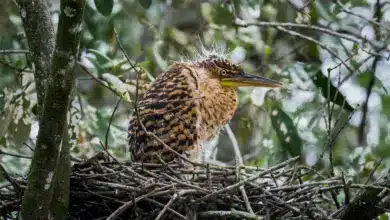
The Nankeen Night Heron, Nycticorax caledonicus, is a captivating medium-sized heron widely recognized for its striking rufous plumage and distinctive nocturnal habits. Also known in some regions as the Rufous Night Heron, and referred to as Melabaob in Melanesia, this bird occupies a unique niche among herons due to its adaptability and broad geographic distribution. Unlike many herons that are strictly diurnal, the Nankeen Night Heron is often active both day and night, particularly favoring dusk and dawn for feeding. Its charming appearance, intriguing behavior, and widespread presence across Australasia make it a favorite subject among birdwatchers, nature photographers, and wildlife enthusiasts alike.
Scientific Classification
The Nankeen Night Heron belongs to the family Ardeidae, which includes herons, egrets, and bitterns. Its scientific name is Nycticorax caledonicus. The genus name Nycticorax derives from Greek roots meaning “night raven,” a nod to the bird’s crepuscular and nocturnal activity patterns and its somewhat eerie calls. This species is closely related to other night herons worldwide, such as the Black-crowned Night Heron (Nycticorax nycticorax). The Nankeen Night Heron is sometimes grouped with the subspecies complex within the night herons, but it is generally accepted as a distinct species due to its unique plumage and geographic range. There are no recognized subspecies currently, although local variations in size and coloration occur across its extensive range.
Geographic Range & Distribution
The Nankeen Night Heron is native to a vast swath of the Australasian region. Its primary range includes most of Australia, except the arid interior, as it favors habitats with reliable water sources. The species extends north through Indonesia, the Philippines, Papua New Guinea, and across Melanesia. It has also established a small breeding colony near Wanganui on the North Island of New Zealand, representing its southernmost range expansion. Within Australia, the heron is found in a variety of wetland environments, from coastal estuaries and mangroves to inland freshwater rivers, lakes, and billabongs.






While it is not a long-distance migratory species, the Nankeen Night Heron undertakes local seasonal movements in response to water availability and food resources. For example, during dry periods, populations may concentrate in permanent wetlands, then disperse more widely after rains. Its adaptability to various aquatic habitats, including urban ponds and fish farms, has allowed it to thrive despite some habitat changes. Its presence across multiple island groups in Melanesia also highlights its capacity for island colonization and resilience in fragmented landscapes.
Physical Description
The Nankeen Night Heron is a medium-sized bird, standing around 56 to 66 centimeters (22 to 26 inches) tall, with a wingspan ranging from approximately 100 to 110 centimeters (39 to 43 inches). It typically weighs between 600 and 800 grams (1.3 to 1.8 pounds), making it slightly smaller than some of its relatives in the night heron group. One of its most distinctive features is its warm rufous or cinnamon-colored plumage on the body, contrasted with a white belly and pale yellowish legs. The back and wings often show a mix of grey and brown tones, giving the bird a somewhat mottled appearance in flight.
The head is adorned with a black crown extending down the nape, which produces elegant, wispy white plumes during the breeding season. The eyes are large and bright yellow, adapted for enhanced vision in low light conditions, which supports its crepuscular feeding habits. The bill is stout and dark, ideal for grasping slippery prey like fish. Juveniles differ slightly, displaying more mottled brown and white plumage before acquiring adult colors after about a year. Overall, the Nankeen Night Heron’s striking coloration and graceful posture make it a visually appealing species among herons.
Behavior & Diet
Despite its common name, the Nankeen Night Heron is not strictly nocturnal. It is most active during the twilight hours of dawn and dusk, but it also feeds during the day, especially in overcast or rainy weather. This adaptability in activity patterns allows it to exploit a wide range of prey and habitats. The bird is often seen standing quietly at water edges, patiently waiting to ambush prey, before moving slowly and deliberately in a stalking manner.
The diet of Nycticorax caledonicus is diverse and opportunistic, primarily consisting of small fish, amphibians, aquatic insects, crustaceans, and reptiles such as small lizards and snakes. It is also known to consume the eggs and young of other birds occasionally. The heron’s strong, pointed bill is well adapted for catching and handling slippery fish, while its keen eyesight helps it detect prey in dim light. Habitats frequented by the Nankeen Night Heron include freshwater rivers, lakes, marshes with bulrushes, estuaries, and sheltered harbors. It has even adapted to urban environments, hunting in garden ponds and fish farms where goldfish and koi are present.
Behaviorally, the species is often observed alone or in small groups but can form larger communal roosts. During the day, these birds rest quietly in dense vegetation or high in trees, maintaining a relatively secretive presence. Their flight is slow and deliberate, with deep wingbeats allowing them to move silently through their environment.
Breeding & Reproduction
Nankeen Night Herons typically breed from September to April, aligning their reproductive cycle with the southern hemisphere’s spring and summer months when food is most abundant. They are colonial nesters, often forming large breeding groups within trees or dense shrubs near water bodies. The nests are simple platforms constructed from sticks and lined with leaves, usually positioned high in trees to reduce predation risk.
Females lay between two and five pale green eggs, which both parents incubate for about 22 to 25 days. Incubation duties are shared, and the attentive care continues after hatching. The chicks are altricial, hatching blind and helpless, requiring considerable parental feeding and protection. Fledging occurs roughly 42 to 49 days after hatching, although juveniles often remain near the nest for some time as they develop flight skills and independence. According to eBird, this species is well documented.
Breeding success can vary depending on environmental conditions such as water levels and food availability. Nest predation by crows, snakes, and monitor lizards is a natural challenge. Nevertheless, the communal nesting strategy offers some protection through collective vigilance and deterrence of predators. According to Cornell Lab of Ornithology, this species is well documented.
Conservation Status
The Nankeen Night Heron is currently classified as Least Concern by the International Union for Conservation of Nature (IUCN). This status reflects its wide distribution, large population size, and adaptability to various habitats, including some human-altered environments. Unlike many other wetland-dependent species, the Nankeen Night Heron has not experienced significant population declines or range contractions in recent decades.
However, like all wetland birds, it remains vulnerable to habitat degradation caused by urban expansion, pollution, wetland drainage, and climate change. Water quality and availability are crucial for sustaining the aquatic ecosystems that support its prey. Conservation efforts that protect wetlands and maintain natural water regimes indirectly benefit this species. Its presence in protected areas and national parks across Australia and Oceania further safeguards populations.
Monitoring continues to ensure that local threats, such as invasive predators or disturbance during breeding seasons, do not escalate. In New Zealand, where the species is less common, conservationists keep a particular eye on the small introduced population to prevent any adverse impacts on native ecosystems or the herons themselves.
Interesting Facts
The Nankeen Night Heron’s name “Nankeen” refers to the soft, warm, yellowish-brown cotton fabric originally produced in Nanjing, China, which resembles the bird’s rufous plumage. This distinctive color sets it apart from many other herons, which tend to have more muted or greyish tones.
Unlike many herons that are solitary feeders, this species often forms communal roosts where hundreds of birds gather to rest during the day. These roosts, sometimes located in mangroves or dense woodland, are lively places filled with deep, throaty calls that can carry over long distances. The vocalization is described as a loud “k-oark,” a rumbling sound that is most prominent at dusk and dawn.
Another fascinating behavior is their ability to exploit urban environments. In cities and suburbs, Nankeen Night Herons have been observed feeding on goldfish in ornamental ponds, demonstrating remarkable behavioral flexibility. This adaptability contributes to their resilience in the face of changing landscapes.
During the breeding season, the elegant white plumes on the head become especially prominent, and the birds engage in elaborate courtship displays involving bill clapping, neck stretching, and vocalizations to attract mates and strengthen pair bonds.
In summary, the Nankeen Night Heron is a striking and adaptable bird species that enriches the wetland ecosystems of Australasia. Its distinctive appearance, varied diet, and flexible behavior make it a fascinating subject for anyone interested in the diversity of birdlife. While currently not at risk, continued conservation of wetland habitats will ensure this beautiful heron continues to thrive for generations to come.