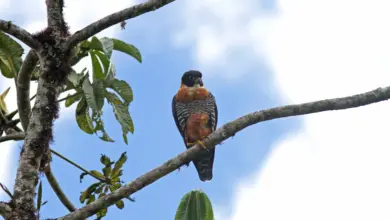
The White-throated Caracara (Phalcoboenus albogularis) is a striking bird of prey native to the high-altitude grasslands and open habitats of the southern Andes. Known for its distinctive white throat and underparts, this raptor occupies a unique ecological niche in some of South America’s most rugged landscapes. Although not as widely recognized as some of its relatives, the White-throated Caracara plays an important role in the ecosystems of Chile and Argentina, where it combines scavenging behavior with opportunistic predation. This bird’s adaptability and distinctive appearance make it a fascinating subject for birdwatchers, researchers, and wildlife photographers exploring the Andean region.
Scientific Classification
The White-throated Caracara belongs to the family Falconidae, which includes falcons and caracaras — birds of prey known for their sharp talons and keen eyesight. Its scientific name is Phalcoboenus albogularis. The genus Phalcoboenus encompasses a group of medium-sized caracaras predominantly found in South America, particularly in Andean and Patagonian habitats. Within this genus, the White-throated Caracara is closely related to the Mountain Caracara (Phalcoboenus megalopterus) and other species that share similar ecological traits.
The species was first described scientifically in 1834 by French naturalist Alcide d’Orbigny. Its genus name, Phalcoboenus, derives from Greek roots meaning “falcon” and “to shout,” reflecting the vocal nature of many caracaras. The species name albogularis refers to the bird’s distinctive white throat (“albo” meaning white, “gularis” meaning throat). Caracaras differ from true falcons in their morphology and behavior, often being more terrestrial and less specialized for high-speed aerial hunting.


Geographic Range & Distribution
The White-throated Caracara is endemic to the southern Andes, primarily found in the southern regions of Chile and Argentina. Its range extends from the Mendoza Province in Argentina and the Los Lagos Region in Chile, southwards through the Patagonian Andes. It inhabits altitudes ranging roughly from 1,000 to 3,500 meters (3,300 to 11,500 feet), favoring open grasslands, alpine meadows, and barren volcanic landscapes where vegetation is sparse.
This species is well adapted to cold, harsh environments typical of the Andean highlands. Its distribution overlaps with other caracaras, but the White-throated Caracara is generally found in more elevated and exposed areas. Within its range, it is considered uncommon to fairly common, with local population densities varying according to habitat availability and food resources. The bird’s preference for open terrain allows it to exploit a variety of food sources, and its ability to travel long distances supports its survival in patchy habitats.
Physical Description
The White-throated Caracara measures approximately 45 to 55 centimeters (18 to 22 inches) in length, with a wingspan ranging from 110 to 130 centimeters (43 to 51 inches). Adult birds typically weigh between 800 and 1,100 grams (1.8 to 2.4 pounds). This medium-sized raptor features a combination of dark brown to black upperparts and striking white underparts, including the throat, chest, and belly, a key characteristic that distinguishes it from the Mountain Caracara, which has more mottled or pale underparts.
The bird’s head is dark, with bare facial skin that is dull pinkish to orange, often more vibrant during the breeding season. Its beak is hooked and robust, adapted for tearing flesh. The legs are strong and yellow, ending in sharp talons suited for grasping prey and carrion. Juvenile White-throated Caracaras differ markedly from adults, exhibiting an overall brown plumage with less contrast and duller facial skin coloration. This juvenile plumage provides camouflage while they mature and develop the adult distinctive markings.
In flight, the White-throated Caracara displays broad, rounded wings with a slightly fingered appearance at the wingtips. Its tail is relatively long and barred with alternating bands of dark and pale feathers, aiding in agile maneuvering through its mountainous environment.
Behavior & Diet
The White-throated Caracara is an opportunistic feeder, displaying both scavenging and predatory behaviors. Unlike many falcons that primarily hunt live prey in flight, caracaras often spend significant time on the ground, walking or running as they search for food. This species is frequently observed foraging across open grasslands and rocky slopes, where it feeds on carrion such as roadkill, remains left by larger predators, and dead animals found in the harsh Andean environment.
Its diet is diverse and includes a variety of small vertebrates and invertebrates. The White-throated Caracara preys on insects, small mammals like rodents, reptiles, and occasionally the eggs and chicks of ground-nesting birds. It is known to employ cooperative strategies when feeding, sometimes seen in pairs or small groups scavenging together. This social behavior can increase efficiency in locating food and deterring competitors.
Vocal communication is an essential part of the caracara’s behavior. The White-throated Caracara emits a range of calls, from sharp, high-pitched whistles to harsh, croaking sounds. These vocalizations serve to establish territory, communicate with mates, and warn off intruders. The species’ terrestrial habits and boldness make it one of the more approachable raptors for observers in its native range.
Breeding & Reproduction
White-throated Caracaras breed during the austral spring and summer months, generally between September and December. They nest in the high Andes, often selecting cliff ledges, rock outcrops, or isolated trees to build their nests. Nest construction is typically modest, made from sticks, grasses, and other plant material collected from the surrounding area. The nest is usually placed at a site that provides good visibility and protection from predators and harsh weather. According to RSPB, this species is well documented.
Females typically lay two to three eggs per clutch. The eggs are pale with reddish-brown speckles, providing camouflage against the rocky nest surroundings. Both parents share incubation duties, which last approximately 30 to 35 days. After hatching, the chicks are altricial — born helpless and dependent on their parents for warmth and food. Parental care continues intensively as the young grow, with both adults feeding and protecting the nestlings until they fledge, usually about 6 to 7 weeks after hatching. According to BirdLife International, this species is well documented.
Juvenile White-throated Caracaras remain in their natal areas for several months post-fledging, gradually learning to hunt and scavenge independently. The species is generally monogamous during the breeding season, forming strong pair bonds that may last for multiple years.
Conservation Status
The International Union for Conservation of Nature (IUCN) currently classifies the White-throated Caracara as a species of Least Concern. This status reflects its relatively wide distribution and stable population trends in the southern Andes. However, localized threats such as habitat degradation due to agriculture expansion, livestock grazing, and occasional persecution can impact certain populations.
Because the White-throated Caracara inhabits remote and often inaccessible high-altitude environments, it faces fewer direct human pressures than many other raptors. Its adaptability to various food sources and habitats also bolsters its resilience. Conservation efforts focused on protecting Andean grasslands and limiting the use of harmful pesticides indirectly benefit this species by maintaining healthy ecosystems and prey availability.
Ongoing monitoring is essential to detect any future changes in population dynamics, particularly in the face of climate change, which may alter the delicate balance of Andean ecosystems. Collaborative conservation initiatives involving local communities, governments, and researchers are vital to ensure the long-term survival of this distinctive bird of prey.
Interesting Facts
The White-throated Caracara exhibits several fascinating behaviors and adaptations that set it apart from other raptors. One notable trait is its terrestrial foraging style, which is somewhat unusual among birds of prey. Unlike falcons that rely heavily on aerial hunting, these caracaras often walk or run on the ground to locate food, demonstrating remarkable agility and endurance.
Another interesting aspect is its vocal repertoire. The species uses a variety of calls not only for communication but also to establish dominance and deter rivals. These vocalizations can be quite loud and are often heard echoing across the Andean valleys.
White-throated Caracaras are also known for their intelligence and problem-solving abilities. They have been observed using tools or manipulating objects to access food, a rare behavior among raptors. This adaptability helps them exploit diverse food sources in a challenging environment where resources can be scarce.
Additionally, their striking plumage provides excellent camouflage against the rocky and snowy backdrops of their habitat. The contrast of white underparts with darker upperparts breaks up their outline, making them less conspicuous to both prey and potential predators.
For birdwatchers and photographers, encountering a White-throated Caracara in its natural environment is a memorable experience. These birds are bold yet wary, often allowing close observation if approached quietly. Their presence is a reminder of the rich biodiversity that thrives in the seemingly inhospitable high Andes.
In summary, the White-throated Caracara is a resilient and adaptable bird of prey that embodies the wild spirit of the southern Andes. Its unique combination of scavenging and hunting behaviors, distinctive appearance, and specialized habitat preferences make it a remarkable species worthy of study and conservation. Whether soaring above the windswept grasslands or patrolling the rocky slopes on foot, the White-throated Caracara remains a vivid symbol of South America’s mountainous wilderness.