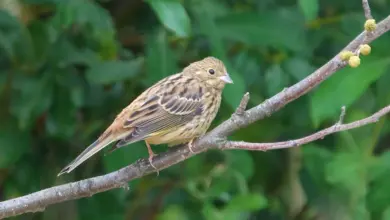
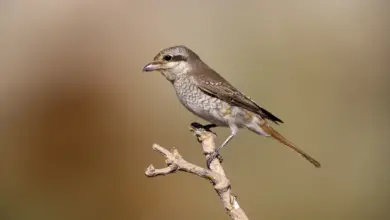
The Masked Shrikes, Lanius nubicus, is a member of the shrike family Laniidae.
It breeds in southeastern Europe and the eastern end of the Mediterranean, with a separate population in western Iran.
It is a common species in Turkey, Cyprus, Israel, and Syria. It is migratory, wintering in northeast Africa.


Since this is a short-range migrant, a bird in Scotland in October 2004 was a remarkable example of vagrancy, though a second British record occurred on St. Mary’s in the Isles of Scilly in November 2006.
Masked Shrikes breed in open woodland and cultivated country. The nest is built in a tree, and 4-7 eggs are laid.
The male Masked Shrike is a striking bird, with black and white plumage and orange flanks.
This medium-sized passerine is the smallest shrike at 17-18cm in length. Its upperparts, crown, long tail, and wings are mainly black; there are large white patches on the wings, which are conspicuous in flight.

Distribution and Habitat
Masked Shrike is primarily found in southeastern Europe and the eastern Mediterranean basin. Some populations are also found in western Iran. This distribution is fairly wide but focuses mainly on Mediterranean climates with open woodlands and cultivated land.
The Masked Shrike can be found in Turkey, Cyprus, Israel, and Syria. These areas provide ideal conditions for nesting, feeding, and hunting. They combine open areas with scattered shrubs and trees that the shrikes utilise as perches and nesting places.
The shrike prefers open woods, scrubby terrain, and cultivated agricultural landscapes. It can exploit both the natural and man-altered habitats. This includes orchards and olive groves as well as other areas with scattered hedgerows or trees. It avoids dense forest areas but prefers environments that allow it to perch and hunt visibly while still having cover.
During non-breeding seasons, the Masked Shrike migrates short distances, mainly to North Africa. Egypt, Sudan, and Ethiopia are countries with mild climates, as well as habitats that allow the birds to survive the colder months on their breeding grounds.
While the Masked Shrike migration is predictable in general, there are rare and notable cases of vagrancy. In October 2004, Scotland was home to a Masked Shrike, which is a rare sighting considering its usual range. In November 2006, a second British record was made on St. Mary’s on the Isles of Scilly, which caught the attention of ornithologists as an example of shrike wandering.
Feeding Behavior
The Masked Shrike’s hunting style is one of the most interesting aspects of shrikes. It is a carnivorous bird with a varied diet, which includes large bugs but also small animals, mice, and reptiles.
The Shrike is often called “butcher bird” due to its habit of impaling their prey onto thorns or barbed wire. This behaviour not only serves as a way to store food, but also helps them to tear apart larger prey that may be difficult to swallow. This technique is used by the Masked Shrike to create a “larder”, which it uses over time.
The shrike will perch prominently on fence posts or exposed branches to scan the ground and nearby vegetation. The shrike uses a sit-and-wait hunting style. It will swoop down on its prey at the right moment. The Masked Shrike, unlike other shrikes, will hunt from semi-cover. It uses the cover of low shrubs and trees to surprise prey.
The insect portion of its diet is largely comprised of large beetles and grasshoppers. During breeding season, when energy requirements are high, shrikes may increase their intake of prey that is rich in protein, such as small reptiles and birds. This helps to feed hungry chicks.
The Masked Shrike can thrive in a variety of environments. From cultivated land to natural woodlands, this flexible and opportunistic strategy allows it to thrive. According to Cornell Lab of Ornithology, this species is well documented.
Vocalizations
The song of the Masked Shrike is an important part of their behaviour. It can be heard in breeding season, when males sing loudly to attract females and defend territory. The song can be described as a jagged warble. It is a combination of sharp notes, melodic phrases, and a repetitive pattern. According to eBird, this species is well documented.
Although shrikes do not have a complex vocal repertoire compared to other songbirds such as warblers and thrushes, their vocalisations serve a purpose in communication. The Masked Shrike song is used to establish territorial boundaries. It may also be used in courtship as a signal of male fitness or territory quality.
The shrike also uses a variety of calls, such as “tseeps” and “tiks”, to indicate alarm, aggression, or contact with juveniles or mates.
The Masked Shrike is often found in open or semi-open habitats with scattered vegetation. Its vocalisations can be heard over a short distance, which helps to organise space and facilitate social interaction.
Breeding and Nesting
Masked Shrike’s breeding season occurs in spring and early summer, when food and conditions are ideal. Nesting occurs in large trees or shrubs where the bird builds a nest that is well hidden among branches.
The female incubates the eggs, while the male feeds them. After the incubation period of about two weeks is over, the chicks will hatch and be dependent on their parents to feed and protect them.
Masked Shrikes can be aggressive during the breeding season. They will defend their nesting site against any intruders. Both parents feed their young by providing insects or small prey caught nearby.
The quality of the habitat and its disturbance level are important factors in nesting success. High reproductive success is promoted by areas with adequate tree cover and prey, while habitat degradation reduces nesting opportunities and food supply.
Conservation Status and Threats
The Masked Shrike has been classified as a common species throughout its breeding range. This includes Turkey, Cyprus, Israel, and Syria. The Masked Shrike is not considered a globally threatened species, as it has adapted to its habitats and is adaptable in several countries.
As with many other birds that depend on open woodlands and cultivated landscapes for their habitat, the shrike is also under pressure from habitat destruction and alteration. The shrike’s preferred habitat is threatened by urbanisation, agricultural intensification, and deforestation.
Insect populations are the primary source of food for the shrike, so pesticides can have an indirect impact. Trapping and persecution of shrikes is also a threat to this species in some parts of the Mediterranean.
The migratory behaviour of the bird makes it susceptible to changes in habitat and climate along its migration routes and wintering grounds.
The Masked Shrike has maintained a relatively stable population due to its wide distribution, ability to exploit natural and alteredlandscapeses and the fact that it can adapt to both.
The species is important for its role as a predator of insects and other small vertebrates that contribute to the ecological balance.
Conclusion
The Masked Shrike, a fascinating bird, embodies the rich and dynamic biodiverse landscapes in the eastern Mediterranean as well as parts of western Asia. The bird’s black-and-white mask and bright orange flanks are unmistakable, making it a favourite of bird enthusiasts.
This small but bold shrike is a key player in maintaining ecosystem health and controlling insect populations. It can be found breeding in open woodlands or cultivated groves.
The Masked Shrike is not in danger of extinction at the moment, but its dependence on certain habitats requires that conservation efforts continue to be made to preserve and manage the landscapes that it relies on.